rewrite this title in spanish AI Is Pushing Advertising Back Into the Physical World
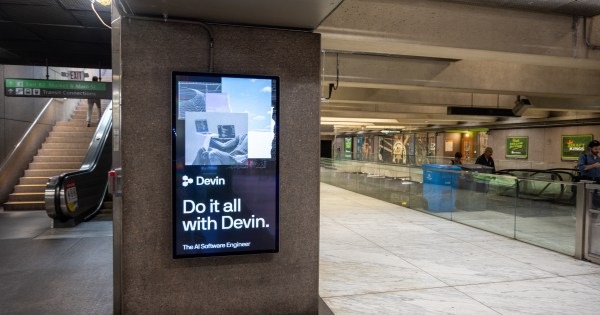
rewrite This story was originally published in On Background with Mark Stenberg, a free, weekly newsletter that explores the key themes shaping the media industry. You can sign up for it here.At Advertising Week, amid conversations about agents, creators, and combating fragmentation, an unusual topic kept coming up: out of home.The relatively fusty advertising channel has, in recent years, taken on renewed relevance. Out-of-home advertising, an industry catchall for media including billboards, wheatpastes, leaflets, and other in-person formats, has benefited from a surprising confluence of tailwinds.Its digital counterpart, somewhat unimaginatively called digital out-of-home media (DOOH), is increasingly seen as offering the best of both its digital and analog components: unskippable, yet targeted and programmable.The numbers reflect this renewed interest. U.S. out-of-home advertising revenue grew 10.7% year over year in the second quarter, reaching a record $3.16 billion, according to the Out of Home Advertising Association of America. Digital-out-of-home grew even faster, rising 18.5% and accounting for nearly 40% of the category’s revenue.Taken more broadly, the resurgence of out-of-home reflects a potentially more consequential shift in advertising: As the internet becomes less trustworthy, less trafficked, and increasingly mediated by artificial intelligence, physical space is becoming more valuable.Dedicated readers of On Background will recognize part of this dynamic. For media companies, in-person events have been one of the few consistent bright spots in an otherwise challenged advertising environment. Publishers from Condé Nast to Semafor to ADWEEK itself have invested significantly in their events businesses, which in some cases now make up more than half of their revenue.There are several explanations for that growth. The rise of remote work has created a more distributed workforce with fewer consistent opportunities for networking and convening. Events solve that problem neatly.More broadly, in-person media offers something increasingly scarce: a tangible, memorable experience, rather than the ephemeral one of scrolling past a display ad or skipping through an ad read.Now, a host of new factors are making that distinction even more meaningful.The rise of artificial intelligence has unleashed an onslaught of low-quality content—often referred to as slop—whose provenance will only become harder to discern as the technology improves. Consumers are already growing more skeptical of what they encounter online. According to a 2024 Adobe report, 87% of U.S. consumers said the rise of generative AI has made it harder to distinguish fact from fiction online.That erosion of trust was one of the reasons Mariano Jeger, the former executive creative director at Droga5, cited for his departure to Outfront Media when I spoke to him this past September. As digital and social content become easier to manufacture and harder to authenticate, brands have new reasons to reconsider the relative value of appearing in those environments.

rewrite this title in spanish Snapchat announces activations for FIFA World Cup 2026
rewrite Listen to the article 3 min This audio is auto-generated. Please let us know if you have feedback. Snapchat announced a range of activations for the FIFA World Cup 2026, including new fan gear for Bitmoji characters, themed Lenses and exclusive coverage from creators at the event.
First, Snapchat added a range of World Cup fan gear to the Bitmoji store, which will enable users to deck their Bitmoji depictions out in their preferred national colors. Snapchat also partnered with U.S. Soccer, Adidas and Nike on an expanded range of Bitmoji outfits for the event.
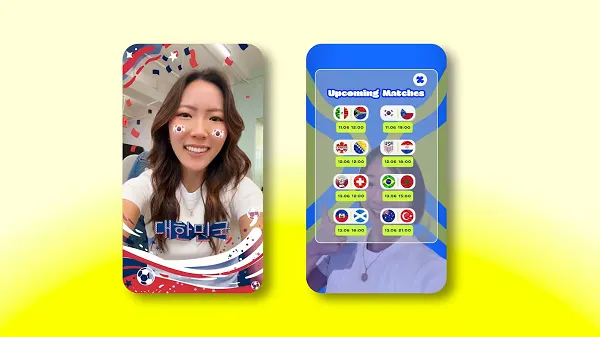
In terms of AR tools, Snapchat added official team and organic country Lenses across more than 20 national teams. The app also added World Cup-related promotions and effects to showcase the event. Snapchat is also sending creator Alix Earle and NBA player Jared McCain to the World Cup to share exclusive insights. The app is also partnering with a range of players, including João Félix of Portugal, Sergiño Dest of the U.S. and Erling Haaland of Norway, who will provide direct insight into the event.
The platform also launched a World Cup Topic Chat, which will provide a way for users to discuss the games in real time.
Finally, Snapchat is hosting in-person World Cup events in Los Angeles and New York City. These events will provide “spaces for communities to celebrate the tournament together,” per Snapchat. “Throughout the tournament, Snapchat will take over the U.S. Soccer House in Los Angeles with immersive experiences designed to help fans, creators, and partners connect around the biggest moments of the tournament,” Snapchat said. “Later in the summer, in partnership with the NYNJ World Cup 2026 Host Committee, Snapchat will activate at the official NYNJ World Cup 26 & Telemundo Fan Village at Rockefeller Center from July 6-19, and the FIFA Fan Festival at USTA Billie Jean King National Tennis Center from June 11-27, bringing Snapchat Cam, AR experiences, and creator-led moments directly to fans on the ground.”
The World Cup could provide a significant engagement opportunity for Snapchat, with the majority of the app’s users engaging with sports content, and seeking out sports-related updates in the app.
Snapchat said that 63% of Gen Z social media users follow professional athletes on social media, and said the app helps players connect with fans “in more authentic, personal ways.”
For the World Cup specifically, Snapchat said that 62% of World Cup fans will watch or follow content in the app from players, teams or creators during the tournament.
With these stats in mind, it makes sense for Snapchat to make the 2026 World Cup a focus, as it looks to make the platform a more critical connector for its users. in spanish