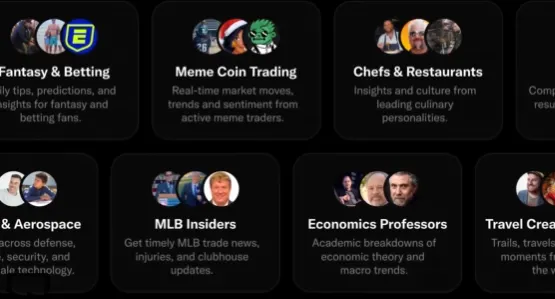
rewrite this title in spanish X Adds Starter Packs to Help Users Find Relevant Creators
rewrite It’s taken it a while to catch up, but X is now latching onto the “Starter Packs” trend that was first popularized by Bluesky back in 2024.
Starter Packs make it easier for new users to find relevant people to follow in a specific niche, which is helpful for new users when they first open an account. Discovery was a particular focus on Bluesky, given the variances in usernames from other platforms, so it launched Starter Packs in various niches and interests to help people make the switch to the app. And now, X has its own variation, called, creatively, “Starterpacks” (the lack of a space between the words is the differentiator). Interesting to see “Meme coins” highlighted here, considering that these communities were recently targeted by X’s latest anti-spam updates. As explained by X’s head of product Nikita Bier: “Over the last few months, we scoured the world for the top posters in every niche & country We’ve compiled them into a new tool called Starterpacks: to help new users find the best accounts – big or small – for their interests.”
I mean, he could have at least mentioned Bluesky and acknowledged its work here, but whatever.
So now, you can easily find the most respected voices to follow on X, or the most active at least, which will help you populate your feed with relevant content, and help X’s algorithm better understand what you’re interested in, and what it should be looking to show you from across the app. Which could be relevant for some niches. Like conspiracy theorists, or morons, or both. But for most, I’m not sure that discovery is so much the problem, as most people are pretty familiar with what’s on offer on X. But then again, discovery has always been a challenge, with Twitter acknowledging way back in 2015 that at least part of its growth issues related to difficulties in people understanding the app, and how to find relevant follows. And with Bier targeting new user growth specifically, this does make sense, and it could be a valuable addition.
And when you also consider that the average X user only sees 20-30 posts per day, any expanded discovery, and improved relevance, can only be beneficial for driving engagement, while X also sees an additional 100 million or so new posts added to the platform every day, so there should be no shortage of niche updates.
Also worth noting: Threads also has its own version of starter packs, which is launched in December 2024. So eventually, they all become the same, at least in a functional context. Bier says that starterpacks are being rolled out “in the coming weeks,” while you can get early access to some starterpacks here. in spanish


rewrite this title in spanish Everything you need to know
rewrite To be loved is to be seen – but when the Instagram algorithm decides how many people see you, sometimes it’s tough to get that love (or even that like). The good news? We’re pulling back the curtain on how the Instagram algorithm works. We’ll walk you through the ranking signals that matter, plus how to optimize your Instagram content for better reach. Bonus!!! Download a free social SEO checklist and follow pro tips for Facebook, Instagram, TikTok, YouTube, X (Twitter), and LinkedIn to get your posts seen by more people. What is the Instagram algorithm? The Instagram algorithm is a series of AI-powered ranking systems that decide what each person sees across the app. The order in which you see posts, Stories, and Reels is also decided by this ranking system: Instagram will show you content that ranks highest, first. It does this by looking at a handful of key signals, including: User activity: Instagram looks at the posts you like, watch, search for, and interact with to figure out what you might enjoy. Relationship signals: You’re more likely to see posts from people you message, comment on, or engage with often. Popularity: Posts that get a lot of likes, comments, shares, or saves – especially off the bat – are more likely to reach more people. Recency: Newer posts usually show up first so your feed feels fresh. Content type: Instagram pays attention to whether you prefer Reels, photos, or carousels, and then shows you more of that format. Safety: Content that breaks Instagram’s guidelines is shown to fewer people or removed. Ultimately, the goal of the AI algorithm is to keep you scrolling by showing you content that feels relevant, timely, and personal. What comes up on one person’s Explore page will be different from what comes up on yours. How does the Instagram algorithm work in 2026? Instagram doesn’t run on a single algorithm anymore. Instead, it uses several AI systems to decide what to show people next. These AI systems look at different signals, then use that info to predict what content it thinks you’ll like. But here’s the tricky part: each part of the app — Feed, Reels, Stories, and Explore — ranks content in its own way: Feed: Who you interact with most and how relevant/timely the post is. Stories: Whose Stories you watch and engage with the most. Explore: Your activity in Explore (likes, saves, comments, shares), plus popularity signals from posts you don’t follow yet. Reels: How long you watch, whether you rewatch, and if you engage or share. Across the app, the goal is still the same: keep you scrolling by surfacing content it thinks you’ll like. How does the Instagram Feed algorithm work? The Instagram Feed algorithm works by pulling a pool of posts it thinks are relevant to you (both from people you follow and recommended accounts). From there, it looks at a handful of signals to decide the exact order those posts should appear. According to Meta, Instagram pays close attention to: Which accounts you regularly interact with How recently a post was shared How much engagement it’s getting How similar posts have performed with people who behave like you Based on these signals, Instagram orders your feed content on your likelihood to: Spend more than 10 seconds on the first post Click on the creator’s profile Comment on it Reshare it Instagram also looks at negative signals, like how often users skip a post, scroll past it quickly, or bounce after a few seconds of viewing. These give the system clues about whether a post deserves to move up — or down — the feed. And, to keep the Feed from feeling repetitive, the algorithm limits back-to-back posts from the same creator and blends content from followed and recommended accounts. How to increase your ranking in the Instagram Feed According to Adam Mosseri, Head of Instagram, there are two main ways content reaches people: Connected reach, which comes from people who already follow you Unconnected reach, which reaches people who don’t follow you yet For both, the same signals matter most: watch time, likes, and shares (or sends). Source: Adam Mosseri So, when checking your insights, pay close attention to your average watch time, likes per reach, and sends per reach. These signals are key to understanding how your content performs and how often it shows up in users’ feeds. How does the Instagram Reels algorithm work? The Instagram Reels algorithm uses AI to predict which videos are most likely to entertain you. It starts by gathering a pool of potential videos, then scoring and ordering them. The signals are similar to Feed, but with an entertainment-first lens. Instagram looks at: How long people watch a video Whether viewers rewatch or reshare it How quickly people interact with the Reel Whether viewers take follow-up actions, like following the creator Using these signals, Instagram predicts how likely you are to: Watch the Reel to the end Tap into the audio page Rewatch or reshare it Follow the creator after watching The Reels you’re most likely to enjoy get pushed higher in the lineup. How to increase your ranking in Reels Mosseri says your Reels should hit these basics if you want to show up in recommendations: Add a strong hook Turn on captions Include audio Post non-watermarked, original content Keep Reels 3 minutes or less Check Account Status to make sure your account is in good standing Source: Adam Mosseri How does the Instagram Stories algorithm work? Since Instagram Stories only come from people you follow, the AI focuses on how close you are to each creator and how often you pay attention to their content. Here are the signals that matter most: Viewing history: If you regularly watch someone’s Stories, the algorithm will push their Stories to the front of the line. Engagement history: If you engage with someone in Stories (likes, replies, emoji reactions), Instagram assumes you want to continue the conversation. Closeness: Instagram also looks at your overall relationship with the creator. If you DM often or know each other on Facebook, Instagram assumes they’re part of your “inner circle,” and those accounts get a fast-pass to the front. According to Mosseri, the top ranking factors for Stories are how likely you are to tap into a Story, like it, or reply to it. Ultimately, Stories that spark action tend to move up. Source: Adam Mosseri For a complete list of all the story ranking signals, go to Meta’s Transparency Centre. How does the Instagram Explore Page algorithm work? On the Explore Page, most posts come from accounts you don’t follow. So, the AI relies heavily on your past behavior to guess what you might like. It looks at what you’ve interacted with before, then pulls in similar content to test what holds your attention. (Fun fact: Explore has the most ranking signals of any surface) Here are the ones that matter most: Your likelihood of following the creator: Instagram looks at how often people follow a creator from a specific post, plus how recently you viewed that creator’s profile. Your likelihood of viewing the post for at least five seconds: If people linger on a post (even a few seconds) that’s a sign it’s grabbing attention. The system looks at how long you’ve spent on similar posts in Explore. Your likelihood of finishing a video (watching 95% or more): High completion rates are a huge deal in Explore. When lots of people watch a video almost all the way through, the system assumes more people might enjoy it too. For the complete list of 36 ranking signals used to build your Explore Page, check out Meta’s Transparency Center. #1 for Instagram marketing Schedule posts, Reels, and Stories. Answer comments and DMs, and build beautiful reports. It’s so easy. Start free 30-day trial Instagram algorithm changes for 2026 Instagram’s AI ranking systems are constantly changing, and new features are shaping how content gets ranked and recommended. Here are the latest updates. Instagram’s Your Algorithm Launched in December 2025, Your Algorithm gives users more control of their Reels algorithm. They can review topics Instagram thinks they care about, add new ones, or down-rank the ones they don’t want to see. Source: Instagram What marketers need to know: Reels need to match the topics your audience actively chooses, not just whatever Instagram predicts for them. If there’s a mismatch, your content is less likely to surface, even if it’s well made. AI translations In late 2025, Instagram rolled out AI-powered translations for Reels. The feature can translate both text and audio into Hindi, Portuguese, English, and Spanish, with more languages on the way. What marketers need to know: In a recent video, Instagram head Adam Mosseri called out translations as a tactic for boosting reach, since more people can understand and engage with your content. Even simple, clear captions can go a long way. Source: Adam Mosseri Shares as a top ranking signal Instagram is putting more weight on shares as a ranking signal. This is because the platform wants to “inspire content that brings people together.” For example, watching a funny video and sending it to a friend tells Instagram the content actually sparked a real connection, which is a stronger signal than simply tapping “Save.” What marketers need to know: Kwok recommends social media teams brainstorm content that incentivizes Instagram users to share. That might be a relatable meme, a genuinely funny video, or a practical tip someone might send to a coworker or friend. A new focus on creativity and connection In 2026 and beyond, Instagram will focus more on creativity and connection, according to Mosseri. As Instagram’s AI gets smarter, the platform wants to push content that feels fresh, original, and made for Instagram (not recycled from elsewhere… *cough* TikTok). What marketers need to know: “The algorithm will start prioritizing and rewarding content that is original and creative,” says Eileen Kwok, Social Marketing Specialist at Hootsuite. In practice, that means leaning into formats, pacing, and storytelling that feel made for Instagram. Trial Reels Last year, Instagram introduced Trial Reels, which lets you create a Reel that is shown only to non-followers. As Adam Mosseri explains in the video below, it’s a great way to test if your content ranks highly before sharing it to your audience. Source: Adam Mosseri What marketers need to know: If a Trial Reel performs well with cold audiences, that’s a green light to post it broadly. Use this to test hooks, formats, or new ideas without risking engagement with your main audience. Teen Restriction Accounts launch Teen accounts were launched in late 2024/early 2025 with the intent to protect young internet users: they are “automatically set to more protective teen safety settings,” according to Meta. What marketers need to know: Jason Fung, Marketing Coordinator at Black & White Zebra, says this launch is “a great reminder to reevaluate your current social content to ensure there isn’t harmful content that may affect your algorithm effectiveness for Gen Z.” 13 tips to optimize your content for Instagram’s algorithm, according to the experts A strong Instagram marketing strategy starts with knowing what actually moves the algorithm. That’s why we asked Eileen Kwok (Social Marketing Specialist at Hootsuite) and Jason Fung (Marketing Coordinator at Black & White Zebra) for advice on using the Instagram algorithm to your advantage. Instagram algorithm tips for feed posts 1. Interact in the comments Engagement (both outbound and inbound) is important when it comes to a post’s ranking. Replying to positive comments on your Instagram posts – even just to say thank you – helps give your content a boost. Source: @bkind.products Who this is for: Brands, businesses, and creators Why it works: Connection and community go both ways — when you engage with your Instagram followers, they’ll engage back. This will lead to more comments on your posts, and a higher ranking on the IG feed. How to do it: Reply to every comment you can, and encourage your followers to interact with your posts. “Consider including a CTA or posing a question in your caption,” Kwok suggests. 2. Be concise Feed content can be passed over with a quick scroll, so it’s important to deliver value as promptly as you can. “Remember you only have a couple seconds to capture your audience’s attention,” Kwok notes. This Reel is just a single shot with a single line of text, but it’s very effective. Source: @dohhut Who this is for: Brands, businesses and creators Why it works: One of Instagram’s ranking signals is how long a user spends viewing your post. When your content is too complex or (gasp) boring, you risk losing a wider audience (and losing points when it comes to ranking). How to do it: “Be simple with your messaging,” Kwok recommends. Create clear, concise content viewers can immediately flag as interesting, entertaining or useful. Instagram algorithm tips for Reels 3. Keep Reels under 90 seconds Reels can be up to 3 minutes, but experts recommend sticking closer to a minute and a half. This Reel, for example, is less than 20 seconds. Source: @jlpatisserieaz Who this is for: Brands, businesses, and creators Why it works: Short Reels are backed by the Instagram team: “Last year, Instagram released a ‘Best Practices’ feature for IG creators, and they made notes on posting shorter Reels, also echoed by Adam Mosseri,” says Fung. Plus, one of Instagram’s ranking signals is how many times your video was watched in its entirety (the shorter your video is, the more likely viewers will watch till the end). How to do it: Keep a 90-second time limit in mind when shooting the majority of your Reels, and consider making a series if your content doesn’t fit within that time frame. 4. Loop your Reels A viewer will often watch a looped video more than once (especially if they don’t realize it’s looped at first). I double-duck dare you to watch this one only once. Source: ducks_in_space Who this is for: Brands, businesses, and creators Why it works: Fung explains that IG relies on watch times as a ranking signal, and looping your videos “stretches that time as much as possible.” How to do it: End your video with a phrase or shot that blends seamlessly into the beginning — for example, if your video starts with, “Looping your Reel is the best way to hack the algorithm,” it could end with, “And that’s why — ”… you get it. Instagram algorithm tips for Stories 5. Post stories often “Post consistently to remain as high as possible in your audience’s feed,” Fung explains. The more you post, the more opportunities viewers will have to see your content. Instagram tends to show accounts with Stories currently posted first in search, too. Who this is for: Brands, businesses, and creators Why it works: A post from Mosseri stated “creators who post to Stories often see fewer unfollows than creators who don’t, which can lead to stronger growth over time.” How to do it: Plan ahead and schedule your Stories to make sure you’re posting consistently, and consider sharing new posts as story reposts so your audience has more channels to view your content. 6. But don’t post too many at once Too many Instagram Stories can be overwhelming for a viewer. When the story bars look tiny (like in the example below), users may lose interest. Kwok backs this up: “The moment your Story slide count goes over five, you’ll start to notice a dip in views and engagement.” Who this is for: Brands, businesses, and creators Why it works: Instagram’s Story ranking signals take into account how many times a viewer has exited or swiped past your Stories, and your Stories won’t be given high priority if your audience is getting bored and giving up. How to do it: Strategically plan your Stories out (a social media calendar can help with this) and focus on quality, not quantity. “Try to convey your message in a couple slides,” Kwok advises. 7. Encourage interaction Our experts agree that engaging content is extremely important when it comes to Instagram Story ranking. After all, “Interactions increase how far up your brand appears in the user’s Stories bar,” says Fung. Stories that use link stickers, like the one below, are also great for driving traffic to a website, contest, or online store. Source: @vancouvermagazine Who this is for: Brands, businesses, and creators Why it works: The more people engage with your story through likes, comments, or sticker interactions, the higher Instagram will rank it — and more users will see it. How to do it: “Get creative with different Story features,” Kwok suggests. “Set up polls, questions, and quizzes to spark engagement and start a conversation.” Instagram algorithm tips for carousel posts 8. Create save-worthy content “Saves signal huge interest and engagement,” says Fung. “Lean into content that users would want to save for later use.” The below post is very save-able: it’s useful and informative. Source: @the_foodiediaries Who this is for: Brands, businesses, and creators Why it works: Helpful content prompts your audience to hit “save.” The more saves your posts have, the higher your content will rank on the Instagram feed. How to do it: Think tips and tricks, checklists, life hacks, infographics, how-to tutorials — anything that viewers would want to bookmark and remember for the future. 9. Make scrolling fun Brands that use carousels strategically often get the best engagement and highest rankings, Kwok notes. The below post, for example, uses a cover that prompts users to scroll to the next slide. Source: @madovermarketing_mom Who this is for: Brands, businesses, and creators Why it works: When users are incentivized to scroll through your carousel, they spend more time viewing your post (and this signals a higher ranking to Instagram’s AI systems). How to do it: “Get creative with copy that entices users to continue scrolling through your carousel,” says Kwok. Instagram algorithm tips for the Explore Page 10. Optimize your content for Instagram SEO While hashtags have value, social SEO reigns supreme. “It’s extremely important to write keyword-rich content to enhance content indexing by Instagram’s AI,” says Fung. For example, this Reel uses keywords and relevant hashtags like “beginner arm workout,” “workout for women,” and “toned arms workout” to help reach the creator’s target audience. Source: @caitiejunefit Who this is for: Brands, businesses, and creators Why it works: “It’s in your best interest to ensure all aspects of your brand/content are constantly optimized,” Fung explains. Using keywords in your bio and captions helps the platform determine what your content is about and who should see it. How to do it: Use alt text whenever you can and ensure you’re including relevant keywords in your Instagram captions and hashtags. 11. If you go viral, keep up the momentum Going viral isn’t an excuse to sit back and relax — in fact, it’s a great opportunity to make the most of the sudden influx of attention and engagement. A Reel posted immediately after a viral Reel will often perform better than average, as exemplified below. Source: @williammattarlawoffices Who this is for: Brands, businesses, and creators Why it works: Mosseri says that posting “in the next day or two” ensures that you’re capitalizing on your virality: your high-ranking viral video will prompt Instagram’s AI to rank your next few videos highly, too. How to do it: Replying to comments with Reels is a simple way to piggyback off of a viral post. Instagram algorithm tips for Business, Creator, and Personal Accounts 12. Use a hook “The first 3 seconds of your video is important,” says Kwok. This sentiment is backed by Instagram head Adam Mosseri. Shock value can make an excellent hook. For example, milk where it doesn’t belong. Source: @cozycookiesdelivery Who this is for: Brands, businesses, and creators Why it works: Engaging your audience in the first three seconds will capture their attention and make sure they don’t scroll away. How to do it: Start your video with something exciting, funny, or surprising, and don’t be afraid to experiment. “Test to see what lands with your audience,” Kwok advises. Hootsuite can help you make sense of your Instagram analytics metrics. 13. Engage with similar accounts Interacting with accounts that are relevant to yours (yes, including your competitors!) aids Instagram’s AI in figuring out what your content is about — and who cares about it. Plus, it’s a way to use Instagram marketing to connect with others. “This will not only help with algorithms pushing your content, but it’s just generally a great practice for community and engagement-building,” says Fung. Businesses in the wedding industry are really good at this kind of interaction: florists interact with photographers and planners to build their community and reach. Source: @oliveandbeanphoto Who this is for: Brands, businesses, and creators Why it works: Fung explains that engaging with accounts in your niche will “help increase visibility and attract a relevant audience through algorithm relevancy.” How to do it: Like, comment, and share posts from other brands working in or around your industry, as well as any influencers who focus on your niche. Instagram algorithm FAQs How does the Instagram algorithm work for brands in 2026? Instagram no longer relies on one algorithm. It uses multiple AI-driven ranking systems across Feed, Stories, Reels, and Explore to figure out what people actually want to see. For brands, that means reach depends on how audiences actually interact with your content, not posting frequency or follower count alone. How can enterprise social teams optimize content for the Instagram algorithm? Enterprise teams win by designing content for how people behave on each surface. Short, fast-paced videos tend to perform best in Reels. Stories work well as conversation starters. Feed posts should be worth saving or sharing. Consistent testing, high-quality creative, and posting at the best times also matter. What signals matter most to the Instagram algorithm for brand visibility? The strongest signals are watch time, shares, saves, likes, and meaningful interactions like comments or replies. It also looks at how quickly people engage and whether they come back for more. The stronger the response, the more likely your content is to get pushed further. How do you troubleshoot declining reach caused by the Instagram algorithm? Start by looking for drops in watch time, shares, and saves. Those are usually the first warning signs. From there, audit your content format, hook strength, and posting cadence. It’s also worth checking your Account Status to make sure your content is eligible for recommendations. How is AI influencing the Instagram algorithm? AI now powers almost every ranking decision on Instagram. It constantly learns from how people behave and adjusts recommendations in real time. How do I fix my Instagram algorithm? You can fix your Instagram algorithm (in other words, see more of what you want to see and less of what you don’t) by interacting with content that you like — like, comment on, share or send photos, Stories and Reels that you enjoy. You can also hit “Not Interested” on Reels you don’t like or mute accounts you don’t want to see. The AI ranking system will read these signals and alter the kind of content it serves on your Instagram account. Save time managing Instagram for business using Hootsuite. From a single dashboard, you can create, schedule, and publish posts directly to Instagram, engage your audience, measure performance, and run all your other social media profiles. It’s social media marketing, made easy. Try it free today. in spanish

rewrite this title in spanish The Complete Guide to Writing Content That Ranks
rewrite SEO writing has evolved far beyond sprinkling keywords into blog posts. In today’s search-driven world, great SEO writing means creating content that search engines—and large language models like ChatGPT—can understand and that people actually want to read. Whether you’re a small business owner trying to compete with bigger brands or a marketer looking to increase organic traffic, mastering SEO writing is essential. In this guide, I’ll share not just the basics of SEO writing but also the strategies I’ve used with clients to help them attract the right audience, build authority, and turn website visitors into customers. What is SEO Writing? Before diving into the tactics to boost search engine optimization, it’s important to understand exactly what SEO writing means. This section will give you a simple definition and explain how search engine optimized writing blends search optimization with audience-focused content creation. SEO writing is any writing designed to capture the attention of search engines to promote increased reach and high ranking on search engine result pages (SERPs). SEO writing targets search rankings directly. Although search engine appeal can seem difficult to understand, search engines typically focus on two things: keyword optimization and high-quality, people-first writing. To rank highly in search results, from Google search to Bing, focus your attention on incorporating keywords that will show up in search terms and creating high-quality content. Search engines are not people. Although people can appreciate a high-quality piece of content without a series of keywords embedded within, a search engine relies upon keywords to understand and subsequently promote your content. Generic content writing does not incorporate keywords, while search engine optimization content creation does. Why SEO Writing Matters for Your Business Source SEO writing isn’t just about ranking higher on Google. It truly is about building trust and driving results. Here, you’ll see why investing in SEO writing pays off in visibility, authority, and long-term business growth. SEO writing impacts… Visibility. Ranking high in search results means bringing in consistent organic traffic. SEO content writing is one of the best ways to increase visibility. Authority. Authority is vital for content writers, as it builds trust with your audience and impacts ranking factors. Good search engine optimization content ultimately builds brand credibility. Conversions. SEO writing attracts people with intent which, in turn, leads to more leads and higher sales. Long-term ROI. SEO writing continues delivering results long after a single campaign has run, unlike paid ads. Web content can be evergreen and continually refer back using internal links, making its long-term ROI very real. SEO writing matters for your business, because search engine results can drive or undermine your organic traffic. The Fundamentals of SEO Writing The basics of SEO writing form the foundation for everything else. By mastering keywords, structure, readability, and on-page optimization, you set your content up for search success. Keyword Research Basics Source Head terms and long-tail keywords can be easy to confuse; both are vital within content for users to effectively find your work. Head terms are broader, larger-reaching terms, while long-tail keywords are more specific and niche-focused. A combination of free and paid tools is considered ideal. Free tools can help with design, keyword research, and even optimization, while paid tools can further improve your scores on platforms like Google Search Console. Keyword selection can be arrived at through research alone, but make sure that research includes user intent; business goals are important, but user intent will effectively inform how you phrase your keywords and improve search engine results. Headings and Structure Headings are a vital part of both search engine results and structure, as they effectively get across content ideas while informing search engines about the content of a page and the audience most likely to benefit from it. H1 tags are the most important tags, while H2 show less important (but still valuable) ideas, and H3 tags rank lowest of all. All are a part of creating SEO-friendly content to help search engines organize your content, while improving the scannable nature of your content. In an ideal world, your search traffic would focus whole-heartedly on your work, but audience attention spans and the vast amount of competition make it necessary to create content that can quickly and easily be scanned for information. Headings create a structure that makes scanning easy and straightforward. Further Reading: The Real Role of SEO Keywords in Driving Business Growth On-Page Essentials Meta titles and descriptions are used to point search engines to relevant content. A meta title is a title used to quickly and effectively describe a piece of content, while descriptions offer a space to include more keywords to give greater detail about a page or post. Alt text is another place for your keywords to improve keyword density and help boost your place in search. When alt text is used properly and includes relevant keywords, an image search can also help bring your work up in SERPs. Finally, make the most of your content by utilizing both internal and external linking strategies. Internal links can help build trust and perpetuate traffic, while external linking can help establish authority. Is Your LinkedIn Not Delivering Results? Just released: my new book to help professionals, entrepreneurs, and business owners maximize LinkedIn for real growth.With years of LinkedIn expertise, Maximizing LinkedIn for Business Growth offers actionable steps to build your brand, expand your network, and drive results. Start leveraging LinkedIn like never before—grab your copy now! Click the cover or button below to buy on Amazon. Further Reading: On-Page SEO: How to Best Optimize the 4 Main Factors to Increase Search Engine Rankings Readability and Flow Readability is also important for ranking highly in search results. Short paragraphs and concise sentences get your point across without sacrificing white space and readability. Active voice will always grab and hold attention more than passive. Passive voice is distant and cold, while active voice provides clarity and a more direct line to your audience. Jargon, too, alienates your audience, and should be avoided when possible. Writing for Search Intent and Humans Search engines may deliver the traffic, but humans decide whether to stay and engage. This section will help you align your content with different types of search intent while keeping it reader-friendly. The most common types of content include informational, navigational, transactional, and commercial intent. Intent matters because… Informational intent delivers information to audiences, and can include how-tos and narratives. Navigational intent includes content focused on delivering a specific page or area. This includes searches for local places, or even specific pages. Transactional intent is intent focused on making a purchase. Search engine optimization efforts for transactional intent will likely include reviews and comparisons. Commercial intent describes intent circling around identifying a specific product or service, or those that are beginning the purchasing process. Mapping blog posts to user intent means tailoring your keywords to match the spirit of search results if not the letter of those results. To map your blog posts, identify the type of intent present behind a search query, and place keywords within the post to match that intent. SEO writing does need to rank, but value is pivotal. Make sure that your SEO pieces are designed to both rank and solve common audience problems. Advanced SEO Writing Strategies Source Once you’ve nailed the fundamentals, it’s time to level up. These advanced techniques—like optimizing for snippets, FAQs, and semantic keywords—can give your content a competitive edge. Once you have a grasp on the basics, you can begin optimizing in more advanced and complicated avenues. Featured snippets and “people also ask” are two great ways to optimize content to show up in search results. Optimizing for these areas requires paying attention to search intent and meeting additional needs. Historical optimization is another great way to level up your optimization. Old content can be refreshed to rank highly by updating keywords and reviewing search intent. FAQs and schema markup can also be used to improve keyword density and show up in Google search results and other search pages. Identify other questions that can be answered and other problems that can be solved and include those in your content. Once a solid keyword strategy is in place, and you have a grasp of search algorithms and how to support organic search traffic, you can move on to incorporating latent semantic indexing keywords, or keywords that support the main keyword without merely providing a synonym. Think keywords like “organic traffic” and “research tools” for a main topic of “SEO content.” Content length and depth are also considerations to take into account. The length of your work and the depth it stretches to can inform search engines, as well. Rather than trying to always hit a certain word count, opt for high quality content–even if it means going over or under the “right” length. Further Reading: Mastering Organic SEO: Proven Strategies and Advanced Tips for Success The Future of SEO Writing in the Age of AI With AI summaries and algorithm updates changing how search works, SEO writing is evolving fast. Future-proof your content by focusing on human expertise and unique insights. As a quick Google search can attest, Google released an impactful Helpful Content Update to their search algorithms, which happened at around the same time AI overviews were introduced to search results. These overviews pull from multiple sources to answer questions, and inclusion in those answers can help increase exposure. Human expertise and credibility will provide a unique perspective that AI alone cannot offer. Infuse your content with humanity, and you will get a leg up on content that has been developed entirely with AI. AI-proof content includes content that uses stories, insights, and personal examples to humanize your work and connect with your audience. Further Reading: AI for SEO: 17 Actionable Tips to Rank Higher Common SEO Writing Mistakes to Avoid Source Even experienced writers fall into traps that can hurt rankings. I have identified the most common SEO writing mistakes and how to steer clear of them. They include: Keyword stuffing. Keyword density is important, but a high volume of keywords can actually detract from your rankings. Writing for algorithms instead of readers. Your audience should be your focal point. While algorithms matter, they change too often to make them your sole focus. Ignoring meta descriptions. Meta descriptions matter! Make the most of your meta descriptions by including your main keyword and identifying the purpose of the page in question. Forgetting CTAs and conversions. Calls to action and focused conversions will help drive your content and keep your audience engaged. Relying entirely on AI-generated content. AI content can be a useful jumping-off point, but should not be used to replace actual human writers. Whether you use AI for outlines, or as a basic framework within which to work, make sure that it is not the bulk of your work. Practical SEO Writing Checklist Source Sometimes you just need a quick guide to make sure nothing gets missed. Use this checklist to help you review your content before hitting publish to confirm it’s SEO-ready. Write one H1 with the target keyword. Your H1 is essentially your title and should be the main focus of any given piece. Use primary keywords in your intro and conclusion. Your intro and conclusion should introduce your point or purpose and wrap it up using your main keyword to provide structure and inform search. Place secondary keywords in H2/H3s. Secondary keywords act as a support for your main keyword, just as paragraphs act as a support for your overall piece of content. Optimize meta tags, alt text, and URLs. Optimizing these smaller aspects of your work ensures that Google and other search platforms can quickly and easily find you, categorize your work, and share it with your target audience. Add at least 2–3 internal links and 1–2 external links. Links help establish authority and build trust, so make sure to include them in your pieces. Ensure mobile readability and fast load speed. A vast number of your audience members will be searching on their phones. Make sure that your pages show up well on mobile. End with a strong CTA. Finally, give your audience something to do at the end of reading or visiting your site. A strong call to action encourages engagement and makes it more likely that your audience will complete a sale or come back for more. The right tools can save time and sharpen your SEO writing. From free keyword research resources to advanced optimization platforms, these are worth knowing about. Free tools: Google Trends, Search Console, AnswerThePublic. These can be used without an upfront investment and can help inform your SEO practices. Paid tools: SEMrush, Ahrefs, Clearscope, Surfer SEO. Each of these tools can help take your optimization one step further, with insights regarding length, peripheral keywords, and more. Writing helpers: Grammarly, Hemingway, Yoast. Each of these tools can help refine your writing and improve the flow of your work. Further Reading: The 16 Best Free SEO Tools You Need to Know in 2025 How Smart SEO Writing Grows Your Business SEO writing is not just a checklist—it’s a long-term strategy that can make your website your most powerful marketing asset. By focusing on user intent, optimizing your content for search engines, and layering in your expertise, you can consistently attract the right audience, establish authority, and drive real business results. If you commit to SEO writing as a core part of your content marketing strategy, you’ll find that it doesn’t just improve rankings—it transforms your website into a lead-generating machine. How are you getting started today? Actionable advice for your digital / content / influencer / social media marketing. Join 13,000+ smart professionals who subscribe to my regular updates. in spanish

rewrite this title in spanish Top Tips to Prevent Carpet Beetles From Coming Back
rewrite You’ve finally managed to clear out the creepy crawlies from your rugs and closets, but the battle isn’t entirely won. The real challenge now is keeping them out for good. Carpet beetles are notoriously persistent pests that can wreak havoc on natural fibers, from your favorite wool sweater to expensive heirlooms. To protect your home from a re-infestation, you need a strategy that combines diligent hygiene with proven pest control solutions.
Preventing these tiny destroyers requires consistency. By removing their food sources and blocking their entry points, you make your home a hostile environment for them. Here are the top tips to ensure carpet beetles don’t make a comeback. 1. Maintain a Rigorous Vacuuming Schedule The larvae of carpet beetles are the true culprits behind the damage. They feed on dust bunnies, pet hair, and lint that accumulate in quiet corners. Vacuuming is your first line of defense. Focus on the Edges: Don’t just clean the high-traffic areas. Use the nozzle attachment to get deep into the crevices along baseboards, under heavy furniture, and in the corners of closets where beetles love to hide.
Clean Under Rugs: Lift up area rugs and vacuum the floor underneath. Larvae often thrive in these undisturbed, dark spaces.
Empty the Canister Regularly: If you vacuum up larvae or eggs, they can survive inside the vacuum bag or canister. Empty the contents into an outdoor trash bin immediately after cleaning. 2. Wash and Store Fabrics Correctly Carpet beetles are attracted to natural animal fibers like wool, silk, fur, and feathers. They are especially drawn to items soiled with food spills or perspiration.
Before you pack away winter clothes or blankets, wash or dry clean them thoroughly. This removes the scents that attract beetles and kills any eggs that might already be present. Once clean, store these items in airtight plastic bins or vacuum-seal bags. Avoid using cardboard boxes, as beetles can easily chew through them. 3. Declutter Closets and Storage Areas Clutter provides endless hiding spots and food sources for pests. Old stacks of papers, unused clothing, and piles of blankets are perfect breeding grounds. By keeping your storage areas organized and minimal, you reduce the places where beetles can establish a colony unnoticed. Regular decluttering also makes it easier to spot the early signs of an infestation, such as shed skins or small holes in fabrics.
4. Seal Entry Points Adult carpet beetles live outdoors and often fly inside to lay eggs. They can enter through the tiniest gaps. Inspect your home’s exterior and seal any cracks around windows, doors, and utility pipes with caulk. Ensure that window screens are free of holes and fit tightly. Installing door sweeps can also prevent beetles from crawling under exterior doors.
5. Use Natural Repellents If you want to add an extra layer of protection without harsh chemicals, consider natural repellents. Cedar blocks or cedar oil can deter carpet beetles, as they dislike the smell. However, cedar loses its potency over time, so you will need to sand the blocks or reapply oil periodically. Vinegar is another effective tool; wiping down shelves and window sills with a mixture of white vinegar and water can remove food residue and deter pests.
6. Monitor for New Activity Vigilance is key. Place sticky glue traps in areas where you previously saw beetles or near potential food sources like wool rugs. These traps can help you detect a new problem early before it spirals out of control. If you catch a few beetles, it’s a signal to step up your cleaning and inspection routine immediately.
Conclusion Keeping carpet beetles away requires a proactive approach. By combining regular deep cleaning with smart storage habits and home maintenance, you can protect your valuable fabrics and keep your home pest-free. Don’t wait for the next hole to appear in your favorite sweater—start these preventative measures today. Post navigation in spanish

rewrite this title in spanish #743: A Course Worth It’s Price Tag… The Key To Creating Courses That Sell – Amy Porterfield
rewrite Listen on… Keep your students engaged and motivated with perfectly designed digital course modules.
While I typically talk about marketing on this podcast, today, I’m taking a beat to focus on the heart of your thriving online business – your exceptional product. In my case, of course, this is digital courses. But even more than that, it’s my seamless digital course modules. Trust me, you can’t just throw content together and hope it sticks. Designing the best digital course is all about organizing it in a way that delivers a transformation so smoothly that your students soak it up like a sponge! Oh, and I’m not just scratching the surface, my friends. I’m deep-diving into the art and science behind designing the perfect modules that are sure to leave a lasting impression on your students. In this episode, I cover: (1:56) Why you need to design course modules in the first place
(5:20) How to get your students into action throughout every step of your course (10:38) Top frameworks for upleveling the course value (15:01) Simple strategies for supercharging engagement (25:07) The easiest way to keep your students motivated and help them make progress through the course (27:39) Tips for incorporating content for every learning style Listen in and consider this episode your golden ticket to creating top-notch digital course modules. Your students and your business will thank you! Click here to listen!
Rate, Review, & Follow on Apple Podcasts
“I love Amy and Online Marketing Made Easy.” <– If that sounds like you, please consider rating and reviewing my show! This helps me support more people — just like you — move toward the online life and business that they desire. Click here, scroll to the bottom, tap to rate with five stars, and select “Write a Review.” Then be sure to let me know what you loved most about the episode!
Also, if you haven’t done so already, follow the podcast. I’m adding a bunch of bonus episodes to the feed and, if you’re not following, there’s a good chance you’ll miss out. Follow now! !function(f,b,e,v,n,t,s) {if(f.fbq)return;n=f.fbq=function(){n.callMethod? n.callMethod.apply(n,arguments):n.queue.push(arguments)}; if(!f._fbq)f._fbq=n;n.push=n;n.loaded=!0;n.version=’2.0′; n.queue=[];t=b.createElement(e);t.async=!0; t.src=v;s=b.getElementsByTagName(e)[0]; s.parentNode.insertBefore(t,s)}(window, document,’script’, ‘https://connect.facebook.net/en_US/fbevents.js’); fbq(‘init’, ‘397525423930890’); fbq(‘track’, ‘PageView’); !function(f,b,e,v,n,t,s){if(f.fbq)return;n=f.fbq=function(){n.callMethod?
n.callMethod.apply(n,arguments):n.queue.push(arguments)};if(!f._fbq)f._fbq=n;
n.push=n;n.loaded=!0;n.version=’2.0′;n.queue=[];t=b.createElement(e);t.async=!0;
t.src=v;s=b.getElementsByTagName(e)[0];s.parentNode.insertBefore(t,s)}(window,
document,’script’,’https://connect.facebook.net/en_US/fbevents.js?v=next’); !function(f,b,e,v,n,t,s) {if(f.fbq)return;n=f.fbq=function(){n.callMethod? n.callMethod.apply(n,arguments):n.queue.push(arguments)}; if(!f._fbq)f._fbq=n;n.push=n;n.loaded=!0;n.version=’2.0′; n.queue=[];t=b.createElement(e);t.async=!0; t.src=v;s=b.getElementsByTagName(e)[0]; s.parentNode.insertBefore(t,s)}(window, document,’script’, ‘https://connect.facebook.net/en_US/fbevents.js’); fbq(‘init’, ‘397525423930890’); fbq(‘track’, ‘PageView’); !function(f,b,e,v,n,t,s) {if(f.fbq)return;n=f.fbq=function(){n.callMethod? n.callMethod.apply(n,arguments):n.queue.push(arguments)}; if(!f._fbq)f._fbq=n;n.push=n;n.loaded=!0;n.version=’2.0′; n.queue=[];t=b.createElement(e);t.async=!0; t.src=v;s=b.getElementsByTagName(e)[0]; s.parentNode.insertBefore(t,s)}(window, document,’script’, ‘https://connect.facebook.net/en_US/fbevents.js’); fbq(‘init’, ‘397525423930890’); fbq(‘track’, ‘PageView’); in spanish
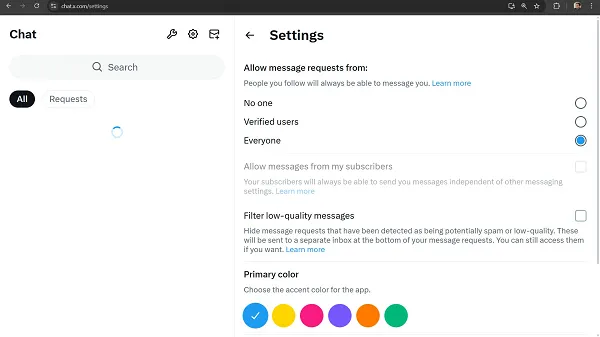
rewrite this title in spanish X Launches Standalone Chat App on Desktop
rewrite X is working on another step in enacting Elon Musk’s “everything app” vision, this time via a separate messaging app, which would enable you to engage via X DMs in isolation from the main X platform. As you can see in this example, posted by app researcher Nima Owji, you can now access a desktop version of X’s new chat interface, enabling you to manage your X DMs outside of the app itself. X is also reportedly developing a separate X Chat mobile app as well, which would put X into direct competition with WhatsApp and Messenger as a standalone messaging platform. That aligns with Elon’s broader vision for the project, with Musk repeatedly referring to China’s WeChat as an example of the “everything app” approach he intends to take, in order to make X a more ubiquitous, essential connection tool.
WeChat plays a major role in linking Chinese people to their digital identity, with users able to conduct all sorts of transactions, in addition to messaging, within the app. It’s become so ubiquitous, in fact, that it’s considered an essential for the billion-plus users in the nation. That’s excited many Western social media executives over the years, with Meta, TikTok, and others all trying their hand at making their platforms more universal tools for discovery, shopping and more, in order to cement themselves as key connective tools.
Yet, for some reason, Western users haven’t warmed to the “super app” approach in the same way. While Chinese users seem much more excited about combining functionality into a single platform, for practicality and functional purpose, Western users have preferred to keep their behaviors separate, shopping in apps like Amazon, while using Facebook to connect with friends, and TikTok to watch video clips. There are various reasons for this. The Chinese government exerts more control over local platforms, and that could add a level of assurance to such processes that Western users don’t have in corporate-owned social media and messaging entities. It might also be just a habitual difference, or maybe the popularity of WeChat is part of a broader push by the CCP to maximize monitoring over digital identities. Whatever is at play, no platform has been able to convert the WeChat approach to Western audiences in any significant way as yet. Elon believes that X can cross the threshold here, and provide a similar transactional layer to our interactive process. And a big part of that, of course, is payments, with X moving to implement in-stream transfers, with a view to eventually enabling all kinds of financial activity within the app.
DMs, then, play a key role, as the added protection of encrypted connection will imbue a higher level of trust, while also providing more functional connective options. Which is why a separate X Chat app is important, extending on X’s recent work to rebuild its messaging back-end, and add in its own form of encryption.
The next step, then, will be to facilitate payments, which X is still working to get licensing for, before moving into to driving more transactional behavior in X DMs.
So, will that work? No, it won’t, and I don’t see any way that Elon Musk, who’s public trust has declined significantly since he took over at X, will be the one to bring WeChat-like functionality to Western audiences. Even if X can reassure users that its encryption is safe (many experts have questioned X’s encryption process), and even if X can get secure money transmitter approval in the U.S. (X’s application has been held up due to concerns over Saudi investment in the platform), there’s nothing to suggest that X users will actually want to use this type of functionality, and definitely not at the scale that would be required to make it a ubiquitous super app. X hasn’t even been able to get full approval for money transfers within the U.S., and there’s no way that the EU, for example, which Musk has made repeated public criticisms of, will approve the same in its region. Maybe, after years of working to appease the various global regulatory groups, Musk might gain permission to implement some level of monetary transactions in the app. But then, again, who’s going to use them? What percentage of the general public would trust Elon Musk’s X with financial transactions?
Maybe something changes, but I don’t see it, and as such, I don’t see why X really needs a separate messaging app. I just don’t imagine that it’s ever going to be the financial hub that Musk envisions, and if that’s not on the cards, then X is little more than a feeder platform for xAI, and a potentially viable ad platform at some stage. in spanish
rewrite this title in spanish Hootsuite earns #1 spot in Social Media Management on G2
rewrite G2’s Fall 2025 Reports rank Hootsuite #1 in five social media categories: Social Media Management, Social Media Advertising, Social Media Analytics, Social Media Listening, and Social Media Suites. Enterprise organizations choose Hootsuite to run social at scale — consolidating tools, reducing risk, and giving teams one place to plan, publish, listen, advertise, and report. G2’s rankings are based on verified customer reviews and market presence, reflecting how large organizations run social every day. Below, we break down each win and what it means for enterprise leaders aligning brand, regions, governance, and results. Where Hootsuite leads the pack In G2’s Fall 2025 release, Hootsuite is cited in 300+ reports and ranked #1 where it matters — unifying planning, publishing, advertising, listening, analytics, and cross-team workflows. CategoryRankingSocial Media Management#1Social Media Analytics#1Social Media Listening#1Social Media Suites#1Social Media Advertising#1 #1 in Social Media Management What this award meansThis category recognizes platforms that centralize planning, publishing, engagement, collaboration, approvals, and reporting across major social networks. Why it matters for enterprise customers For global teams, social media management isn’t just about getting content published — it’s about governance, consistency, and visibility. Being #1 confirms that Hootsuite provides: One governed calendar across brands, teams, and regions Approval workflows that reduce risk and maintain brand standards Enterprise-grade inbox routing and audit-ready records Executive-level reporting that ties social activity back to business impact Echoing those benefits Hootsuite gives us a unified global calendar, seamless approvals, and clear visibility for leadership. It’s the only platform we’ve found that scales with our regional teams without introducing chaos. — Director of Digital Communications, Enterprise Healthcare, via G2 See how this works in our social media management solution. #1 in Social Media Listening Tools What this award means This category recognizes platforms that turn billions of social conversations into structured insights: sentiment, themes, influencers, competitive intelligence, and emerging trends. Why it matters for enterprise customers For global brands, listening isn’t optional — it’s operational risk management. Being #1 demonstrates that Hootsuite gives enterprises: Real-time awareness of brand, competitor, and industry conversations Sentiment analysis that helps prevent crises and respond strategically Market intelligence that supports product, comms, and go-to-market decisions A single, integrated view across social, forums, podcasts, and more Echoing those benefits The social listening aspect is also super nice. Unrelated to the Hootsuite subscription, there are SOO many great articles that the Hootsuite team puts out, along with training videos & courses, so that marketers can be as relevant as possible. — Former Sprout Social user #1 in Social Media Suites What this award meansThis category recognizes platforms that deliver a full end-to-end social ecosystem: publishing, planning, engagement, listening, analytics, and cross-team coordination — all in one place. Why it matters for enterprise customersGlobal organizations don’t need more tools — they need fewer, more integrated ones. Being #1 validates Hootsuite as the single operating system for social, helping teams: Consolidate vendors and reduce complexity Collaborate seamlessly across markets and business units Align paid, organic, and customer care efforts Get faster, clearer insights to support leadership decisions Echoing those benefits Hootsuite makes managing multiple social media accounts simple and efficient. The scheduling feature is a huge time-saver, allowing me to plan content weeks in advance. I also appreciate the analytics tools, which provide clear insights into performance and engagement, helping me refine our social media strategy. The dashboard is intuitive, and integration with various platforms is seamless. — Digital Marketing Specialist, GCB Bank PLC #1 in Social Media Analytics What this award meansThis category recognizes platforms that turn social data into business intelligence by tracking performance across networks, campaigns, content types, and audiences. Why it matters for enterprise customersLeaders need answers, not dashboards. Being #1 proves Hootsuite supports enterprises with: Cross-platform, real-time reporting Audience and engagement insights that guide content strategy Executive-friendly visualizations that tie activity to outcomes Data governance and consistency across regions and teams Echoing those benefits Hootsuite’s … built-in approval workflow lets Executive Directors bless content with one click—no more endless email chains—while the analytics dashboard translates engagement into plain-English insights our leadership team can act on. Add in responsive support and snack-size trainings, and the platform feels less like software and more like a strategic partner. — Shauna D., Social Media Specialist #1 in Social Media Advertising What this award meansThis category highlights platforms that unify social advertising creation, optimization, and reporting across networks — alongside organic content. Why it matters for enterprise customersPaid and organic can’t live in silos. Being #1 signals that Hootsuite empowers enterprise teams to: Run ads and organic posts side by side Manage budgets, approvals, and governance in one place Compare ROAS and performance across platforms Align brand messaging across paid and organic channels Echoing those benefits Hootsuite has made managing our school’s social media SO much easier and has become a vital tool for our team. We use it daily as part of our workflow. The approval workflow is the main draw for us. … We also appreciate the analytics it offers. It gives us detailed metrics that help us analyze how our posts are performing, understand how our audience is engaging with them, and spot trends or patterns. — G2 Reviewer, Primary/Secondary Education A new era of social intelligence This clean sweep in G2’s report isn’t just a marketing win — it reflects a larger shift in how enterprises are using social. As our CEO Irina Novoselsky puts it: We’re honored to be named the top-ranked social intelligence platform across G2’s Fall Reports,” said Irina Novoselsky, CEO of Hootsuite. “Today, hundreds of enterprise organizations trust Hootsuite for the social data and insights that inform their go-to-market strategies, from employee advocacy to market intelligence to AI-powered social trend detection. This recognition, informed directly from customers, reflects the trust we’ve built to transform social into a true driver of business impact. What Hootsuite users are saying Thousands of four and five-star G2 reviews reflect what social teams value most in Hootsuite: advanced analytics, powerful collaboration tools, and results they can stand behind. On ease of use and onboarding: Hootsuite is incredibly user-friendly and intuitive, making it easy to navigate and teach others how to use it. The platform is well-organized with a simple layout that enhances the user experience. It offers a wide range of functionalities, allowing for seamless management of social media accounts and campaigns. Customer support has always been amazing! Plus, when we rolled out and implemented HS for our social media team, the onboarding experience was a breeze. — Sandra W., Director of Social Media On collaboration and workflow management: Hootsuite makes it easy to manage multiple social media accounts from a single dashboard. The scheduling feature is intuitive and saves our team a significant amount of time. I particularly appreciate the team collaboration features, the content calendar view, and how seamless it is to track performance metrics across platforms. — G2 Reviewer, Computer Software Why we stand out Our category-leading success isn’t just about features — it’s about helping social teams across industries work better together. Compared to tools like Sprout Social, Buffer, Sprinklr, and Later, Hootsuite stands out for: Enterprise-ready social media management: Schedule posts, monitor engagement, manage permissions, and ensure consistency—all from one secure platform. Analytics and listening that drive strategy: Go beyond dashboards. Use audience insights to understand sentiment, identify trends, and shape campaigns that perform. Multi-account and multi-team coordination: Coordinate social efforts across regions and departments with streamlined workflows, tiered approvals, and enterprise-grade controls. Social advertising and customer care: Run paid and organic campaigns side by side, while enabling seamless customer engagement from one centralized hub. Employee advocacy at scale: Empower staff to amplify brand messaging through curated content, frictionless sharing, and detailed reporting. No other platform brings publishing, insights, listening, advocacy, advertising, and customer care together with this level of enterprise-ready scale and usability. FAQs: What you should know about Hootsuite Can Hootsuite manage both paid and organic social at scale? Yes. Hootsuite unifies paid and organic campaigns across networks, giving enterprise teams centralized approvals, budget visibility, and cross-channel reporting. How does Hootsuite support enterprise governance for social media management? Through governed workflows, permissioning, audit trails, and integrations with your existing tech stack. Global teams stay aligned while protecting the brand. Does Hootsuite offer advanced analytics for leadership reporting? Yes. Hootsuite provides real-time dashboards, customizable reports, and cross-platform analytics designed for C-suite clarity — including ROI, sentiment, audience data, and campaign comparisons. Does Hootsuite have Social Listening? Yes! Hootsuite has social listening integrated into the platform, which is powered by Talkwalker, allowing users to efficiently process signals from the most viral social media posts to the most niche podcasts. How strong are Hootsuite’s listening and market intelligence tools? Hootsuite Listening gives you real-time insights across social, news, forums, and podcasts. Enterprises use it for brand tracking, trend spotting, competitive insights, and crisis detection. Can Hootsuite replace multiple social tools for large organizations? Absolutely. Hootsuite is built as an all-in-one suite that consolidates publishing, analytics, listening, advertising, governance, and collaboration. We’re honored to be recognized, but even more excited to keep building with the people who made it happen. Thank you to everyone who’s shared a review, given feedback, or spread the word. Save time managing all your social media with Hootsuite. From one powerful dashboard, you can plan, schedule, and publish content across every network, engage your audience in real time, track performance, and uncover insights with OwlyGPT and social listening tools. Try Hootsuite free today. in spanish

rewrite this title in spanish How to Run Facebook Ads for Real Estate (Strategies + Examples)
rewrite Facebook remains one of the most powerful tools in the real estate marketing playbook. With billions of users and unmatched ad targeting capabilities, it gives agents, brokerages, and property managers the ability to connect with motivated buyers, sellers, and renters at scale. But in 2025, running successful Facebook ads for real estate isn’t as simple as boosting a listing and hoping for leads. Between new compliance rules, rising ad costs, and evolving consumer behaviors, real estate pros need a smarter, more strategic approach to make real estate ads work. In this guide, I’ll handhold you through everything you need to know—from compliance and ad formats to advanced strategies and real-world examples—so you can generate more qualified leads, build trust with your audience, and grow your real estate business using Facebook ads. Why Facebook Ads Work for Real Estate For real estate professionals, Meta remains one of the most effective marketing platforms in 2025. Unlike traditional advertising, where you pay high costs for limited reach, Facebook advertising gives agents and brokerages the ability to connect with a large target audience while keeping budgets flexible and measurable. Here’s why it continues to be a cornerstone of modern real estate marketing: Visual-first platform for showcasing properties Real estate is inherently visual. Buyers and sellers want to see what makes a property unique — from light-filled kitchens to spacious backyards. Facebook’s feed is designed for professional photography, video walkthroughs, and carousel galleries, making it a natural match for property marketing. With more users scrolling on mobile, you can capture attention instantly with the right creative. Reach + precision targeting (even under restrictions) Yes, the Special Ad Category rules limit demographic targeting, but that doesn’t make Facebook ineffective. Instead of guessing based on age or income, you can now focus on behavioral and engagement signals. For example, retargeting someone who just visited your listing site or engaged with a property video is far more powerful than cold outreach. Even with restrictions, you can still reach highly motivated buyers and sellers at the exact moment they’re in-market. Cost-effectiveness vs traditional advertising Print ads, billboards, and even some portal listings can cost thousands of dollars without giving you measurable results. With Facebook, you’re in control — setting daily or lifetime budgets, testing ad creatives, and tracking ROI in real time. That means every dollar spent can be optimized toward generating actual leads instead of just vague “exposure.” For most real estate pros, this translates into lower cost per lead and higher efficiency compared to offline methods. Retargeting & nurturing for long-term engagement Real estate decisions aren’t made overnight. Buyers and sellers often take weeks or months to move from initial interest to action. Facebook’s retargeting capabilities allow you to stay in front of these prospects throughout that journey. Whether it’s showing them the same property they viewed last week, inviting them to an open house, or offering a free home valuation, you can nurture relationships at scale until they’re ready to take the next step. Compliance and Targeting Rules You Must Know in 2025 Running Facebook ads for real estate isn’t just about great visuals — it also means staying compliant with Meta’s Special Ad Category: Housing rules. These advertising policies regarding housing ads are designed to prevent discrimination and apply in the U.S., Canada, and parts of Europe. If you don’t declare your campaign as housing-related, your real estate ads may be rejected or your Facebook ad account restricted. What You Can’t Target Anymore Age or gender Zip codes (must use a 15-mile minimum radius) Income, education, household composition Behaviors like “likely to move” or “new mortgage borrowers” What You Still Can Use Location: Target a city or neighborhood with a 15-mile radius. Interests: Broad lifestyle and housing-related engagement (e.g., Zillow, Realtor.com, Trulia). Custom audiences: Website visitors, CRM/email lists, or people who engage with your content. Lookalikes: Expand reach by mirroring your best existing audiences. Why This Matters in 2025 The old days of hyper-granular demographic targeting options are gone, but that doesn’t mean Facebook real estate ads are less effective. Success now comes from behavioral and engagement-based targeting — retargeting people who watched a property video, visited your site, or clicked a past ad. These signals are often stronger than demographics ever were. Bottom line: embrace the rules, focus on creative digital marketing strategy, and you’ll still have access to Meta’s massive reach, dynamic formats, and retargeting power — without compliance risks. Choosing the Right Campaign Objective Before you launch a campaign, Facebook asks you to choose an objective — and this choice determines how ads are delivered and measured. For real estate, two objectives dominate: Traffic Campaigns: Driving Visitors Best for sending people to property listings, landing pages, or your website. Use Traffic when you want to: Build awareness of new listings or open houses Grow retargeting audiences with the Meta Pixel (formerly Facebook Pixel) Warm up prospects before asking for their details Lead Generation Campaigns: Capturing Inquiries Lead Ads let users submit contact info without leaving Facebook, making conversions fast and low-friction. Choose this when you want to: Collect serious buyer or motivated seller inquiries Grow your CRM with qualified leads Offer valuations, guides, or exclusive listings as a lead magnet to encourage users to share their contact info Pro Tip: The strongest results often come from layering both campaign objectives. Start with Traffic to build awareness and retargeting pools, then run Lead campaigns to capture details from engaged prospects. This keeps your funnel full at every stage — awareness, interest, and action. Best Ad Formats for Real Estate One of Meta’s biggest advantages is its flexibility. The right ad format can highlight a single listing, showcase multiple homes, or capture leads instantly. Here are the formats every real estate professional should know in 2025: Image Ads — Simple & Effective Perfect for single listings or brand awareness. With professional, well-lit photography, a single scroll-stopping image can generate clicks and inquiries. Carousel Ads — Multiple Views, More Engagement Showcase several properties at once, or highlight different angles and outdoor features of the same listing. Carousels are highly interactive and great for promoting neighborhoods or investment opportunities. Video Ads — Bring Properties to Life From quick walkthroughs to virtual video tours using drone video footage to location-based lifestyle scenes, video builds trust and adds dimension that photos can’t. Homes with video ads consistently generate more inquiries than those without. Lead Ads — Instant Conversions Source Built-in forms let users request showings or valuations without leaving Facebook. These real estate ads reduce friction and work best when synced with your CRM for fast follow-up. Dynamic Catalog Ads (Advantage+ for Real Estate) — Automated at Scale Source For brokerages or agents managing multiple listings, Advantage+ catalog ads automatically create personalized ads based on user behavior. Think of it as retargeting on autopilot. Proven Facebook Ad Strategies for Realtors Running Facebook ads for real estate isn’t just about posting listings — it’s about building trust, engaging the right target audience, and guiding prospects through the funnel. Here are the strategies that consistently generate qualified leads: 1. Target Smartly (Within the Rules) Even with Special Ad Category restrictions, you can still reach high-intent buyers and sellers: Location → Target within a 15-mile radius of a city or listing. Engagement → Retarget site visitors, social media engagers, and CRM contacts. Lookalikes → Expand reach by mirroring your best audiences. 2. Use Custom & Lookalike Audiences Your warmest leads come from people who already know you. Retarget past clients, email subscribers, or video viewers — then build lookalikes to scale. For example, a realtor with a past customer list can upload it into Facebook Ads Manager, then reach thousands of similar homeowners who may be ready to move. 3. Test and Optimize The difference between a good campaign and a great one often comes down to testing. Compare images vs. video, lifestyle vs. feature-driven ad copy, or carousel vs. single image ads. A/B test one variable at a time lets you see what really resonates. For example, one agent discovered drone footage doubled their click-through rate compared to static images — insight that permanently shaped their creative strategy. Since the Facebook algorithm rewards ad creatives that generate strong engagement, the more you test and refine, the more Meta will prioritize your ads and deliver them to the right people at a lower cost. 4. Build Trust With Social Proof Real estate is built on reputation. Client testimonials, “just sold” ads, and case studies show proof of results. These real estate ads not only contribute to lead generation, but also reassure cold prospects that you’re credible. Think of it as digital word-of-mouth — buyers and sellers feel safer working with an agent who can demonstrate a track record of success. Pro Tip: Rotate testimonial ads or “just sold” posts seasonally. This keeps your content fresh while reinforcing credibility year-round. Crafting High-Converting Ad Creative Targeting gets you in front of the right people — but it’s the creative that stops the scroll. Use Strong Visuals Photography → Bright, well-shot images that highlight selling points. Video → Quick walk-throughs or drone shots. Homes with video see up to 400% more inquiries. Carousel → Multiple views of a home or several listings in one ad. Write Copy That Converts Hook with a clear headline (“Spacious 3-Bedroom with Ocean Views”). Tease just enough details to spark curiosity. Add urgency: “Schedule your tour — homes in this area sell fast.” Include a Clear Call to Action Direct CTAs: “Book a showing,” “Request a valuation.” Value-driven CTAs: “Unlock exclusive listings before they hit the market.” Design for Mobile First Most users browse Facebook on their phones, so your ads must be designed with mobile user experience in mind. That means using vertical or square formats that fill the screen, readable text overlays that don’t get cut off, and layouts that are easy to scan on smaller displays. Advanced Tactics for 2025 Once you’ve mastered the basics, these next-level tactics can help you stand out in a crowded market: Personalized Dynamic Ads – Leverage Advantage+ catalog ads strategically — not just as a format, but as a personalization engine. These ads automatically match users with properties based on past browsing behavior, making them feel more like tailored recommendations than generic promotions. Cinemagraphs & Interactive Visuals – A cinemagraph is a still photo with one subtle moving element — like a flickering fireplace or flowing pool water. These eye-catching formats stop the scroll and are more affordable to produce than full video. Ephemeral Stories (24-Hour Highlights) – Both organic Stories and paid Stories ad placements are perfect for promoting time-sensitive content like upcoming open houses or new listings. Because they disappear after 24 hours, they create urgency and FOMO.. Hyper-Local Neighborhood Guides – Ads that showcase more than a property — like local schools, dining spots, or parks — position you as a community expert. These campaigns attract buyers relocating from outside the area who want to get a feel for the neighborhood vibe. Polls & Market Insight Ads – Engagement ads that ask questions (“Would you rather buy new construction or a historic home?”) not only boost interaction, but also provide insights into buyer preferences. The bonus? You can retarget people who engage with your poll, since they’ve already signaled interest in real estate. Why it matters: In 2025, standing out means going beyond static listing ads. These advanced tactics blend creativity with data, giving your campaigns the polish and personalization today’s buyers and sellers expect. Cost of Facebook Ads for Real Estate One of the first questions real estate professionals ask is: “How much do Facebook ads cost?” The answer: it depends — but the good news is you’re always in control of spend and scale. Average Costs (Broad Ranges) While costs vary by market, here are typical benchmarks for real estate ads in 2025: CPC (Cost per Click): About $0.50–$3.00, with WordStream’s data showing an industry average around $1.80 for real estate ads (WordStream). CPM (Cost per 1,000 Impressions): Typically $7–$15 in the U.S., with Varos reporting a median CPM of $7.69 for real estate services (Varos). CPL (Cost per Lead): Most campaigns fall between $5–$30 per lead, though Focus Digital’s July 2025 benchmark shows some markets averaging closer to $50+, especially for higher-value or luxury listings (Focus Digital). These are just broad ranges. The true measure of success isn’t cheap clicks — it’s whether the leads generated actually convert into clients. That’s where tracking ROAS (Return on Ad Spend) becomes critical. What Impacts Cost Several factors influence how much you’ll pay for Facebook ads: Market & Competition: Ads in competitive metro areas (New York, LA, Miami) cost more than ads in smaller suburban or rural markets. Ad Format & Placement: Video and carousel ads often reduce CPC because they drive stronger engagement, while static image ads can cost more per click. Your ad placement also matters — Feed ads usually cost more but generate higher-quality leads, while Stories and Reels can deliver cheaper reach. For real estate professionals, Facebook Marketplace can also be a cost-effective placement to boost visibility for listings, especially apartments and condos, since many users already browse Marketplace for housing. Seasonality: Costs rise during the busy spring and summer months when demand peaks. Relevance & Quality: Facebook rewards ads that get engagement. High-quality visuals, clear copy, and strong CTAs reduce costs, while weak creative drives them up. Budgeting Tips for Realtors Start small (e.g., $10–$20/day) and test audiences, ad formats, and messaging before scaling. Reinvest in winners — double down on ads, audiences, or formats that prove profitable. Don’t spread your budget too thin; a focused campaign performs better than trying to run five different ad sets on $5/day. The ROI & ROAS Mindset: Think Like a Business Owner Instead of obsessing over the cheapest clicks or leads, measure campaigns by ROI (Return on Investment) and ROAS (Return on Ad Spend). In real estate, one closed transaction can pay for months of ads. Here’s a simple step-by-step formula to calculate your Facebook Ads ROI: Total Ad Spend ÷ Leads Generated = Cost per Lead (CPL)Example: $1,000 ÷ 50 leads = $20 CPL Leads Generated ÷ Closing Rate = Number of Deals ClosedIf you close 1 in 20 leads, 50 leads = 2.5 clients (round to 2). Number of Deals Closed × Average Commission = RevenueIf your average commission is $7,500 and you close 2 deals = $15,000. Revenue – Ad Spend = ROI$15,000 – $1,000 = $14,000 return. That’s a 14x ROI — which also translates into a highly positive ROAS. Even if your CPL feels “expensive” at $20, the profit margin justifies the cost. Bottom Line Facebook ads don’t have to be cheap to be profitable. The key is running campaigns with high-quality creative, targeting engaged audiences, and following up quickly. For real estate, the math usually works in your favor — because just one client can cover the cost of months of consistent advertising. How to Integrate Facebook Ads Into Your Sales Funnel Facebook ads don’t exist in a vacuum — they work best as part of a larger sales funnel that nurtures leads from first click to closed deal. The goal isn’t just to generate inquiries; it’s to move prospects through each stage of the buying or selling journey. 1. Ads → Landing Page → CRM Think of Facebook as the top of your funnel. An ad sparks interest, but the real conversion happens off-platform. Send traffic to a dedicated landing page — whether it’s a property listing, a “free home valuation” form, or a neighborhood guide. From there, connect the form or inquiry directly into your CRM. This ensures every lead is captured, tracked, and ready for follow-up. 2. Nurture with Automation Not every lead is ready to buy or sell today. That’s where automation comes in. Set up drip email campaigns, market updates, or property alerts so you stay top of mind while prospects research. A lead who first engaged with your ad in February may not make a move until May — but if you’ve been consistently adding value, you’ll be the agent they call. 3. Retargeting at Each Stage Facebook retargeting lets you show the right message at the right time: Awareness stage: Highlight lifestyle-driven content or community guides. Consideration stage: Retarget site visitors with similar properties, testimonials, or market insights. Decision stage: Push strong CTAs like “Schedule a showing” or “Get your free valuation.” This keeps your ads relevant and prevents wasted spend on people who aren’t ready. 4. Align Online With Offline Real estate is still a relationship business. Use Facebook ads to fuel offline actions: Drive attendance to open houses. Prompt phone calls or text inquiries. Follow up quickly via SMS (while staying TCPA compliant). The more seamlessly you connect digital ads to real-world touchpoints, the more effective your campaigns become. The Big Picture When you integrate Facebook ads into a structured sales funnel, you’re no longer just chasing clicks — you’re building a predictable system for attracting, nurturing, and converting leads into long-term clients. Done well, your ads don’t just generate inquiries; they power your entire pipeline. Key Metrics to Track Facebook’s Ads Manager can feel like a data firehose, but focusing on a few key KPIs will tell you if your campaigns are really working. Click-Through Rate (CTR) How many people click your ad after seeing it. A healthy CTR for real estate is 1–3%. If you’re below that, test new visuals or headlines. Cost Per Lead (CPL) How much you spend for each inquiry or form submission. Track this closely against your average commission — if you can acquire a client for $200 and earn $7,000, that’s a scalable model. Conversion Rate Of the people who click your ad, how many actually become leads? Benchmark this by format: Lead Ads often convert higher than Traffic campaigns, but both play a role in the funnel. Ad Frequency How many times the same person sees your ad. If frequency climbs above 3–4x without conversions, fatigue sets in. Rotate your creative to keep things fresh. Engagement Metrics Likes, comments, shares, and video views aren’t just vanity numbers. They help lower your costs by signaling relevance — and they build social proof that your ads are worth engaging with. Pro Tip: Track these numbers weekly, not daily. Real estate ads need a little time to optimize before you make big adjustments. Facebook ads for real estate are no longer optional—they’re essential for reaching today’s digital-first buyers and sellers. But running ads that actually produce results takes more than just boosting a post. It requires knowing the compliance rules, choosing the right objectives, and leveraging ad formats that align with your campaign goals. By combining proven strategies like lifestyle-focused video, retargeting, and free valuation offers with advanced tactics like dynamic ads and hyper-local audience targeting, you can build campaigns that stand out, generate consistent leads, and strengthen your brand in a competitive market. The key is to treat Facebook ads as part of a larger marketing funnel—connecting ads with landing pages, CRMs, and follow-up systems—so every lead is nurtured from click to closing. If you’re ready to unlock growth, start testing, refining, and scaling your Facebook ad campaigns today. Done right, they’ll not only bring in more leads but also position you as the go-to real estate expert in your market. Actionable advice for your digital / content / influencer / social media marketing. Join 13,000+ smart professionals who subscribe to my regular updates. in spanish

rewrite this title in spanish David Lee Saylor Exposes Antonio Brown’s Secret
rewrite
The Moment That Changed Antonio Brown’s Life Forever Most people think Antonio Brown’s story is about touchdowns, rings, highlight reels, or controversies. According to Episode 3 of the Saylor Made Podcast hosted by Tennessee entrepreneur David Lee Saylor, the truth is far more powerful. Brown’s defining moment came at a Liberty City party when he was shot in the ear. Instead of freezing or spiraling, he made a split second decision that ultimately led to more than 100 million dollars in NFL earnings.
In the interview, Brown tells Saylor, “It was just another hour waking up for God too. You cannot be hanging out in the same environment if you want to be successful.” The bullet took 0.3 seconds to travel. Brown needed the same amount of time to decide that his environment would no longer dictate his future. That single decision became the catalyst for his rise from Miami’s toughest neighborhood to worldwide athletic stardom. The Liberty City Formula That Built an Athlete Antonio Brown grew up with five brothers in Liberty City, a place where excuses were a luxury no one could afford. His father, Touchdown Eddie Brown, was an AFL icon who instilled football into his son’s identity from childhood. For Antonio, football was not just a sport. It was a mission, a unifying force, and a path out of danger.
“Football made my family happy,” Brown shares during the conversation. “It brought my family together.” While many young athletes rely on talent alone, Brown understood that talent had to be paired with responsibility. David Lee Saylor, who built CBD Plus USA and ALTRD Nicotine into major national brands, mirrors this mentality in his own entrepreneurial journey.
The Discipline Equation That Separates Winners from Quitters During the interview, Saylor asks Brown about the intense pressure of performing on the NFL stage. Brown responds with a sobering truth: “You better bring your best right now because you not only lose your spot, it’s not competitive. It is a worldwide stage and you are getting criticized like never before.”
Only 1,696 players compete in the NFL each season. Out of a global population of 7.8 billion, that represents just 0.00002 percent. Brown explains that discipline is the variable that determines who survives and who fades away. “Discipline will predetermine success in anything you do. The more you understand that early on, the more success you have.” This concept, which Saylor applies to each of his companies, emerges as a universal success equation: Discipline equals consistency multiplied by time and intensity. The Real Manifestation Strategy Elite Performers Use Brown also breaks down the misunderstood concept of manifestation. For him, manifestation is not fantasy. It is strategy. “Manifestation is about seeing yourself doing something great already. You have to make it part of you. Write it down. See it.”
He explains how visualizing success, writing down goals, embodying the right identity and taking massive action pushed him from prep school to Division 1 football and ultimately to the NFL. Saylor uses the exact formula in his entrepreneurial ventures including ALTRD Nicotine and the Saylor Made Podcast.
Building a Legacy Through Family and Hustle One of the most surprising moments in the episode is Brown revealing that his children constantly call him with business ideas. While many kids spend their time on video games, Brown has created a home environment where entrepreneurship is normal and ambition is expected. Saylor resonates with this approach as his own career centers on building a legacy rather than simply creating businesses.
Why This Episode Matters for Athletes and Entrepreneurs Episode 3 of the Saylor Made Podcast delivers more than entertainment. It provides a practical roadmap for anyone striving to rise above their environment. Whether you are an athlete or a business owner, the lessons are the same. Discipline shapes destiny. Environment dictates opportunity. Manifestation becomes real only when it is paired with action.
To watch the full conversation, visit the Saylor Made Podcast on YouTube and follow David Lee Saylor on Instagram for more insights from top performers rewriting their futures every day.
Post navigation in spanish
rewrite this title in spanish #744: How to Stop People’s Opinions From Impacting Your Life with Mel Robbins – Amy Porterfield
rewrite Listen on… Using the “Let Them Theory” to reclaim your power and find freedom through letting go.
What if I told you the secret to achieving your goals lies in one simple, super impactful mindset shift? My dear friend Mel Robbins joins me to discuss her incredible “Let Them Theory,” which she just released a book about — yep, the same one that Oprah is calling “a book that defines a generation.” Mel reflects on the pinch-me-moment when she was invited to be a guest on Oprah’s new podcast and reveals how this powerful framework will unlock the confidence you need to step into your power. Mel’s story is living proof that timing is everything and there are opportunities for lessons in every setback. Plus, we break down how the “Let Them Theory” helps you maintain healthy boundaries, take full responsibility for your life, and finally set yourself free from what’s holding you back. In this episode, we discuss: (2:54) Mel’s biggest takeaways from her conversation with Oprah (11:37) Examples of the Let Them Theory in action (25:01) How to stop giving your power away to things you can’t control (38:08) Navigating emotional immaturity in business and personal relationships (58:54) Why imposter syndrome is actually a healthy sign of growth (1:09:00) How to transform comparison into your greatest teacher Listen in and start reclaiming your power today! Click here to listen!
Rate, Review, & Follow on Apple Podcasts
“I love Amy and Online Marketing Made Easy.” please consider rating and reviewing my show! This helps me support more people — just like you — move toward the online life and business that they desire. Click here, scroll to the bottom, tap to rate with five stars, and select “Write a Review.” Then be sure to let me know what you loved most about the episode!
Also, if you haven’t done so already, follow the podcast. I’m adding a bunch of bonus episodes to the feed and, if you’re not following, there’s a good chance you’ll miss out. Follow now! !function(f,b,e,v,n,t,s) {if(f.fbq)return;n=f.fbq=function(){n.callMethod? n.callMethod.apply(n,arguments):n.queue.push(arguments)}; if(!f._fbq)f._fbq=n;n.push=n;n.loaded=!0;n.version=’2.0′; n.queue=[];t=b.createElement(e);t.async=!0; t.src=v;s=b.getElementsByTagName(e)[0]; s.parentNode.insertBefore(t,s)}(window, document,’script’, ‘https://connect.facebook.net/en_US/fbevents.js’); fbq(‘init’, ‘397525423930890’); fbq(‘track’, ‘PageView’); !function(f,b,e,v,n,t,s){if(f.fbq)return;n=f.fbq=function(){n.callMethod?
n.callMethod.apply(n,arguments):n.queue.push(arguments)};if(!f._fbq)f._fbq=n;
n.push=n;n.loaded=!0;n.version=’2.0′;n.queue=[];t=b.createElement(e);t.async=!0;
t.src=v;s=b.getElementsByTagName(e)[0];s.parentNode.insertBefore(t,s)}(window,
document,’script’,’https://connect.facebook.net/en_US/fbevents.js?v=next’); !function(f,b,e,v,n,t,s) {if(f.fbq)return;n=f.fbq=function(){n.callMethod? n.callMethod.apply(n,arguments):n.queue.push(arguments)}; if(!f._fbq)f._fbq=n;n.push=n;n.loaded=!0;n.version=’2.0′; n.queue=[];t=b.createElement(e);t.async=!0; t.src=v;s=b.getElementsByTagName(e)[0]; s.parentNode.insertBefore(t,s)}(window, document,’script’, ‘https://connect.facebook.net/en_US/fbevents.js’); fbq(‘init’, ‘397525423930890’); fbq(‘track’, ‘PageView’); !function(f,b,e,v,n,t,s) {if(f.fbq)return;n=f.fbq=function(){n.callMethod? n.callMethod.apply(n,arguments):n.queue.push(arguments)}; if(!f._fbq)f._fbq=n;n.push=n;n.loaded=!0;n.version=’2.0′; n.queue=[];t=b.createElement(e);t.async=!0; t.src=v;s=b.getElementsByTagName(e)[0]; s.parentNode.insertBefore(t,s)}(window, document,’script’, ‘https://connect.facebook.net/en_US/fbevents.js’); fbq(‘init’, ‘397525423930890’); fbq(‘track’, ‘PageView’); in spanish