
rewrite this title in spanish Precision Circuit Board Flux Removal with Dry Ice
rewrite
In electronics manufacturing and repair environments, cleaning delicate components presents ongoing challenges, including flux residue buildup, production downtime, and the risk of damaging sensitive surfaces. Traditional cleaning approaches—such as liquid solvents, water-based washing, or abrasive techniques—can introduce moisture, static risks, or physical wear to microscopic solder joints and circuit traces. As industries seek safer alternatives, dry ice cleaning circuit boards has emerged as a precision-focused method designed to remove contaminants while protecting fragile assemblies. Nu-Ice Blasting™, an industrial dry ice blasting equipment manufacturer, develops systems that use solid CO₂ pellets accelerated by compressed air to dislodge residues without introducing water or secondary waste. This approach provides manufacturers with an alternative to abrasive, wet, or chemical cleaning methods when maintaining sensitive electronic components.
Dry ice blasting is an industrial cleaning method that uses compressed air to accelerate solid carbon dioxide (CO₂) pellets toward a contaminated surface. The pellets are propelled through a blasting hose and nozzle, allowing operators to direct the cleaning stream with precision. When the dry ice pellets strike the surface, they help dislodge residues such as oils, adhesives, or manufacturing buildup. A defining characteristic of the process is sublimation: upon impact, the dry ice pellets transition directly from a solid state to CO₂ gas. Because the cleaning media converts into gas rather than liquid, the process does not introduce moisture and does not leave secondary blasting media behind, helping reduce post-cleaning cleanup requirements. Kinetic ImpactCompressed air accelerates dry ice pellets through the blasting system and toward the target surface. The velocity of the pellets helps loosen contaminants and break the bond between the residue and the underlying material.
Thermal ShockDry ice is extremely cold compared to most industrial surfaces. When the pellets contact the contaminated area, the temperature differential can cause residues to contract or become brittle, weakening their adhesion to the surface.
Sublimation ExpansionAfter impact, the dry ice pellets rapidly sublimate from solid CO₂ into gas. This expansion helps lift loosened contaminants away from the surface, supporting the removal process while leaving no blasting media behind.
A dry ice blasting system is composed of several integrated components that work together to deliver controlled cleaning performance. An air compressor supplies the compressed air required to propel dry ice pellets through the system at high velocity. The dry ice hopper stores the pellets and feeds them into the machine during operation. A metering system regulates the amount of dry ice introduced into the air stream, helping operators control the cleaning intensity and media consumption. From there, the mixture of compressed air and pellets travels through a blasting hose, which directs the flow toward the nozzle. The nozzle shapes and focuses the stream, allowing the operator to target specific areas of the surface being cleaned.
Nu-Ice Blasting™ is a manufacturer of industrial dry ice blasting equipment designed for precision cleaning applications across multiple industries. Founded in 1999, the company develops and manufactures its systems in the United States, focusing on equipment that supports non-abrasive cleaning processes using solid CO₂ pellets. Nu-Ice Blasting™ machines are engineered to deliver dry ice through controlled compressed-air systems that remove residues without introducing water or secondary blasting media. The technology is commonly evaluated in manufacturing environments where surface sensitivity, contamination control, and downtime reduction are important operational considerations. Within electronics maintenance and production environments, flux removal dry ice blasting can be used to dislodge manufacturing residues from delicate assemblies while avoiding liquid cleaning agents. As an equipment manufacturer, Nu-Ice Blasting™ focuses on producing dry ice blasting systems that enable operators to perform controlled industrial cleaning without relying on chemical or abrasive methods.
Nu-Ice Blasting™ equipment incorporates several integrated components that support controlled delivery of dry ice during cleaning operations. Systems typically include a blasting gun designed to direct compressed air and dry ice pellets toward the target surface. Operators can pair the gun with interchangeable nozzles, allowing the airflow and pellet stream to be shaped for different cleaning scenarios or surface geometries.
Many systems also integrate a moisture separator, which removes water vapor from the compressed air supply before it enters the blasting unit. This helps maintain consistent airflow conditions during operation. In addition, an aftercooler may be used in conjunction with the compressed air system to reduce air temperature and condense excess moisture before it reaches the equipment. Together, these components support stable airflow delivery and controlled pellet acceleration through the blasting hose and nozzle.
Dry ice blasting machines manufactured by Nu-Ice Blasting™ are designed as compact industrial cleaning systems that integrate air delivery, pellet storage, and metering components within a single unit. Equipment dimensions vary by model, but systems are generally designed for mobility within manufacturing or maintenance environments. Units typically include a dry ice hopper capable of holding several pounds of pellets to support continuous operation during cleaning tasks.
Operational performance depends on the available compressed air supply. Systems generally operate within a defined airflow range and pressure range, allowing operators to adjust output based on the cleaning requirements of the surface being treated. Equipment specifications also include defined dry ice consumption rates, which correspond to the metering system settings and airflow conditions. These parameters allow operators to regulate pellet usage while directing compressed air and dry ice toward the cleaning area.
Preparation and SetupBefore operation, the dry ice blasting unit is connected to a suitable compressed air supply and the hopper is filled with dry ice pellets. Operators check air pressure levels, hose connections, and nozzle selection to ensure the system is configured for the intended cleaning task.
Safety RequirementsStandard industrial safety procedures apply when operating dry ice blasting equipment. This typically includes appropriate personal protective equipment, ensuring proper ventilation in enclosed spaces, and verifying that compressed air connections and equipment components are secured before operation.
Typical Workflow StepsOnce the system is prepared, compressed air carries dry ice pellets from the hopper through the metering system and blasting hose toward the nozzle. The operator directs the nozzle at the surface being cleaned, adjusting air pressure and pellet feed as needed. The process continues until the targeted area has been treated.
Dry ice blasting equipment manufactured by Nu-Ice Blasting™ is used across a wide range of industrial and commercial environments where surface contamination must be addressed without introducing water or additional blasting media. In manufacturing and production facilities, dry ice blasting equipment is often applied to machinery, molds, and production equipment during routine maintenance. The process can be integrated into cleaning procedures where minimizing disassembly and limiting moisture exposure are operational considerations. In food processing and sanitation environments, dry ice blasting equipment may be used to clean production lines, conveyors, or processing machinery. Because the process relies on solid CO₂ pellets that sublimate into gas, it can be incorporated into maintenance procedures where water-based cleaning is not preferred during certain maintenance intervals.
The equipment is also evaluated in historical restoration and delicate surface cleaning, where surface sensitivity is an important factor. Additional industries that use dry ice blasting equipment include automotive manufacturing, aerospace maintenance, electrical equipment servicing, and specialty industrial cleaning environments. In these sectors, the equipment is integrated into maintenance workflows where controlled removal of residues or buildup is required.
Dry ice blasting is recognized for several operational characteristics that differentiate it from traditional cleaning methods. Because dry ice pellets sublimate directly into CO₂ gas, the process does not generate secondary blasting media that must be collected after cleaning. The interaction between pellets and surfaces is also considered non-abrasive, which allows the method to be evaluated for use on materials that may be sensitive to aggressive mechanical cleaning.
Another consideration is that the process is dry and chemical-free, since it does not rely on water or solvents during operation. These factors are often relevant in industrial environments where moisture control, contamination management, and post-cleaning handling procedures are part of routine maintenance workflows. In specialized electronics maintenance, electronic component dry ice cleaning may be evaluated within these operational parameters.
Dry ice blasting systems can be configured with a range of accessories that support different cleaning environments and equipment layouts. Interchangeable nozzles allow operators to adjust the shape and focus of the blasting stream, while various hose lengths and materials help accommodate different working distances and facility configurations. The compressed air supply is a critical component of system integration, and many setups include aftercoolers and moisture separators to condition the air before it enters the blasting unit. Proper dry ice storage is also important, as pellets gradually sublimate over time. Routine maintenance typically includes checking hoses, fittings, and seals to maintain consistent airflow and pellet delivery.
What is dry ice blasting?Dry ice blasting is an industrial cleaning method that uses compressed air to propel solid carbon dioxide (CO₂) pellets toward a surface. When the pellets strike the surface, they help loosen contaminants and then sublimate directly into gas, leaving no blasting media behind.
Frequently Asked Questions (FAQs)
What types of equipment can be cleaned using dry ice blasting systems?Dry ice blasting equipment is used in many industrial environments, including manufacturing facilities, food processing plants, and maintenance operations. It can be applied to machinery, molds, production equipment, and electrical housings where moisture-free cleaning processes may be required.
What safety considerations are involved when operating dry ice blasting equipment?Operators generally follow standard industrial safety procedures. These may include wearing appropriate personal protective equipment, maintaining adequate ventilation when working with CO₂, and ensuring that compressed air lines, hoses, and system components are properly secured before operation.
What infrastructure is required to operate a dry ice blasting machine?Dry ice blasting equipment requires a compressed air source and a supply of dry ice pellets. Facilities also typically provide ventilation, adequate working space for the equipment, and proper storage conditions to limit sublimation of dry ice before use.
How does dry ice blasting compare to abrasive cleaning methods?Dry ice blasting uses solid CO₂ pellets rather than abrasive media such as sand or grit. Because the pellets sublimate into gas upon impact, the process does not introduce additional blasting media that must be collected or disposed of after cleaning.
Does dry ice blasting create environmental waste?The cleaning media used in the process is solid carbon dioxide, which transitions directly to gas when it contacts the surface being cleaned. Since the pellets sublimate, the method does not leave behind residual blasting media, reducing secondary cleanup requirements.
Can dry ice blasting be used around sensitive equipment?Dry ice blasting is evaluated in environments where water or abrasive cleaning materials may not be suitable. Because the process does not involve liquid solvents or water, it can be considered for applications where dry cleaning methods are necessary.
As manufacturing technologies continue to evolve, maintaining sensitive equipment without introducing moisture or abrasive media remains an ongoing consideration for many industries. Dry ice blasting equipment developed by Nu-Ice Blasting™ provides a cleaning approach based on the controlled use of solid CO₂ pellets and compressed air. By combining precision airflow, pellet metering, and specialized blasting components, these systems are designed to support industrial maintenance processes across a range of operational environments. From production facilities to technical maintenance settings, equipment designed around dry ice blasting offers a method that operates without water or chemical cleaning agents. As industries evaluate different maintenance technologies, systems manufactured by Nu-Ice Blasting™ continue to be integrated into workflows where controlled surface cleaning, minimal secondary waste, and dry operation are important technical considerations.
Post navigation in spanish


rewrite this title in spanish #741: How to Plan Your Own Peer-Led Retreats – Amy Porterfield
rewrite Listen on… How to create meaningful connections, plan transformational retreats, and build a powerful community of female entrepreneurs.
When was the last time you had deep, meaningful connections with other female business owners? For most of us, it’s probably hard to remember a time when we attended a gathering of entrepreneurs who support, inspire, and uplift each other. In this episode, I’m sharing my recent experience from an incredible retreat that transformed how I think about community building and growing a business. As an introvert who feels much more comfortable behind my computer, I’ve experienced firsthand how important it is to break out of that pattern and create meaningful connections with other female entrepreneurs. Today, I’m breaking down exactly how you can create your own transformational retreat experience, even if you’ve never done anything like this before! I share the behind-the-scenes of my recent Napa retreat experience and give you a practical framework for planning your own event in 2025. Because here’s the truth: You don’t need to wait for an invitation — you can create it yourself! Remember, these experiences aren’t just for certain people or specific milestones in your entrepreneurial journey ー they’re available for YOU right now! In this episode, we discuss: (2:07) How business retreats can directly impact the success of your business (5:43) The importance of connecting with entrepreneurs who truly understand your journey (10:20) What worked so well about my recent Napa retreat (14:08) The one piece of advice I wish someone had told me before I started attending business retreats (16:28) Practical tips for event planning and logistics (19:55) How to create an intentional guest list for maximum impact (24:13) The approach I use to foster connection without having a super rigid agenda My challenge to you is to plan two of these retreat opportunities for next year. Listen in to learn exactly how to get started today! Click here to listen!
Rate, Review, & Follow on Apple Podcasts
“I love Amy and Online Marketing Made Easy.” <– If that sounds like you, please consider rating and reviewing my show! This helps me support more people — just like you — move toward the online life and business that they desire. Click here, scroll to the bottom, tap to rate with five stars, and select “Write a Review.” Then be sure to let me know what you loved most about the episode!
Also, if you haven’t done so already, follow the podcast. I’m adding a bunch of bonus episodes to the feed and, if you’re not following, there’s a good chance you’ll miss out. Follow now! !function(f,b,e,v,n,t,s) {if(f.fbq)return;n=f.fbq=function(){n.callMethod? n.callMethod.apply(n,arguments):n.queue.push(arguments)}; if(!f._fbq)f._fbq=n;n.push=n;n.loaded=!0;n.version=’2.0′; n.queue=[];t=b.createElement(e);t.async=!0; t.src=v;s=b.getElementsByTagName(e)[0]; s.parentNode.insertBefore(t,s)}(window, document,’script’, ‘https://connect.facebook.net/en_US/fbevents.js’); fbq(‘init’, ‘397525423930890’); fbq(‘track’, ‘PageView’); !function(f,b,e,v,n,t,s){if(f.fbq)return;n=f.fbq=function(){n.callMethod?
n.callMethod.apply(n,arguments):n.queue.push(arguments)};if(!f._fbq)f._fbq=n;
n.push=n;n.loaded=!0;n.version=’2.0′;n.queue=[];t=b.createElement(e);t.async=!0;
t.src=v;s=b.getElementsByTagName(e)[0];s.parentNode.insertBefore(t,s)}(window,
document,’script’,’https://connect.facebook.net/en_US/fbevents.js?v=next’); !function(f,b,e,v,n,t,s) {if(f.fbq)return;n=f.fbq=function(){n.callMethod? n.callMethod.apply(n,arguments):n.queue.push(arguments)}; if(!f._fbq)f._fbq=n;n.push=n;n.loaded=!0;n.version=’2.0′; n.queue=[];t=b.createElement(e);t.async=!0; t.src=v;s=b.getElementsByTagName(e)[0]; s.parentNode.insertBefore(t,s)}(window, document,’script’, ‘https://connect.facebook.net/en_US/fbevents.js’); fbq(‘init’, ‘397525423930890’); fbq(‘track’, ‘PageView’); !function(f,b,e,v,n,t,s) {if(f.fbq)return;n=f.fbq=function(){n.callMethod? n.callMethod.apply(n,arguments):n.queue.push(arguments)}; if(!f._fbq)f._fbq=n;n.push=n;n.loaded=!0;n.version=’2.0′; n.queue=[];t=b.createElement(e);t.async=!0; t.src=v;s=b.getElementsByTagName(e)[0]; s.parentNode.insertBefore(t,s)}(window, document,’script’, ‘https://connect.facebook.net/en_US/fbevents.js’); fbq(‘init’, ‘397525423930890’); fbq(‘track’, ‘PageView’); in spanish

rewrite this title in spanish Snapchat announces new awards show designed to spotlight creators
rewrite Snapchat has announced a new awards show for Snap creators called “The Snappys,” which will recognize and highlight in-app talent.
Snapchat said The Snappys will celebrate the creators shaping culture on Snapchat, adding that the show will honor creative excellence, cultural impact and community-building across the platform.
Snappy awards will be handed out to Snapchat creators who excel in categories including entertainment, comedy, music, sports and beauty, according to a Feb. 25 announcement from the company. As per Snapchat: “Taking place on March 31 at Snapchat’s Santa Monica headquarters, The Snappys will bring together creators, industry leaders, and special guests for an evening focused on the voices, stories, and creativity resonating most with our community. The show will be hosted by comedian and Snap Star Matt Friend, who has built his own community on Snapchat and will bring his signature voice and comedic flair to the evening.”
The event will also include a lifetime achievement award for DJ Khaled, who has long been associated with Snapchat, using it to showcase his lifestyle.
DJ Khaled’s Snapchat account first rose to fame in 2015, when he documented his misadventure of getting lost while jet skiing in Miami, according to NME. That video solidified him as a must-follow for many Snapchat users, with his raw posting style winning over the app’s audience.
Snapchat said The Snappys will also include awards such as Spotlight MVP, for the best short-form video creator; Best Storyteller in the app; and Breakout Creator of the Year.
“Together, these honors reflect the many ways creators spark conversations, build community, and define culture on Snapchat,” Snapchat said. “The Snappys reinforces Snapchat’s ongoing commitment to celebrating creators not just as users, but as artists, entertainers, and cultural leaders.”
It’s another way to highlight the best of Snapchat, and with the app’s growth slowing, and even shrinking in key markets, Snap needs to do more to highlight the best content in the app, in order to maximize interest.
Maybe The Snappys will provide another stage for this, which could help to get more people looking Snapchat’s way. in spanish

rewrite this title in spanish 6 brand safety best practices to inform your 2026 marketing plan
rewrite Brand safety isn’t just a checkbox anymore. As marketing moves faster (and leans more on automation), the risks get bigger too. Here’s your guide to brand safety in 2026. Key takeawaysBrand safety is more important than ever. AI and automation are a big reason why, driving new risks for data privacy, copyright, and compliance.Brand safety often slips unintentionally. Most problems start when brands lose control of conversations, comments, or ad placement.The best brand safety strategies are proactive. Clear guidelines, workflow approvals, and cross-team alignment help prevent issues before they surface.Real-time monitoring is your best defense. Social listening and inbox tools — like those from Hootsuite — help brands spot issues early and act fast. What is brand safety? Brand safety is a set of practices brands use to avoid being associated with inappropriate content that could damage their reputation. Brand safety is most often discussed in the context of digital advertising — specifically ad placement. However, it also applies to organic content in digital media. Brand safety guidelines ensure your content aligns with relevant regulations, advertising standards, and audience expectations to prevent a brand crisis. Who decides what content is “safe” or “unsafe”? Ultimately, brands decide what content is “safe” or “unsafe” for their advertising, but those decisions are shaped by laws, industry standards, and platform rules. Before launching a brand safety strategy, every brand needs to define its risk tolerance. That’s how close they’re willing to get to controversial or sensitive content. Some topics, like pornography, terrorism, and misinformation, are obvious no-gos for ad placement. These are called the brand safety floor, a term used by the Global Alliance for Responsible Media (GARM) to describe content categories advertisers should avoid entirely. Similarly, the ad tech industry has a “dirty dozen” list of content categories to avoid for brand safety. For the most part, it aligns with GARM. The Interactive Advertising Bureau (IAB) added a 13th category to round out the list: Military conflict Obscenity Drugs Tobacco Adult Arms Crime Death/injury Online piracy Hate speech Terrorism Spam/harmful sites Fake news Not every category on this list applies equally to every brand. For example, a vaping brand may be fine advertising near tobacco-related content or adult-themed material. (And vice versa for an adult brand.) Still, some boundaries are non-negotiable. Laws, financial regulations, and social platform monetization guidelines often make those decisions for you. It’s a good idea to take things a step further by defining what is brand-suitable. TL;DR: Brands ultimately decide what content is safe or unsafe, but legal, industry, and platform rules shape those choices. The brand safety floor includes different types of content most advertisers avoid entirely, like terrorism and misinformation. Not all “unsafe” categories apply equally to every brand. Risk tolerance varies by industry and audience. Brand safety vs. brand suitability While brand safety and brand suitability are closely related, they solve different problems: Brand safety is about protecting your brand reputation Brand suitability is about alignment with your brand values For example, a brand might run ads next to true crime content. From a brand safety perspective, the content is compliant and legally acceptable. However, a wellness brand may determine that association with crime and violence conflicts with its brand values. In this case, the content is brand safe but not brand suitable. That’s why both perspectives matter. Legal and compliance teams help define what’s brand safe, while marketing and PR teams help decide what’s brand suitable. What are common threats to brand safety? Brand safety issues often arise when brands lose control over context, conversations, or technology. Below are some of the most common brand safety missteps: Ad placements near inappropriate content Ads appearing next to inappropriate or harmful content are one of the most common threats to brand safety in digital advertising. In digital advertising, brands typically buy placements through networks or platforms, not individual publishers. Likewise, on social media, advertisers pay for placement on the platform, rather than controlling exactly where their ads appear. As a result, brands don’t always have full control over the surrounding content. When that goes wrong, the fallout can be fast. For example, Hyundai pulled ads from X after they appeared next to antisemitic content. Source: Nancy Levine Stearns To reduce risk, most social platforms offer built-in brand safety and content exclusion tools, which we’ll cover later in this post. Bots and trolls Bots and trolls are a persistent threat to brand safety because they can inflate engagement and even cause reputational damage. While engagement is a primary goal for many brands, not all engagement is valuable. Bots create fake likes, clicks, and comments that warp performance data, while trolls show up to provoke or derail conversations on purpose. Left unchecked, these negative actors can wreak havoc in your comments and DMs. Setting up keyword filters for comments can keep the worst offenders in check. They can also create negative conversations about you on non-owned social channels. In this case, a tool like Hootsuite Listening helps you catch brand-damaging content before it gets out of control. Bots can also drive ad fraud by generating fake clicks, wasting ad spend and making campaign performance look better on paper than it actually is. Problematic influencers Influencers can be a brand safety risk when their behavior, opinions, or past posts don’t line up with your brand’s values. Working with creators is a powerful way to boost reach and credibility. But today, brands are also engaging more casually by commenting on creator posts, even without a formal relationship. This tactic is known as outbound engagement, and 41% of respondents to Hootsuite’s 2025 Social Trends Survey have already tried it. But here’s the catch: Any interaction with a creator — whether a paid collaboration or a simple comment — ties your brand to their content. If that creator shares views or opinions, the association can reflect back on you. In fact, “aligning with an influencer, creator or celebrity that during the course of your partnership says or does something that doesn’t align with your business” is one of the top threats to brand security, according to Trish Riswick, Hootsuite’s former Team Lead, Social Marketing. Most brands carefully vet influencers before signing a deal. But comments often happen without the same level of scrutiny. To stay brand safe, advise your team to do a quick background check before engaging publicly. Pro tip 💡: Build a shortlist of brand-safe creators your team can engage with confidently, and review it regularly. It’s a simple move that can save you a lot of cleanup later. Using a hashtag or meme associated with risky content Hashtags and memes can be great for reach, but meanings shift fast on the internet, and some can carry baggage that isn’t obvious at first glance. For instance, a hashtag that looks harmless can be tied to controversial conversations or communities your brand definitely doesn’t want to sit next to. So make sure to do your research first. Hootsuite Listening lets you take initiative by conducting in-depth research on hashtags and keywords before you start your campaign to avoid any embarrassing incidents. Inappropriate use of AI Over the last year, AI has become a mainstream tool used for just about every aspect of marketing. For example, 79% of social media managers now use AI daily, according to Hootsuite’s 2026 Social Media Trends report. AI is here to stay, but used carelessly — especially when creating content across multiple platforms and formats — can create serious risks around data privacy, copyright infringement, and compliance. One major brand safety concern is data protection. For example, feeding proprietary or sensitive information into AI tools can create exposure you can’t take back. Another risk involves copyright and intellectual property. If you don’t know what a tool was trained on, you can’t be sure copyrighted material isn’t slipping into your outputs. This is especially important in highly regulated industries like government and finance, where 82% of social marketers use AI to produce and optimize content. Finally, if you’re using generative AI for customer service, it’s critically important to control the data inputs and training materials, so that your chatbot never creates a brand safety issue. Pro tip 💡: Hootsuite’s Generative AI Chatbot was specifically designed with brand safety in mind. How to build a brand-safe marketing strategy Building a brand-safe marketing strategy starts with clear boundaries, collaboration with the right teams, and guardrails everyone in your org understands. Here are three critical brand safety measures: 1. Put together brand safety guidelines Clear brand safety guidelines are the foundation of a brand-safe marketing strategy. Start by using the industry-standard “dirty dozen” content categories as a baseline. From there, tailor the list to match your brand’s risk tolerance. These rules should apply everywhere your brand shows up, from organic social posts to paid ads and placements. These rules matter even more when brands experiment more with creative boundaries. According to Hootsuite’s 2025 Social Media Trends report, 43% of organizations have tested a new tone of voice, personality, or persona on social media in the past year. Experimentation is a key element in marketing, but without clear limits, it can introduce brand safety risks. Take Dunkin’s Halloween campaign, for example. The innuendo went far, but not by accident. You can bet multiple teams weighed in on how far was too far before anything went live. Source: Dunkin’ When pushing the limits, it’s important to be crystal clear on where they are. Define what’s allowed, who signs off, and when legal or PR needs to step in. And if you’re boosting experimental content, tighten your ad placements too. What works for a standard campaign may not be appropriate everywhere when the tone shifts. Bonus!!! Get a free, customizable social media policy template to quickly and easily create guidelines for your company and employees. 2. Consult other teams within your organization Building effective brand safety guidelines requires input from multiple teams across your organization. Get relevant teams and leaders together for a thorough review of your overall brand and social media guidelines, along with your brand’s messaging, vision, and mission statement. Work together to build a set of brand safety and brand suitability guidelines, and add this to your social media guidelines document. The most important team to connect with is legal. They’ll help you stay compliant with advertising standards and industry regulations. Check in about memes, celebrity photos, and anything else that may involve other people’s intellectual property. But legal isn’t the only stakeholder that matters: PR teams can identify potential reputational risks, even when content is legally compliant. IT and security teams can make sure marketing and AI tools are used safely. Customer care teams can surface common customer concerns and sensitivities that may not be obvious during campaign planning. Pro tip 💡: Set up approval workflows to ensure critical stakeholders can provide input at the appropriate stage. 3. Train your team Employees are proud of their work, and they may share employer-related content on their social profiles. In most cases, this is a great thing. An employee advocacy program can extend your reach. But with any collaboration, there’s risk. You can’t control employees’ personal profiles. However, you can mitigate this risk by establishing a social media policy. Include a section outlining the importance of brand safety. It’s also a good idea to include brand safety training as part of your onboarding process. Don’t forget to include your brand’s leaders in this training! They can be some of the most visible brand representatives online. If you work with advertising agencies, make sure they are also in the loop. 6 brand safety best practices and strategies These six best practices help teams stay in control, reduce exposure, and protect their reputation: Use real-time monitoring Do your research before jumping on social trends Keep an eye on (and respond to) comments and messages Use negative targeting Use platform-specific brand safety advertising tools Make a social media crisis plan and response strategy 1. Use real-time monitoring Social listening is a marketer’s best line of defense when it comes to avoiding brand safety incidents. Fortunately, every Hootsuite plan includes everything you need to get started with social listening. Use Quick Search for personalized insights on your brand. You can track what people are saying about you, your top competitors, your products — up to two keywords tracking anything at all over the last 7 days. Plus, you can use Quick Search to analyze things like: Key metrics. Are more people talking about you this week? What’s the vibe of their posts? Hootsuite Listening doesn’t just track what people are saying — it uses enhanced sentiment analysis to tell you how they really feel. Top themes. How are people talking about you? What are the most popular positive and negative posts about? Which other conversations are you showing up in? Results. Ready to get into specifics? The results tab will show you a selection of popular posts related to your search terms — you can filter by sentiment, channel, and more. #1 Easy Social Listening Brand mentions, trending topics, and sentiment at your fingertips. Enhance your social strategy with the insights that matter. Start free 30-day trial 2. Do your research before jumping on social trends Before jumping in on any social trend, check that it aligns with your brand values. “Brands should never take part in a trend or use a meme without knowing the context of where or who it is from,” notes Riswick. Ask yourself: What’s the sentiment associated with the trend? Is the hashtag too risqué? Hootsuite Listening helps you understand trending hashtags, brands, and events anywhere in the world, so you can make sure a trend is safe for your brand before you engage. 3. Keep an eye on (and respond to) comments and messages To make sure that you never miss a tricky message, use a unified social media inbox to capture interactions from all of your accounts. With Hootsuite Inbox, you can bridge the gap between social listening, brand safety, engagement, and customer service — and manage all of your social media messages in one place. Bonus: You’ll also see responses to your outbound engagement comments, so you can be sure the conversations you’re having on other people’s channels stay brand-safe, too. 4. Use negative targeting If you know there are terms or phrases that you never want your brand’s content to be associated with, you can input a list of these terms as “negative keywords” into a blocklist to avoid related placements on most platforms. Pro tip 💡: Consult your legal, social care and customer service teams for terms to include in your blocklist. 5. Use platform-specific brand safety advertising tools Social platforms have brand safety tools that allow you to control what kind of content your ads appear next to. Meta: The platform’s Brand Safety Hub offers brand safety settings like inventory filters, publisher and content block lists, topic and content type exclusions, and content allow lists at the ad account level. You can choose to make individual ad sets more restrictive as well. X (Twitter): Exclude up to 4,000 negative keywords and 2,000 negative account handles, as well as certain ad placements. For video campaigns, exclude content categories or handles. TikTok: Choose an inventory filter risk level for ad adjacency placement, and exclude categories like gambling or youth content or vertical-related content misaligned with your brand. LinkedIn: Create an exclude list of profiles and Pages, or block specific partner sites on the LinkedIn Audience Network. Pinterest: Opt out of expanded targeting and certain ad placements, and apply a negative list for keyword exclusion. 6. Make a social media crisis plan and response strategy A social media crisis plan is a great tool to protect your brand’s safety. It should include: Criteria for when to pause posts during major world events (and criteria to decide when to resume posting) Guidelines for responses to large volumes of customer complaints and issues Messaging approval processes and contact information for key stakeholders required for approvals An internal communications plan With Hootsuite, you can pause all posts with one click and show a warning for all users in your organization. Find more tools to protect your brand. Brand safety statistics Still not sure you need to worry about brand security? These numbers don’t lie. 35% of consumers hold brands accountable for ads appearing near unsafe content (Integral Ad Science) 43% of consumers feel unfavorable toward brands whose ads are adjacent to brand unsafe content (IAS) 56% of consumers are unlikely to purchase from an ad that appears next to unsafe content (IAS) 60% of programmatic ad experts say brand safety/suitability is one of the biggest causes for concern (WARC) FAQ: Brand safetyWhat is brand safety, and why does it matter in digital and social media?Brand safety is about making sure your brand isn’t associated with content that could damage trust, credibility, or reputation, and it matters more than ever in fast-moving digital and social spaces. Ads, posts, and comments can appear next to risky content in seconds, so without guardrails, small mistakes can snowball into big problems.How do brands protect themselves from brand safety risks online?Brands protect themselves by setting clear guidelines, defining risk tolerance, and actively monitoring where their content appears and how people engage with it. The goal is to stay proactive, not scrambling to respond after something’s already gone wrong.What are the best brand safety practices for social media and digital advertising?The best brand safety practices include real-time monitoring, careful trend research, strong approval workflows, and clear rules for content placement and engagement. Together, these guardrails help teams move fast without losing control.What tools help monitor and manage brand safety in real time?Brand safety tools like Hootsuite help teams monitor conversations and respond to issues before they escalate. With features like social listening, unified inboxes, approval workflows, and compliance monitoring, Hootsuite makes it easier to spot risks early and manage brand safety at scale.What are examples of brand safety failures — and what can brands learn from them?Common examples of brand safety failures include ads appearing next to extremist or harmful content, brands partnering with influencers who later spark controversy, jumping on hashtags or memes tied to risky conversations, or relying on AI-powered tools without proper human oversight.The lesson is simple: brand safety requires clear rules, real-time monitoring, and human judgment. Save time managing your social media presence with Hootsuite. Publish and schedule posts, find relevant conversions, engage your target audience, measure results, and more — all from a single dashboard. Try it free today. in spanish

rewrite this title in spanish 11 Steps to Rank Higher & Drive Traffic
rewrite I often hear the following: “I publish blog posts, but hardly anyone sees them.” That frustration isn’t about laziness or lack of creativity. It’s about one thing: visibility. Crafting useful content is only half the battle. To get found, shared, and trusted online, you have to think strategically about how search works and how content gets discovered across websites and search engines like Google and Bing. As the author of Digital Threads, the modern digital marketing playbook covering SEO, content marketing, and AI-driven strategies, I’ve seen firsthand how the right approach transforms invisible blogs into lead-generating assets. In my work as a Fractional CMO, helping businesses build sustainable growth, blog SEO consistently proves to be one of the highest-ROI activities a small business can invest in. The age of AI search further complicates things, as you are not only trying to have your page published at the top of a search results page. Large language models and artificial intelligence are reshaping how audience members discover content, meaning your blog must now satisfy both traditional algorithms and emerging AI Overviews. That being said, blog SEO is your bridge between “I wrote it” and “they read it.” Over the years, working with a variety of businesses, I’ve helped blogs move from invisible to indispensable by applying proven SEO principles. In this guide you’ll find the same framework I apply with my clients: a step-by-step process that covers keyword strategy, content structure, technical health, and emerging 2026 trends so you can make your blogging efforts perform better, even without a big team or big budget. Key Takeaways ✅ Blog SEO connects great content to the audiences actively searching for it through strategic optimization ✅ Relevance, authority, and user experience form the foundation of higher search rankings ✅ Keyword research focused on search intent drives more qualified organic traffic ✅ Technical factors like page speed and mobile optimization directly impact visibility ✅ AI-powered search requires structured content that both humans and machines understand ✅ Consistent publishing and content updates compound your blog’s authority over time What Is Blog SEO and Why Does It Matter in 2026? Source Blog SEO is the practice of optimizing your blog content so both humans and search engines understand its value. It’s not about tricking algorithms. It is about clarity, authority, and connection. In 2026, the search environment is shifting: AI-powered search tools and new SERP features are changing how people find content. According to Conductor’s State of SEO research, 63% of respondents reported that Google AI Overviews have positively impacted organic traffic, visibility, or rankings since its rollout in May 2024. The foundation still holds, however: match user intent, deliver value, and make your content easy to find for search engines and search users alike. According to BrightEdge research, a significant 68% of all online activities start with a search engine. That means if your blog isn’t optimized, you’re missing out on the largest inbound channel you already control. While that number will fluctuate with the emergence of ChatGPT and other LLMs, those same large language models will often search the Internet for answers, too. This means your content strategy must account for both traditional SERP rankings and AI Overviews. For a small business or solo creator using blogging as part of your marketing, SEO is not optional. It’s central. When you publish optimized blog posts, you’re building long-term visibility, not just chasing the next trending topic. According to BKA Content, websites with active blogs have 434% more indexed pages and 97% more inbound links than those without. Whether you’re running a small business or working as a solo blogger, learning how to start a blog with SEO in mind creates opportunities for every website. What Are the Three Key Elements of Blog SEO? The three key elements of blog SEO are relevance, authority, and experience. Every successful blog optimization strategy addresses these core factors that search engines use to evaluate and rank content. Relevance Relevance means your content matches what people are searching for. It’s about conducting thorough keyword research to choose the right terms, understanding search intent, and writing accordingly. If someone searches “how to write a blog post optimized for SEO,” and your article is about “top blog platforms,” you’re misaligned. Relevance gets your post into the contest. With conversational search becoming more prevalent, this is more important than ever. Treat your preferred search engine as a conversational entity rather than a computer to show up in search queries. Use a keyword research tool to discover keyword ideas and build a comprehensive keyword list that addresses your audience’s needs. Trying to Keep Up with Digital Marketing? Just released: my new book to help small businesses, entrepreneurs, and marketers master digital marketing in today’s digital-first world.Drawing on my Fractional CMO experience, Digital Threads simplifies complex strategies into clear, actionable steps for success. Transform your business today—grab your copy! Click the cover or button below to buy on Amazon. Authority Once relevance is established, search engines (and humans) want to know that you are credible. Authority comes from quality content, proven expertise, and links (both internal links and external). Backlinks from reputable websites signal trust to algorithms. According to Advanced Web Ranking, the average #1 ranking on Google receives 27.6% of all clicks. The top position attracts more traffic than all lower-ranked listings combined. That means authority drives visibility. Search engines need to prove their own authority, and will therefore prioritize trusted sites in search rankings. Building your brand profile through quality content and earning backlinks are key factors in how well you rank. Learn more about link building strategies that drive real results. Experience Experience covers how your blog reads, loads, and functions. If users bounce quickly or the post is hard to consume, search engines interpret that as a weaker option and rank it lower in search engine results. According to Google’s official documentation, Core Web Vitals is a set of metrics that measure real-world user experience for loading performance, interactivity, and visual stability of the page. Google highly recommends site owners achieve good Core Web Vitals for success with Search. According to Google research, if page load times increase from 1 second to 3 seconds, bounce rates jump by 32%. If your site takes 6 seconds to load, bounce rates skyrocket by 106%. Good blog SEO includes readability, speed, structure, and mobile-first indexing compliance. While organic traffic is great to bring users to your site, search engine optimization is not complete without taking a close look at your technical SEO and overall user experience. How Do You Optimize a Blog Post for SEO? A Step-by-Step Framework Here is the playbook you can apply every time you write a blog post. Each step works deliberately to bring together relevance, authority, and experience. Step 1: Choose a Keyword with Clear Intent Source Use tools (Google Keyword Planner, Ahrefs, Semrush) to find phrases your audience actually uses. Start with comprehensive keyword research to identify terms with appropriate search volume and clear search intent. According to Orbit Media, 66% of bloggers use SEO to gain blog traffic. This will help you show up in organic search and will ultimately satisfy any given search algorithm. Prioritize long-tail keywords (three or more words) because they tend to be less competitive and reflect clearer intent. Check search volumes to prioritize high-value opportunities. For content optimization, clear intent is key. From video content to social media posts, your content should be directed toward a particular audience or query. Learn more about SEO keywords and how to select them strategically. Ask yourself: What question is the searcher asking? How can my post answer their needs? Step 2: Craft a Compelling, Keyword-Rich Title Front-load your keyword so it appears early in the title. Search engine results require you to match search user needs. This means showing in search results that your post is relevant to the search query in question. According to DemandSage, blog posts with seven or fewer words in their H1 tag obtain 36% higher organic traffic on average than those with fourteen or more words. Make the title click-worthy while still accurate and relevant. Your audience should feel a sense of urgency or value when they come across your post. Keep it under 60 characters so it doesn’t get cut off in search results. Search engine results are limited in space, so make sure that your titles are not too long to actually show up in organic search results. Step 3: Structure Your Post with Clear Hierarchy Use one H1 (your post title). Each post should contain only one H1 for clarity and ease of use. Use H2s for major sections and H3s for sub-points. Proper headers are essential for on-page SEO, because they provide clear structure for your audience and make your content easier to understand and digest. This structure helps readers scan and helps search engines understand your content flow. Search engine algorithms rely on marketers’ ability to organize and structure content through effective headers. Check out my guide on blog post format for more detailed formatting tips. Step 4: Write for Your Reader First, Optimize for Search Second Use conversational language, short paragraphs (three to four sentences), and clear subheadings. Just as page speed focuses on providing an enjoyable experience for your audience, make sure that your language focuses on your audience first and brand awareness or conversions second. According to HubSpot research, 70% of marketers prioritize creating high-quality content over quantity. Mention your primary keyword near the beginning, but avoid stuffing. Keyword stuffing can actually harm your place on a search results page. Use target keywords and secondary keywords organically and intentionally throughout your content, focusing on relevant keywords that match search intent. Include semantic keywords (variations) naturally to cover related terms. SEO content writing usually encompasses a range of topics and ideas, so make sure you are using keyword variations to tackle a wider range of ideas and topics. Step 5: Include Internal and External Links Internal links: Connect this post to other pages on your site to build clusters and help users navigate. If you are actively developing content for content marketing, make sure you are tying your SEO content together through internal links. Use descriptive anchor text that tells readers and search engines what to expect. External links: Reference reputable resources to back up claims and build credibility. Broken links can undermine your efforts, so make sure that you regularly check your links for broken or damaged connections. Monitor for errors and redirects that might impact user experience. Step 6: Optimize Visuals and Media Use images, diagrams, or charts to break up large text walls and support your points. According to SEO.AI’s SEO statistics compilation, 97% of pages appearing on Google’s #1 page incorporate at least one image, highlighting the value of visuals in SEO. A compelling featured image helps attract attention on social media and in search results. Media elements like images, diagrams, and charts help eyes more easily scan your content. Tools like Canva make it easy to create custom visuals. Optimize filenames (for example, blog-seo-checklist.jpg) and include alt text with descriptive keywords. Alt text and file names should also be optimized and include relevant keywords. Compress images for fast loading using the right blogging tools. Step 7: Write a Persuasive Meta Description Treat it as your mini marketing pitch in search results. Your meta description can improve organic search by essentially convincing your audience to click. Include the keyword and a benefit. Keep it around 150 to 160 characters. Learn more about meta tags for SEO and how to write them effectively. Step 8: Keep Your URL Short and Descriptive Example: /blog-seo-step-by-step. Longer URLs can clutter your search results and make it difficult to find your pages. According to Backlinko’s study of 11.8 million Google search results, URLs on the first page of Google results are about 66 characters long. But shorter lengths do better than longer ones. URLs that rank at the #1 position are 9.2 characters shorter than URLs in the #10 positions. Avoid dates, filler words, or long strings. Dates can negatively impact search visibility, as they can make your content seem out of touch. Opt for simplicity and evergreen content instead. Step 9: Ensure Mobile-Friendly, Fast-Loading Pages Source According to Google’s indexing guidelines, Google uses mobile-first indexing for 100% of new websites. This means Google primarily uses the mobile version of your site for ranking. Use a responsive design (built into platforms like WordPress) and make sure your pages are easy to load and navigate on mobile. Run speed tests using Google PageSpeed Insights and minimize page load time. Core Web Vitals include Largest Contentful Paint (LCP), measuring loading performance with a target of 2.5 seconds; Interaction to Next Paint (INP), measuring responsiveness with a target under 200 milliseconds; and Cumulative Layout Shift (CLS), measuring visual stability with a score target under 0.1. Remember: user experience affects SEO rankings. Keyword ranking is only one piece in a larger puzzle. Consider your blog hosting options carefully to ensure optimal performance. Step 10: Add Schema Markup and FAQ Sections Use structured data for FAQs, how-tos, or review blocks. Providing this content can help drive more traffic to your page and increase the amount of page authority your site is awarded. According to AIOSEO research, the first featured snippet on the SERP gets the most clicks, with a 42.9% click-through rate. If a featured snippet isn’t present, the #1 organic search result gets 39.8% of all clicks. This increases your chance of appearing in enhanced search results or AI Overviews. As AI Overviews become increasingly common, your ability to show up in this way can significantly impact how well organic search traffic actually comes to your site. How Do You Build a Blog SEO Strategy That Scales? Optimizing individual posts is essential, but real scale comes when you build a strategy around your blog. A comprehensive SEO strategy and content strategy working together will drive sustained growth. Create a pillar post: A long, comprehensive guide covering your main topic (like “Blog SEO for Small Business”). Then build cluster posts: Shorter posts on subtopics (such as “How to Choose Keywords for Blog SEO” or “Blog SEO Checklist 2026”) that link back to your pillar using optimized anchor text. Browse blog post ideas and topics to find cluster opportunities. Link strategically: Link each cluster back to the pillar and the pillar to clusters. This builds topical authority and a clear site structure. Maintain an editorial calendar aligned with your business goals (for example, launch a pillar every quarter and two to three clusters each month). According to DemandMetric, companies with blogs produce an average of 67% more leads monthly than companies that don’t blog. This consistent content strategy helps you rank for more terms over time. Monitor performance in Google Search Console and GA4. Identify posts gaining traction and update or expand them over time. Watch for Google algorithm updates that might cause rankings to drop, and know how to recover by analyzing the factors involved. Submit an XML sitemap to Google Search Console and Bing Webmaster Tools to help search engines discover and index your content. Your sitemap serves as a roadmap for crawlers. Learn more about how to do SEO effectively. What Are Common Blog SEO Mistakes to Avoid? MistakeWhy It HurtsHow to Fix ItKeyword stuffingDilutes readability and can hurt rankingsUse keywords naturally, focus on semantic variationsIgnoring search intentWriting what you want instead of what the searcher needsResearch queries thoroughly before writingNeglecting internal linkingLeaves posts isolated, misses site-wide relevanceLink related content strategicallyOver-promoting productsTurns users away, signals low valueFocus on customer needs first, promotion secondFailing to update contentEven good posts lose freshness over timeThe majority of successful bloggers update their old posts regularlyIgnoring local opportunitiesMissing local search trafficOptimize for local SEO and claim your Google Business Profile How Is AI Changing Blog SEO in 2026 and Beyond? AI is fundamentally transforming how search works. According to WordStream, AI Overviews appear in up to 47% of all search results. On mobile devices, AI Overviews and featured snippets can take up over 75% of the real estate on the screen. Here’s how to adapt: Optimizing for AI-Powered Search With features like Google’s AI Overviews and ChatGPT, you’ll want to include clear question-and-answer sections in your posts. According to Yoast’s 2025 SEO wrap-up, SEO has evolved into visibility management for AI-driven search. Artificial intelligence is transforming how search engines interpret and present content. According to Mike Khorev’s AI SEO analysis, AI Overviews are reducing website clicks by over 30%, even as visibility increases. This shift, often called “The Great Decoupling,” highlights the gap between rising impressions and declining traffic. This makes appearing in AI-generated summaries increasingly important. Refreshing High-Performing Posts Rather than always creating new content, research your older posts, update data, add new visuals, and re-promote them on social media. According to Orbit Media’s annual blogging survey, the proportion of bloggers who update their old posts increased from 53% in 2017 to 74% in 2023. Using Structured Data Markup Use FAQs, how-to, reviews, or article schema to increase eligibility for rich results. This helps AI systems understand and cite your content effectively. Building Backlinks Through Thought Leadership Write guest posts, collaborate with other creators, and aim to earn high-quality links to your pillar content from authoritative websites. According to Backlinko research, 95% of all pages have zero backlinks. But the #1 results have an average of 3.8 times more backlinks than the results that rank 2-10. Leveraging AI Tools for SEO According to WordStream, among surveyed businesses, 65% report better SEO results because of AI. 61% of marketers using AI for ranking and attracting organic traffic say they are “effective” or “very effective.” Consider using AI for SEO to streamline keyword research, content optimization, and performance analysis. Explore AI SEO software options that can help accelerate your results. Measuring What Matters Use Google Search Console to track clicks, impressions, and average position. Note which keywords bring traffic and which posts convert. Analyze search volume trends and performance data to identify new opportunities. Use the best SEO tools to gain deeper insights. Blog SEO Checklist for 2026 Use this checklist every time you publish: TaskDetails☐ Keyword researchChoose a primary keyword with clear intent and appropriate search volume☐ Build keyword listInclude primary and secondary terms☐ Title optimizationCraft a strong title with the keyword early☐ Header structureUse H2s and H3s to organize content logically☐ Keyword placementMention primary keyword near the top and naturally throughout☐ Internal linkingInclude relevant internal links with descriptive anchor text☐ External linkingAdd authoritative external sources☐ Image optimizationAdd optimized images with filenames, alt text, and a compelling featured image☐ Meta descriptionWrite a clear meta description including the keyword☐ URL optimizationUse a short, keyword-rich URL slug☐ Page speedEnsure fast loading and proper mobile display (Core Web Vitals)☐ Mobile compatibilityVerify mobile-first indexing compatibility☐ Error checkingCheck for errors and redirects☐ Schema markupAdd schema or FAQ markup when applicable☐ Social sharingShare on social media to amplify reach☐ Content refreshPlan periodic updates to maintain relevance FAQ: Blog SEO Questions Answered How long does it take to see results from blog SEO? Blog SEO typically takes three to six months to show significant results. According to research, the average page’s age that ranks on the first page is over two years. However, well-optimized content can gain traction faster, especially for less competitive keywords. Consistency in publishing and updating content accelerates results. Is blogging still worth it with AI search? Yes. According to HubSpot’s State of Blogging Report, 50% of marketers from businesses that maintain blogs say they saw a higher ROI from blogging in 2024. 45% of marketers from blog-maintaining businesses say their companies are going to invest more budget in blogging in 2025. While AI changes how content is discovered, it still relies on quality sources to generate answers. How often should I publish blog posts for SEO? Quality matters more than quantity, but consistency helps. According to Orbit Media, bloggers who publish 2-6 times weekly are 50% more likely to report strong results. For most small businesses, one to four well-optimized posts per month is a sustainable and effective pace. Should I use AI to write my blog posts? AI can assist with research, outlines, and drafts, but human expertise and editing remain essential. According to Orbit Media’s research, 65% of bloggers use AI to some extent. 43% use it to generate ideas for their content. Use AI as a tool to enhance your process, not replace your unique perspective. Learn more about AI blogging best practices. What’s more important: on-page SEO or backlinks? Both matter, but they serve different purposes. On-page SEO ensures your content is relevant and accessible. According to Ahrefs, SEO leads close at 14.6% compared to 1.7% for outbound leads, making SEO leads 8.5 times more likely to convert. Backlinks build authority. A balanced approach works best. Blog SEO Delivers Visibility That Translates to Business Growth Blog SEO is not a one-off task. It is a framework for building lasting visibility, authority, and traffic. When you optimize your blog thoughtfully, you’re not just trying to rank. You’re creating marketing assets that drive awareness, nurture trust, and generate leads on autopilot. According to Conductor’s research, 91% of marketers reported that SEO had a positive impact on their website performance and marketing goals. For small business owners and entrepreneurs, that shift from “I publish and hope” to “I publish and get found” is what turns blogging from a time-sink into a growth engine. Whether you’re using WordPress, another CMS, or operating as a solo blogger, these principles apply. Keep your focus on clarity, consistency, and strategic structure. Stay current with Google algorithm updates and emerging artificial intelligence trends. Build resources that serve your customer needs. Your next blog post can be the step that changes what your blog does for your business, providing access to new audience segments and sustainable brand growth. If you want to go deeper on SEO strategy and content marketing, download a free preview of my book Digital Threads where I cover these topics in detail. For hands-on guidance, consider joining my Digital First Group Coaching Community where I help entrepreneurs and creators implement these strategies step by step. And if you’re looking for personalized strategic guidance for your business, let’s connect about how I can help as your Fractional CMO. Actionable advice for your digital / content / influencer / social media marketing. Join 13,000+ smart professionals who subscribe to my regular updates. in spanish

rewrite this title in spanish The Velvet Voice of the Island: The Captivating Ascent of Mary Hoover Drucker
rewrite In the sun-drenched enclave of Palm Beach, where the mansions are historic and the expectations are impossibly high, it takes more than a beautiful face to command attention. It takes a presence that feels both timeless and entirely new. Enter Mary Hoover Drucker, a 40-year-old singer of East Asian heritage who has quietly, then suddenly, become the most sought-after voice in South Florida’s most exclusive zip codes.
With a silhouette that reflects the elegance of the island’s architecture and a vocal range that sweeps from the sultry depths of a midnight jazz club to the crystalline heights of an operatic soprano, Mary is redefining what it means to be a modern diva. The Mystery and the Muse Mary Hoover Drucker does not fit the mold of the typical aspiring starlet. At 40, she possesses a refined “sophistication of soul” that only comes with a life well-lived. Born to a family that prized discipline and academic excellence, Mary’s journey to the spotlight was a slow burn.
“In my twenties, I was listening and learning,” Mary says, sitting in a sun-lit café on Worth Avenue, her dark hair swept back in a chic, effortless bun. “In my thirties, I was finding my courage. Now, at forty, I am finally speaking—or rather, singing—my truth. There is a specific power in being an Asian woman in this space; it’s about bringing a different texture to the American Songbook.”
Her presence in Palm Beach is a breath of fresh air. In a demographic landscape that is rapidly evolving, Mary represents a bridge between the traditional old-world glamour of the island and a more diverse, global future.
A Sonic Signature: Jazz, Silk, and Salt Air To describe Mary’s voice is to describe the climate of Palm Beach itself: warm, enveloping, and occasionally hit by a sudden, exhilarating storm of emotion. Her repertoire is a carefully curated journey through genres. On any given night at a private gala or a high-end lounge like The Colony, one might hear her transition seamlessly from a bossa nova rendition of a classic Gershwin tune to a haunting, stripped-back cover of a modern pop anthem.
Local critics have dubbed her style “Tropical Noir.” It is music that feels at home under a canopy of palm trees, yet carries the weight of a smoke-filled New York basement club from the 1950s.
“Mary doesn’t just sing a song; she inhabits it,” says a frequent guest at the Everglades Club. “When she performs, the room stops. It’s not just background music; it’s an event.”
The Art of the Performance What sets Mary apart is her meticulous attention to the “theater” of her craft. Drawing from her heritage, she often incorporates subtle Eastern aesthetics into her performances—be it a vintage silk kimono-inspired gown tailored for a Florida gala or the minimalist, Zen-like poise she maintains on stage.
She understands that in Palm Beach, the performance begins the moment she walks into the room. Her discipline is legendary; she treats her voice like a high-performance instrument, adhering to a strict regimen of vocal rest and wellness that allows her to perform multiple nights a week without losing an ounce of her signature richness. Navigating the “Golden Decade” Turning 40 is often viewed with trepidation in the entertainment industry, but for Mary Hoover Drucker, it has been a liberation. She views her age as her greatest asset.
“There is a richness in a woman’s voice that only arrives once she has experienced true joy and true heartbreak,” she explains. “At 40, I’m no longer trying to prove myself to anyone. I’m not singing to be famous; I’m singing to connect. That lack of desperation is what people are responding to. It’s magnetic.”
This grounded perspective has made her a favorite among the island’s elite, who see in her a peer—someone who understands the nuances of luxury, the importance of discretion, and the value of true talent.
Beyond the Spotlight When she isn’t gracing the stage, Mary is a fixture of the Palm Beach community. She is often seen walking along the Lake Trail or supporting local arts charities. She is a staunch advocate for Asian-American representation in the arts, often mentoring younger musicians and encouraging them to embrace their cultural identity as a source of creative strength.
Her home is a reflection of her dual nature: a serene sanctuary filled with contemporary art and a state-of-the-art music studio where she spends hours experimenting with new arrangements. She is currently working on her first full-length studio album, aptly titled Avenue A—a nod to her journey from her roots to the prestigious avenues of Palm Beach.
The Future of a Palm Beach Icon As the sun sets over the Intracoastal Waterway, the lights begin to twinkle at the island’s most exclusive venues. For Mary Hoover Drucker, the night is just beginning. Her schedule for the upcoming season is packed, with headlining slots at the most prestigious charity balls and private residency requests that would make a veteran pop star envious.
But despite the growing fame, Mary remains remarkably centered. She isn’t chasing the bright lights of Hollywood or the charts of New York. She has found her home here, between the Atlantic and the lagoon, where her voice can carry over the water.
“Palm Beach has a rhythm,” she says with a knowing smile. “It’s a bit slower, a bit more melodic. I think my voice finally found the right tempo to match it.”
In a world that is always looking for the “next big thing,” Mary Hoover Drucker is a reminder that the most beautiful melodies are often the ones that take their time to perfect. She is more than just a singer; she is the new sound of Palm Beach—elegant, soulful, and absolutely unforgettable. Post navigation in spanish

rewrite this title in spanish #742: AI Strategies for Entrepreneurs – Amy Porterfield
rewrite Listen on… Clear, actionable strategies for implementing AI tools that align perfectly with your goals and vision for your business.
Whether you fully embrace it or try to avoid it, AI is here to stay! In this episode, I break down how to use AI as your strategic assistant to enhance (not replace) your unique expertise and voice. From content creation to business operations, you’ll learn practical ways to leverage and customize tools like ChatGPT to amplify your impact. As someone who’s made it my mission to become proficient in AI, I share my personal experiences and philosophy on using AI effectively without compromising on quality or authenticity. Plus, you’ll hear real examples from my star students who are using custom GPTs to serve their audiences better and drive real results in their businesses. In this episode, we discuss: (2:54) How working with AI experts helped shape my approach to using these tools (7:02) Ways to use AI as a brainstorming partner and supercharged assistant (12:04) Breaking down the best content creation tools like napkin.ai and lately.ai (19:37) Two of my favorite ChatGPT prompts to optimize your schedule (and have a good laugh!) (26:56) Real examples from my students on how custom GPTs are upleveling their businesses
(36:53) How to identify opportunities for integrating AI into your business My challenge for you, friend, is to find at least one way you can use custom GPTs in your business ー and don’t forget to ask ChatGPT to create an image of what it thinks your life looks like ー I can’t wait to see that message in my DMs! Click here to listen!
Rate, Review, & Follow on Apple Podcasts
“I love Amy and Online Marketing Made Easy.” <– If that sounds like you, please consider rating and reviewing my show! This helps me support more people — just like you — move toward the online life and business that they desire. Click here, scroll to the bottom, tap to rate with five stars, and select “Write a Review.” Then be sure to let me know what you loved most about the episode!
Also, if you haven’t done so already, follow the podcast. I’m adding a bunch of bonus episodes to the feed and, if you’re not following, there’s a good chance you’ll miss out. Follow now! !function(f,b,e,v,n,t,s) {if(f.fbq)return;n=f.fbq=function(){n.callMethod? n.callMethod.apply(n,arguments):n.queue.push(arguments)}; if(!f._fbq)f._fbq=n;n.push=n;n.loaded=!0;n.version=’2.0′; n.queue=[];t=b.createElement(e);t.async=!0; t.src=v;s=b.getElementsByTagName(e)[0]; s.parentNode.insertBefore(t,s)}(window, document,’script’, ‘https://connect.facebook.net/en_US/fbevents.js’); fbq(‘init’, ‘397525423930890’); fbq(‘track’, ‘PageView’); !function(f,b,e,v,n,t,s){if(f.fbq)return;n=f.fbq=function(){n.callMethod?
n.callMethod.apply(n,arguments):n.queue.push(arguments)};if(!f._fbq)f._fbq=n;
n.push=n;n.loaded=!0;n.version=’2.0′;n.queue=[];t=b.createElement(e);t.async=!0;
t.src=v;s=b.getElementsByTagName(e)[0];s.parentNode.insertBefore(t,s)}(window,
document,’script’,’https://connect.facebook.net/en_US/fbevents.js?v=next’); !function(f,b,e,v,n,t,s) {if(f.fbq)return;n=f.fbq=function(){n.callMethod? n.callMethod.apply(n,arguments):n.queue.push(arguments)}; if(!f._fbq)f._fbq=n;n.push=n;n.loaded=!0;n.version=’2.0′; n.queue=[];t=b.createElement(e);t.async=!0; t.src=v;s=b.getElementsByTagName(e)[0]; s.parentNode.insertBefore(t,s)}(window, document,’script’, ‘https://connect.facebook.net/en_US/fbevents.js’); fbq(‘init’, ‘397525423930890’); fbq(‘track’, ‘PageView’); !function(f,b,e,v,n,t,s) {if(f.fbq)return;n=f.fbq=function(){n.callMethod? n.callMethod.apply(n,arguments):n.queue.push(arguments)}; if(!f._fbq)f._fbq=n;n.push=n;n.loaded=!0;n.version=’2.0′; n.queue=[];t=b.createElement(e);t.async=!0; t.src=v;s=b.getElementsByTagName(e)[0]; s.parentNode.insertBefore(t,s)}(window, document,’script’, ‘https://connect.facebook.net/en_US/fbevents.js’); fbq(‘init’, ‘397525423930890’); fbq(‘track’, ‘PageView’); in spanish
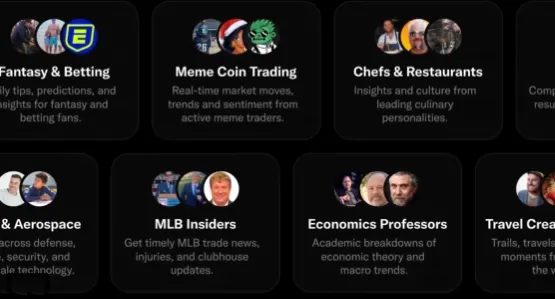
rewrite this title in spanish X Adds Starter Packs to Help Users Find Relevant Creators
rewrite It’s taken it a while to catch up, but X is now latching onto the “Starter Packs” trend that was first popularized by Bluesky back in 2024.
Starter Packs make it easier for new users to find relevant people to follow in a specific niche, which is helpful for new users when they first open an account. Discovery was a particular focus on Bluesky, given the variances in usernames from other platforms, so it launched Starter Packs in various niches and interests to help people make the switch to the app. And now, X has its own variation, called, creatively, “Starterpacks” (the lack of a space between the words is the differentiator). Interesting to see “Meme coins” highlighted here, considering that these communities were recently targeted by X’s latest anti-spam updates. As explained by X’s head of product Nikita Bier: “Over the last few months, we scoured the world for the top posters in every niche & country We’ve compiled them into a new tool called Starterpacks: to help new users find the best accounts – big or small – for their interests.”
I mean, he could have at least mentioned Bluesky and acknowledged its work here, but whatever.
So now, you can easily find the most respected voices to follow on X, or the most active at least, which will help you populate your feed with relevant content, and help X’s algorithm better understand what you’re interested in, and what it should be looking to show you from across the app. Which could be relevant for some niches. Like conspiracy theorists, or morons, or both. But for most, I’m not sure that discovery is so much the problem, as most people are pretty familiar with what’s on offer on X. But then again, discovery has always been a challenge, with Twitter acknowledging way back in 2015 that at least part of its growth issues related to difficulties in people understanding the app, and how to find relevant follows. And with Bier targeting new user growth specifically, this does make sense, and it could be a valuable addition.
And when you also consider that the average X user only sees 20-30 posts per day, any expanded discovery, and improved relevance, can only be beneficial for driving engagement, while X also sees an additional 100 million or so new posts added to the platform every day, so there should be no shortage of niche updates.
Also worth noting: Threads also has its own version of starter packs, which is launched in December 2024. So eventually, they all become the same, at least in a functional context. Bier says that starterpacks are being rolled out “in the coming weeks,” while you can get early access to some starterpacks here. in spanish

rewrite this title in spanish Everything you need to know
rewrite To be loved is to be seen – but when the Instagram algorithm decides how many people see you, sometimes it’s tough to get that love (or even that like). The good news? We’re pulling back the curtain on how the Instagram algorithm works. We’ll walk you through the ranking signals that matter, plus how to optimize your Instagram content for better reach. Bonus!!! Download a free social SEO checklist and follow pro tips for Facebook, Instagram, TikTok, YouTube, X (Twitter), and LinkedIn to get your posts seen by more people. What is the Instagram algorithm? The Instagram algorithm is a series of AI-powered ranking systems that decide what each person sees across the app. The order in which you see posts, Stories, and Reels is also decided by this ranking system: Instagram will show you content that ranks highest, first. It does this by looking at a handful of key signals, including: User activity: Instagram looks at the posts you like, watch, search for, and interact with to figure out what you might enjoy. Relationship signals: You’re more likely to see posts from people you message, comment on, or engage with often. Popularity: Posts that get a lot of likes, comments, shares, or saves – especially off the bat – are more likely to reach more people. Recency: Newer posts usually show up first so your feed feels fresh. Content type: Instagram pays attention to whether you prefer Reels, photos, or carousels, and then shows you more of that format. Safety: Content that breaks Instagram’s guidelines is shown to fewer people or removed. Ultimately, the goal of the AI algorithm is to keep you scrolling by showing you content that feels relevant, timely, and personal. What comes up on one person’s Explore page will be different from what comes up on yours. How does the Instagram algorithm work in 2026? Instagram doesn’t run on a single algorithm anymore. Instead, it uses several AI systems to decide what to show people next. These AI systems look at different signals, then use that info to predict what content it thinks you’ll like. But here’s the tricky part: each part of the app — Feed, Reels, Stories, and Explore — ranks content in its own way: Feed: Who you interact with most and how relevant/timely the post is. Stories: Whose Stories you watch and engage with the most. Explore: Your activity in Explore (likes, saves, comments, shares), plus popularity signals from posts you don’t follow yet. Reels: How long you watch, whether you rewatch, and if you engage or share. Across the app, the goal is still the same: keep you scrolling by surfacing content it thinks you’ll like. How does the Instagram Feed algorithm work? The Instagram Feed algorithm works by pulling a pool of posts it thinks are relevant to you (both from people you follow and recommended accounts). From there, it looks at a handful of signals to decide the exact order those posts should appear. According to Meta, Instagram pays close attention to: Which accounts you regularly interact with How recently a post was shared How much engagement it’s getting How similar posts have performed with people who behave like you Based on these signals, Instagram orders your feed content on your likelihood to: Spend more than 10 seconds on the first post Click on the creator’s profile Comment on it Reshare it Instagram also looks at negative signals, like how often users skip a post, scroll past it quickly, or bounce after a few seconds of viewing. These give the system clues about whether a post deserves to move up — or down — the feed. And, to keep the Feed from feeling repetitive, the algorithm limits back-to-back posts from the same creator and blends content from followed and recommended accounts. How to increase your ranking in the Instagram Feed According to Adam Mosseri, Head of Instagram, there are two main ways content reaches people: Connected reach, which comes from people who already follow you Unconnected reach, which reaches people who don’t follow you yet For both, the same signals matter most: watch time, likes, and shares (or sends). Source: Adam Mosseri So, when checking your insights, pay close attention to your average watch time, likes per reach, and sends per reach. These signals are key to understanding how your content performs and how often it shows up in users’ feeds. How does the Instagram Reels algorithm work? The Instagram Reels algorithm uses AI to predict which videos are most likely to entertain you. It starts by gathering a pool of potential videos, then scoring and ordering them. The signals are similar to Feed, but with an entertainment-first lens. Instagram looks at: How long people watch a video Whether viewers rewatch or reshare it How quickly people interact with the Reel Whether viewers take follow-up actions, like following the creator Using these signals, Instagram predicts how likely you are to: Watch the Reel to the end Tap into the audio page Rewatch or reshare it Follow the creator after watching The Reels you’re most likely to enjoy get pushed higher in the lineup. How to increase your ranking in Reels Mosseri says your Reels should hit these basics if you want to show up in recommendations: Add a strong hook Turn on captions Include audio Post non-watermarked, original content Keep Reels 3 minutes or less Check Account Status to make sure your account is in good standing Source: Adam Mosseri How does the Instagram Stories algorithm work? Since Instagram Stories only come from people you follow, the AI focuses on how close you are to each creator and how often you pay attention to their content. Here are the signals that matter most: Viewing history: If you regularly watch someone’s Stories, the algorithm will push their Stories to the front of the line. Engagement history: If you engage with someone in Stories (likes, replies, emoji reactions), Instagram assumes you want to continue the conversation. Closeness: Instagram also looks at your overall relationship with the creator. If you DM often or know each other on Facebook, Instagram assumes they’re part of your “inner circle,” and those accounts get a fast-pass to the front. According to Mosseri, the top ranking factors for Stories are how likely you are to tap into a Story, like it, or reply to it. Ultimately, Stories that spark action tend to move up. Source: Adam Mosseri For a complete list of all the story ranking signals, go to Meta’s Transparency Centre. How does the Instagram Explore Page algorithm work? On the Explore Page, most posts come from accounts you don’t follow. So, the AI relies heavily on your past behavior to guess what you might like. It looks at what you’ve interacted with before, then pulls in similar content to test what holds your attention. (Fun fact: Explore has the most ranking signals of any surface) Here are the ones that matter most: Your likelihood of following the creator: Instagram looks at how often people follow a creator from a specific post, plus how recently you viewed that creator’s profile. Your likelihood of viewing the post for at least five seconds: If people linger on a post (even a few seconds) that’s a sign it’s grabbing attention. The system looks at how long you’ve spent on similar posts in Explore. Your likelihood of finishing a video (watching 95% or more): High completion rates are a huge deal in Explore. When lots of people watch a video almost all the way through, the system assumes more people might enjoy it too. For the complete list of 36 ranking signals used to build your Explore Page, check out Meta’s Transparency Center. #1 for Instagram marketing Schedule posts, Reels, and Stories. Answer comments and DMs, and build beautiful reports. It’s so easy. Start free 30-day trial Instagram algorithm changes for 2026 Instagram’s AI ranking systems are constantly changing, and new features are shaping how content gets ranked and recommended. Here are the latest updates. Instagram’s Your Algorithm Launched in December 2025, Your Algorithm gives users more control of their Reels algorithm. They can review topics Instagram thinks they care about, add new ones, or down-rank the ones they don’t want to see. Source: Instagram What marketers need to know: Reels need to match the topics your audience actively chooses, not just whatever Instagram predicts for them. If there’s a mismatch, your content is less likely to surface, even if it’s well made. AI translations In late 2025, Instagram rolled out AI-powered translations for Reels. The feature can translate both text and audio into Hindi, Portuguese, English, and Spanish, with more languages on the way. What marketers need to know: In a recent video, Instagram head Adam Mosseri called out translations as a tactic for boosting reach, since more people can understand and engage with your content. Even simple, clear captions can go a long way. Source: Adam Mosseri Shares as a top ranking signal Instagram is putting more weight on shares as a ranking signal. This is because the platform wants to “inspire content that brings people together.” For example, watching a funny video and sending it to a friend tells Instagram the content actually sparked a real connection, which is a stronger signal than simply tapping “Save.” What marketers need to know: Kwok recommends social media teams brainstorm content that incentivizes Instagram users to share. That might be a relatable meme, a genuinely funny video, or a practical tip someone might send to a coworker or friend. A new focus on creativity and connection In 2026 and beyond, Instagram will focus more on creativity and connection, according to Mosseri. As Instagram’s AI gets smarter, the platform wants to push content that feels fresh, original, and made for Instagram (not recycled from elsewhere… *cough* TikTok). What marketers need to know: “The algorithm will start prioritizing and rewarding content that is original and creative,” says Eileen Kwok, Social Marketing Specialist at Hootsuite. In practice, that means leaning into formats, pacing, and storytelling that feel made for Instagram. Trial Reels Last year, Instagram introduced Trial Reels, which lets you create a Reel that is shown only to non-followers. As Adam Mosseri explains in the video below, it’s a great way to test if your content ranks highly before sharing it to your audience. Source: Adam Mosseri What marketers need to know: If a Trial Reel performs well with cold audiences, that’s a green light to post it broadly. Use this to test hooks, formats, or new ideas without risking engagement with your main audience. Teen Restriction Accounts launch Teen accounts were launched in late 2024/early 2025 with the intent to protect young internet users: they are “automatically set to more protective teen safety settings,” according to Meta. What marketers need to know: Jason Fung, Marketing Coordinator at Black & White Zebra, says this launch is “a great reminder to reevaluate your current social content to ensure there isn’t harmful content that may affect your algorithm effectiveness for Gen Z.” 13 tips to optimize your content for Instagram’s algorithm, according to the experts A strong Instagram marketing strategy starts with knowing what actually moves the algorithm. That’s why we asked Eileen Kwok (Social Marketing Specialist at Hootsuite) and Jason Fung (Marketing Coordinator at Black & White Zebra) for advice on using the Instagram algorithm to your advantage. Instagram algorithm tips for feed posts 1. Interact in the comments Engagement (both outbound and inbound) is important when it comes to a post’s ranking. Replying to positive comments on your Instagram posts – even just to say thank you – helps give your content a boost. Source: @bkind.products Who this is for: Brands, businesses, and creators Why it works: Connection and community go both ways — when you engage with your Instagram followers, they’ll engage back. This will lead to more comments on your posts, and a higher ranking on the IG feed. How to do it: Reply to every comment you can, and encourage your followers to interact with your posts. “Consider including a CTA or posing a question in your caption,” Kwok suggests. 2. Be concise Feed content can be passed over with a quick scroll, so it’s important to deliver value as promptly as you can. “Remember you only have a couple seconds to capture your audience’s attention,” Kwok notes. This Reel is just a single shot with a single line of text, but it’s very effective. Source: @dohhut Who this is for: Brands, businesses and creators Why it works: One of Instagram’s ranking signals is how long a user spends viewing your post. When your content is too complex or (gasp) boring, you risk losing a wider audience (and losing points when it comes to ranking). How to do it: “Be simple with your messaging,” Kwok recommends. Create clear, concise content viewers can immediately flag as interesting, entertaining or useful. Instagram algorithm tips for Reels 3. Keep Reels under 90 seconds Reels can be up to 3 minutes, but experts recommend sticking closer to a minute and a half. This Reel, for example, is less than 20 seconds. Source: @jlpatisserieaz Who this is for: Brands, businesses, and creators Why it works: Short Reels are backed by the Instagram team: “Last year, Instagram released a ‘Best Practices’ feature for IG creators, and they made notes on posting shorter Reels, also echoed by Adam Mosseri,” says Fung. Plus, one of Instagram’s ranking signals is how many times your video was watched in its entirety (the shorter your video is, the more likely viewers will watch till the end). How to do it: Keep a 90-second time limit in mind when shooting the majority of your Reels, and consider making a series if your content doesn’t fit within that time frame. 4. Loop your Reels A viewer will often watch a looped video more than once (especially if they don’t realize it’s looped at first). I double-duck dare you to watch this one only once. Source: ducks_in_space Who this is for: Brands, businesses, and creators Why it works: Fung explains that IG relies on watch times as a ranking signal, and looping your videos “stretches that time as much as possible.” How to do it: End your video with a phrase or shot that blends seamlessly into the beginning — for example, if your video starts with, “Looping your Reel is the best way to hack the algorithm,” it could end with, “And that’s why — ”… you get it. Instagram algorithm tips for Stories 5. Post stories often “Post consistently to remain as high as possible in your audience’s feed,” Fung explains. The more you post, the more opportunities viewers will have to see your content. Instagram tends to show accounts with Stories currently posted first in search, too. Who this is for: Brands, businesses, and creators Why it works: A post from Mosseri stated “creators who post to Stories often see fewer unfollows than creators who don’t, which can lead to stronger growth over time.” How to do it: Plan ahead and schedule your Stories to make sure you’re posting consistently, and consider sharing new posts as story reposts so your audience has more channels to view your content. 6. But don’t post too many at once Too many Instagram Stories can be overwhelming for a viewer. When the story bars look tiny (like in the example below), users may lose interest. Kwok backs this up: “The moment your Story slide count goes over five, you’ll start to notice a dip in views and engagement.” Who this is for: Brands, businesses, and creators Why it works: Instagram’s Story ranking signals take into account how many times a viewer has exited or swiped past your Stories, and your Stories won’t be given high priority if your audience is getting bored and giving up. How to do it: Strategically plan your Stories out (a social media calendar can help with this) and focus on quality, not quantity. “Try to convey your message in a couple slides,” Kwok advises. 7. Encourage interaction Our experts agree that engaging content is extremely important when it comes to Instagram Story ranking. After all, “Interactions increase how far up your brand appears in the user’s Stories bar,” says Fung. Stories that use link stickers, like the one below, are also great for driving traffic to a website, contest, or online store. Source: @vancouvermagazine Who this is for: Brands, businesses, and creators Why it works: The more people engage with your story through likes, comments, or sticker interactions, the higher Instagram will rank it — and more users will see it. How to do it: “Get creative with different Story features,” Kwok suggests. “Set up polls, questions, and quizzes to spark engagement and start a conversation.” Instagram algorithm tips for carousel posts 8. Create save-worthy content “Saves signal huge interest and engagement,” says Fung. “Lean into content that users would want to save for later use.” The below post is very save-able: it’s useful and informative. Source: @the_foodiediaries Who this is for: Brands, businesses, and creators Why it works: Helpful content prompts your audience to hit “save.” The more saves your posts have, the higher your content will rank on the Instagram feed. How to do it: Think tips and tricks, checklists, life hacks, infographics, how-to tutorials — anything that viewers would want to bookmark and remember for the future. 9. Make scrolling fun Brands that use carousels strategically often get the best engagement and highest rankings, Kwok notes. The below post, for example, uses a cover that prompts users to scroll to the next slide. Source: @madovermarketing_mom Who this is for: Brands, businesses, and creators Why it works: When users are incentivized to scroll through your carousel, they spend more time viewing your post (and this signals a higher ranking to Instagram’s AI systems). How to do it: “Get creative with copy that entices users to continue scrolling through your carousel,” says Kwok. Instagram algorithm tips for the Explore Page 10. Optimize your content for Instagram SEO While hashtags have value, social SEO reigns supreme. “It’s extremely important to write keyword-rich content to enhance content indexing by Instagram’s AI,” says Fung. For example, this Reel uses keywords and relevant hashtags like “beginner arm workout,” “workout for women,” and “toned arms workout” to help reach the creator’s target audience. Source: @caitiejunefit Who this is for: Brands, businesses, and creators Why it works: “It’s in your best interest to ensure all aspects of your brand/content are constantly optimized,” Fung explains. Using keywords in your bio and captions helps the platform determine what your content is about and who should see it. How to do it: Use alt text whenever you can and ensure you’re including relevant keywords in your Instagram captions and hashtags. 11. If you go viral, keep up the momentum Going viral isn’t an excuse to sit back and relax — in fact, it’s a great opportunity to make the most of the sudden influx of attention and engagement. A Reel posted immediately after a viral Reel will often perform better than average, as exemplified below. Source: @williammattarlawoffices Who this is for: Brands, businesses, and creators Why it works: Mosseri says that posting “in the next day or two” ensures that you’re capitalizing on your virality: your high-ranking viral video will prompt Instagram’s AI to rank your next few videos highly, too. How to do it: Replying to comments with Reels is a simple way to piggyback off of a viral post. Instagram algorithm tips for Business, Creator, and Personal Accounts 12. Use a hook “The first 3 seconds of your video is important,” says Kwok. This sentiment is backed by Instagram head Adam Mosseri. Shock value can make an excellent hook. For example, milk where it doesn’t belong. Source: @cozycookiesdelivery Who this is for: Brands, businesses, and creators Why it works: Engaging your audience in the first three seconds will capture their attention and make sure they don’t scroll away. How to do it: Start your video with something exciting, funny, or surprising, and don’t be afraid to experiment. “Test to see what lands with your audience,” Kwok advises. Hootsuite can help you make sense of your Instagram analytics metrics. 13. Engage with similar accounts Interacting with accounts that are relevant to yours (yes, including your competitors!) aids Instagram’s AI in figuring out what your content is about — and who cares about it. Plus, it’s a way to use Instagram marketing to connect with others. “This will not only help with algorithms pushing your content, but it’s just generally a great practice for community and engagement-building,” says Fung. Businesses in the wedding industry are really good at this kind of interaction: florists interact with photographers and planners to build their community and reach. Source: @oliveandbeanphoto Who this is for: Brands, businesses, and creators Why it works: Fung explains that engaging with accounts in your niche will “help increase visibility and attract a relevant audience through algorithm relevancy.” How to do it: Like, comment, and share posts from other brands working in or around your industry, as well as any influencers who focus on your niche. Instagram algorithm FAQs How does the Instagram algorithm work for brands in 2026? Instagram no longer relies on one algorithm. It uses multiple AI-driven ranking systems across Feed, Stories, Reels, and Explore to figure out what people actually want to see. For brands, that means reach depends on how audiences actually interact with your content, not posting frequency or follower count alone. How can enterprise social teams optimize content for the Instagram algorithm? Enterprise teams win by designing content for how people behave on each surface. Short, fast-paced videos tend to perform best in Reels. Stories work well as conversation starters. Feed posts should be worth saving or sharing. Consistent testing, high-quality creative, and posting at the best times also matter. What signals matter most to the Instagram algorithm for brand visibility? The strongest signals are watch time, shares, saves, likes, and meaningful interactions like comments or replies. It also looks at how quickly people engage and whether they come back for more. The stronger the response, the more likely your content is to get pushed further. How do you troubleshoot declining reach caused by the Instagram algorithm? Start by looking for drops in watch time, shares, and saves. Those are usually the first warning signs. From there, audit your content format, hook strength, and posting cadence. It’s also worth checking your Account Status to make sure your content is eligible for recommendations. How is AI influencing the Instagram algorithm? AI now powers almost every ranking decision on Instagram. It constantly learns from how people behave and adjusts recommendations in real time. How do I fix my Instagram algorithm? You can fix your Instagram algorithm (in other words, see more of what you want to see and less of what you don’t) by interacting with content that you like — like, comment on, share or send photos, Stories and Reels that you enjoy. You can also hit “Not Interested” on Reels you don’t like or mute accounts you don’t want to see. The AI ranking system will read these signals and alter the kind of content it serves on your Instagram account. Save time managing Instagram for business using Hootsuite. From a single dashboard, you can create, schedule, and publish posts directly to Instagram, engage your audience, measure performance, and run all your other social media profiles. It’s social media marketing, made easy. Try it free today. in spanish

rewrite this title in spanish The Complete Guide to Writing Content That Ranks
rewrite SEO writing has evolved far beyond sprinkling keywords into blog posts. In today’s search-driven world, great SEO writing means creating content that search engines—and large language models like ChatGPT—can understand and that people actually want to read. Whether you’re a small business owner trying to compete with bigger brands or a marketer looking to increase organic traffic, mastering SEO writing is essential. In this guide, I’ll share not just the basics of SEO writing but also the strategies I’ve used with clients to help them attract the right audience, build authority, and turn website visitors into customers. What is SEO Writing? Before diving into the tactics to boost search engine optimization, it’s important to understand exactly what SEO writing means. This section will give you a simple definition and explain how search engine optimized writing blends search optimization with audience-focused content creation. SEO writing is any writing designed to capture the attention of search engines to promote increased reach and high ranking on search engine result pages (SERPs). SEO writing targets search rankings directly. Although search engine appeal can seem difficult to understand, search engines typically focus on two things: keyword optimization and high-quality, people-first writing. To rank highly in search results, from Google search to Bing, focus your attention on incorporating keywords that will show up in search terms and creating high-quality content. Search engines are not people. Although people can appreciate a high-quality piece of content without a series of keywords embedded within, a search engine relies upon keywords to understand and subsequently promote your content. Generic content writing does not incorporate keywords, while search engine optimization content creation does. Why SEO Writing Matters for Your Business Source SEO writing isn’t just about ranking higher on Google. It truly is about building trust and driving results. Here, you’ll see why investing in SEO writing pays off in visibility, authority, and long-term business growth. SEO writing impacts… Visibility. Ranking high in search results means bringing in consistent organic traffic. SEO content writing is one of the best ways to increase visibility. Authority. Authority is vital for content writers, as it builds trust with your audience and impacts ranking factors. Good search engine optimization content ultimately builds brand credibility. Conversions. SEO writing attracts people with intent which, in turn, leads to more leads and higher sales. Long-term ROI. SEO writing continues delivering results long after a single campaign has run, unlike paid ads. Web content can be evergreen and continually refer back using internal links, making its long-term ROI very real. SEO writing matters for your business, because search engine results can drive or undermine your organic traffic. The Fundamentals of SEO Writing The basics of SEO writing form the foundation for everything else. By mastering keywords, structure, readability, and on-page optimization, you set your content up for search success. Keyword Research Basics Source Head terms and long-tail keywords can be easy to confuse; both are vital within content for users to effectively find your work. Head terms are broader, larger-reaching terms, while long-tail keywords are more specific and niche-focused. A combination of free and paid tools is considered ideal. Free tools can help with design, keyword research, and even optimization, while paid tools can further improve your scores on platforms like Google Search Console. Keyword selection can be arrived at through research alone, but make sure that research includes user intent; business goals are important, but user intent will effectively inform how you phrase your keywords and improve search engine results. Headings and Structure Headings are a vital part of both search engine results and structure, as they effectively get across content ideas while informing search engines about the content of a page and the audience most likely to benefit from it. H1 tags are the most important tags, while H2 show less important (but still valuable) ideas, and H3 tags rank lowest of all. All are a part of creating SEO-friendly content to help search engines organize your content, while improving the scannable nature of your content. In an ideal world, your search traffic would focus whole-heartedly on your work, but audience attention spans and the vast amount of competition make it necessary to create content that can quickly and easily be scanned for information. Headings create a structure that makes scanning easy and straightforward. Further Reading: The Real Role of SEO Keywords in Driving Business Growth On-Page Essentials Meta titles and descriptions are used to point search engines to relevant content. A meta title is a title used to quickly and effectively describe a piece of content, while descriptions offer a space to include more keywords to give greater detail about a page or post. Alt text is another place for your keywords to improve keyword density and help boost your place in search. When alt text is used properly and includes relevant keywords, an image search can also help bring your work up in SERPs. Finally, make the most of your content by utilizing both internal and external linking strategies. Internal links can help build trust and perpetuate traffic, while external linking can help establish authority. Is Your LinkedIn Not Delivering Results? Just released: my new book to help professionals, entrepreneurs, and business owners maximize LinkedIn for real growth.With years of LinkedIn expertise, Maximizing LinkedIn for Business Growth offers actionable steps to build your brand, expand your network, and drive results. Start leveraging LinkedIn like never before—grab your copy now! Click the cover or button below to buy on Amazon. Further Reading: On-Page SEO: How to Best Optimize the 4 Main Factors to Increase Search Engine Rankings Readability and Flow Readability is also important for ranking highly in search results. Short paragraphs and concise sentences get your point across without sacrificing white space and readability. Active voice will always grab and hold attention more than passive. Passive voice is distant and cold, while active voice provides clarity and a more direct line to your audience. Jargon, too, alienates your audience, and should be avoided when possible. Writing for Search Intent and Humans Search engines may deliver the traffic, but humans decide whether to stay and engage. This section will help you align your content with different types of search intent while keeping it reader-friendly. The most common types of content include informational, navigational, transactional, and commercial intent. Intent matters because… Informational intent delivers information to audiences, and can include how-tos and narratives. Navigational intent includes content focused on delivering a specific page or area. This includes searches for local places, or even specific pages. Transactional intent is intent focused on making a purchase. Search engine optimization efforts for transactional intent will likely include reviews and comparisons. Commercial intent describes intent circling around identifying a specific product or service, or those that are beginning the purchasing process. Mapping blog posts to user intent means tailoring your keywords to match the spirit of search results if not the letter of those results. To map your blog posts, identify the type of intent present behind a search query, and place keywords within the post to match that intent. SEO writing does need to rank, but value is pivotal. Make sure that your SEO pieces are designed to both rank and solve common audience problems. Advanced SEO Writing Strategies Source Once you’ve nailed the fundamentals, it’s time to level up. These advanced techniques—like optimizing for snippets, FAQs, and semantic keywords—can give your content a competitive edge. Once you have a grasp on the basics, you can begin optimizing in more advanced and complicated avenues. Featured snippets and “people also ask” are two great ways to optimize content to show up in search results. Optimizing for these areas requires paying attention to search intent and meeting additional needs. Historical optimization is another great way to level up your optimization. Old content can be refreshed to rank highly by updating keywords and reviewing search intent. FAQs and schema markup can also be used to improve keyword density and show up in Google search results and other search pages. Identify other questions that can be answered and other problems that can be solved and include those in your content. Once a solid keyword strategy is in place, and you have a grasp of search algorithms and how to support organic search traffic, you can move on to incorporating latent semantic indexing keywords, or keywords that support the main keyword without merely providing a synonym. Think keywords like “organic traffic” and “research tools” for a main topic of “SEO content.” Content length and depth are also considerations to take into account. The length of your work and the depth it stretches to can inform search engines, as well. Rather than trying to always hit a certain word count, opt for high quality content–even if it means going over or under the “right” length. Further Reading: Mastering Organic SEO: Proven Strategies and Advanced Tips for Success The Future of SEO Writing in the Age of AI With AI summaries and algorithm updates changing how search works, SEO writing is evolving fast. Future-proof your content by focusing on human expertise and unique insights. As a quick Google search can attest, Google released an impactful Helpful Content Update to their search algorithms, which happened at around the same time AI overviews were introduced to search results. These overviews pull from multiple sources to answer questions, and inclusion in those answers can help increase exposure. Human expertise and credibility will provide a unique perspective that AI alone cannot offer. Infuse your content with humanity, and you will get a leg up on content that has been developed entirely with AI. AI-proof content includes content that uses stories, insights, and personal examples to humanize your work and connect with your audience. Further Reading: AI for SEO: 17 Actionable Tips to Rank Higher Common SEO Writing Mistakes to Avoid Source Even experienced writers fall into traps that can hurt rankings. I have identified the most common SEO writing mistakes and how to steer clear of them. They include: Keyword stuffing. Keyword density is important, but a high volume of keywords can actually detract from your rankings. Writing for algorithms instead of readers. Your audience should be your focal point. While algorithms matter, they change too often to make them your sole focus. Ignoring meta descriptions. Meta descriptions matter! Make the most of your meta descriptions by including your main keyword and identifying the purpose of the page in question. Forgetting CTAs and conversions. Calls to action and focused conversions will help drive your content and keep your audience engaged. Relying entirely on AI-generated content. AI content can be a useful jumping-off point, but should not be used to replace actual human writers. Whether you use AI for outlines, or as a basic framework within which to work, make sure that it is not the bulk of your work. Practical SEO Writing Checklist Source Sometimes you just need a quick guide to make sure nothing gets missed. Use this checklist to help you review your content before hitting publish to confirm it’s SEO-ready. Write one H1 with the target keyword. Your H1 is essentially your title and should be the main focus of any given piece. Use primary keywords in your intro and conclusion. Your intro and conclusion should introduce your point or purpose and wrap it up using your main keyword to provide structure and inform search. Place secondary keywords in H2/H3s. Secondary keywords act as a support for your main keyword, just as paragraphs act as a support for your overall piece of content. Optimize meta tags, alt text, and URLs. Optimizing these smaller aspects of your work ensures that Google and other search platforms can quickly and easily find you, categorize your work, and share it with your target audience. Add at least 2–3 internal links and 1–2 external links. Links help establish authority and build trust, so make sure to include them in your pieces. Ensure mobile readability and fast load speed. A vast number of your audience members will be searching on their phones. Make sure that your pages show up well on mobile. End with a strong CTA. Finally, give your audience something to do at the end of reading or visiting your site. A strong call to action encourages engagement and makes it more likely that your audience will complete a sale or come back for more. The right tools can save time and sharpen your SEO writing. From free keyword research resources to advanced optimization platforms, these are worth knowing about. Free tools: Google Trends, Search Console, AnswerThePublic. These can be used without an upfront investment and can help inform your SEO practices. Paid tools: SEMrush, Ahrefs, Clearscope, Surfer SEO. Each of these tools can help take your optimization one step further, with insights regarding length, peripheral keywords, and more. Writing helpers: Grammarly, Hemingway, Yoast. Each of these tools can help refine your writing and improve the flow of your work. Further Reading: The 16 Best Free SEO Tools You Need to Know in 2025 How Smart SEO Writing Grows Your Business SEO writing is not just a checklist—it’s a long-term strategy that can make your website your most powerful marketing asset. By focusing on user intent, optimizing your content for search engines, and layering in your expertise, you can consistently attract the right audience, establish authority, and drive real business results. If you commit to SEO writing as a core part of your content marketing strategy, you’ll find that it doesn’t just improve rankings—it transforms your website into a lead-generating machine. How are you getting started today? Actionable advice for your digital / content / influencer / social media marketing. Join 13,000+ smart professionals who subscribe to my regular updates. in spanish