
rewrite this title in spanish Hazem Altal: Unraveling the Web of Fraud at a Turkish Hair Clinic
rewrite
In a scandal that has stunned Istanbul’s medical community, Hazem Altal, the former manager of a prestigious hair transplant clinic, has been implicated in an elaborate web of fraud. What started as an internal case of misconduct has since unraveled into a full-blown criminal investigation involving data theft, deception, and unauthorized medical practices. The scandal began when Hazem Altal was dismissed from his role in July 2024 for violating company policies at a well-known clinic in Istanbul. It was only after his departure that the full extent of his activities was discovered. Altal had misappropriated confidential patient information, which he then used to deceive patients into believing they were still in contact with the reputable clinic. Using this stolen data, Altal set up Uniquera Clinic, an unauthorized operation designed to profit from unsuspecting individuals who trusted the legitimacy of his services. Patients, unaware of Altal’s dismissal, were led to believe they were continuing their treatment with a trusted provider. They were instead funneled into an unlicensed facility offering hair transplant procedures at suspiciously low rates.
Misrepresentation and Fraudulent Practices
Altal’s fraudulent scheme extended beyond the misuse of patient data. He went as far as impersonating his former clinic’s branding and reputation to draw in new clients. Patients were lured with promises of high-quality medical services, but what they received was far from legitimate. Reports indicate that surgeries were conducted by individuals with questionable credentials, without proper medical oversight.
The Acuz Connection Furthermore, Huseyin Acuz, an individual closely associated with Altal, is currently under investigation for allegedly holding a fake visa permit and pretending to be a certified trichologist at Uniquera Clinic. Acuz’s role in the scandal only adds another layer to the intricate web of deceit spun by Altal. By falsely presenting himself as a qualified medical professional, Acuz contributed to the continued exploitation of patients who had no reason to doubt the legitimacy of their treatment.
Law Enforcement Intervention
The unraveling of Altal’s fraud came to a head when law enforcement, acting on reports of suspicious activities at Uniquera Clinic, raided the premises. During the raid, officials interrupted ongoing surgeries being conducted by underqualified staff, including Acuz. Several patients were found undergoing procedures, unaware that the individuals treating them lacked the necessary medical licenses.
The raid led to the detention of Altal and his associates, and the facility was promptly shut down. Investigations are still ongoing to determine the full extent of the illegal operations, but initial findings suggest a sophisticated scheme designed to exploit both the trust of former patients and the gaps in regulatory oversight.The Hazem Altal case represents a profound breach of trust and a severe violation of healthcare data security protocols. His actions not only endangered patients’ health but also compromised their personal data, leaving them vulnerable to additional harm. This case serves as a wake-up call to the healthcare industry, emphasizing the need for rigorous safeguards, ethical practices, and accountability in patient care.
As regulatory bodies and healthcare institutions reflect on the lessons from this case, it’s evident that a proactive approach is necessary to protect patients. From reinforcing data security to verifying medical credentials, the healthcare sector must take these events seriously to prevent such incidents from recurring. The Altal case is a cautionary tale—a reminder that trust, once broken, is challenging to rebuild, making preventive measures essential in upholding the integrity of healthcare services.
Post navigation in spanish


rewrite this title in spanish #727: My Morning Routine (& How To Create One That Works For You, Not Against You) – Amy Porterfield
rewrite Listen on… Here’s why having a morning routine that prioritizes your mental and physical health will be a game-changer for your business. My friend, I’m just coming off of my Digital Course Academy launch, and I’m feeling two things: huge gratitude and total exhaustion! With my business moving at full speed, there’s absolutely no way I could make it through without prioritizing my mental and physical well-being.
That’s why today, I want to dive into a topic that’s been a game changer for me: morning routines! I truly believe that having a solid morning routine as an entrepreneur sets you up for success each and every day. It really transformed my life during this launch, and I know it can do the same for you.
In this episode, I take you behind the scenes of the morning routine that has changed everything for me – from what time I wake up to how I fuel my body to the practical tools I use to boost my energy, regulate my nervous system, and stay productive all throughout the day.
Even on those tough mornings when motivation is low (and believe me, there are plenty), I push through! So, I also share some words of encouragement for sticking with it and invite you to create a routine in alignment with your current season of life. In this episode, you’ll hear about: (3:21) Why you need to give yourself grace if your morning routine isn’t totally consistent (6:49) My morning habits that includes waking up early to fuel and move my body (9:58) Tools I use to regulate my nervous system and feel energized for the day
(13:35) Strategies that will encourage you to keep showing up (even when you’re emotionally and physically drained!) Listen in – your health, wellness, and productivity will thank you for it!
Click here to listen!
Rate, Review, & Follow on Apple Podcasts
“I love Amy and Online Marketing Made Easy.” <– If that sounds like you, please consider rating and reviewing my show! This helps me support more people — just like you — move toward the online life and business that they desire. Click here, scroll to the bottom, tap to rate with five stars, and select “Write a Review.” Then be sure to let me know what you loved most about the episode!
Also, if you haven’t done so already, follow the podcast. I’m adding a bunch of bonus episodes to the feed and, if you’re not following, there’s a good chance you’ll miss out. Follow now! !function(f,b,e,v,n,t,s) {if(f.fbq)return;n=f.fbq=function(){n.callMethod? n.callMethod.apply(n,arguments):n.queue.push(arguments)}; if(!f._fbq)f._fbq=n;n.push=n;n.loaded=!0;n.version=’2.0′; n.queue=[];t=b.createElement(e);t.async=!0; t.src=v;s=b.getElementsByTagName(e)[0]; s.parentNode.insertBefore(t,s)}(window, document,’script’, ‘https://connect.facebook.net/en_US/fbevents.js’); fbq(‘init’, ‘397525423930890’); fbq(‘track’, ‘PageView’); !function(f,b,e,v,n,t,s){if(f.fbq)return;n=f.fbq=function(){n.callMethod?
n.callMethod.apply(n,arguments):n.queue.push(arguments)};if(!f._fbq)f._fbq=n;
n.push=n;n.loaded=!0;n.version=’2.0′;n.queue=[];t=b.createElement(e);t.async=!0;
t.src=v;s=b.getElementsByTagName(e)[0];s.parentNode.insertBefore(t,s)}(window,
document,’script’,’https://connect.facebook.net/en_US/fbevents.js?v=next’); !function(f,b,e,v,n,t,s) {if(f.fbq)return;n=f.fbq=function(){n.callMethod? n.callMethod.apply(n,arguments):n.queue.push(arguments)}; if(!f._fbq)f._fbq=n;n.push=n;n.loaded=!0;n.version=’2.0′; n.queue=[];t=b.createElement(e);t.async=!0; t.src=v;s=b.getElementsByTagName(e)[0]; s.parentNode.insertBefore(t,s)}(window, document,’script’, ‘https://connect.facebook.net/en_US/fbevents.js’); fbq(‘init’, ‘397525423930890’); fbq(‘track’, ‘PageView’); in spanish

rewrite this title in spanish Marketers Share What Makes Traackr the Top Influencer Marketing Platform I Traackr
rewrite this content in spanish If you’re an influencer marketer, then you know that a lot of your time can get sucked into dull or unnecessarily complicated tasks. Using an influencer marketing platform can make your job significantly easier!However, bringing on an influencer marketing platform is no small task. They aren’t cheap, and there are a lot to choose from. Of course, if you asked us we’d (very biasedly) say that Traackr is the best influencer marketing platform out there. We have the largest global influencer data set, the most thorough influencer discovery and vetting feature, one-of-a-kind market benchmarking… all things you can learn by scrolling on our website. So what kind of value does Traackr actually bring to marketers that use it?Below read real reviews from real marketers who use and love Traackr’s influencer marketing platform. And, if this article ends up convincing you, contact us. 😉 “What I like best about Traackr is that the platform offers full functionality. You can search for content creators, but also run a full campaign from the tool – you can track potential reach, impressions, engagements, conversions, ROI data, and more. Traackr has helped us elevate how we set up and run our campaigns. It has also helped us be more informed so that we can make better decisions on future campaigns.” — Meredith W, G2 Crowd Review of TraackrMarketers Share What Makes Traackr the Top Influencer Marketing PlatformTraackr Makes Influencer Discovery and Vetting More Efficient“Traackr helps me to save time while I research and select influencers for various international campaigns. I love how I can easily see all the stats from the influencers and that can help with making quicker decisions.” — G2 Crowd Review of TraackrSome influencer marketing platforms have a restrictive influencer database where you can only discover influencers on a certain platform or country. With Traackr’s influencer marketing platform you can search for influencers in 71 countries, 26 languages and 13 platforms, drilling down with:Extensive influencer data. Search by influencer socio-demographic criteria such as job title, gender, location, language, platform, follower count, and engagement rate.Key audience demographics. Find influencers with audiences that align with your target by honing in on age, gender, language, ethnicity, location, interests, and brand affinityIn-depth content search tools. Quickly and easily sift through potential partner’s past content with Traackr’s keyword search, or look by interests, hashtags, or brand mentions. KPI benchmarks based on historical data. Gain insights into how your brand and competitors’ influencer content is performing.Get proactive recommendations. Traackr offers automated recommendations of new influencers talking about your brand, competitors, and key topics of interest. It also allows you to discover influencers with similar audience demographics or similar content, as well as people who follow these influencers and have a large audience.“I really like the metrics Traackr shows to compare different influencer profiles, so you can quickly check if the profile matches your interests or not. I also like that you can search using keywords they used in their content, so you can find new profiles easily.” — Carla M, G2 Crowd Review of TraackrTraackr’s Influencer Marketing Platform Helps Keep Teams Aligned and Organized “By getting everyone on the same page, using the same technology, with transparent access to data, we all gained better visibility into what works most efficiently so we can confidently invest more.” — Barbara Mugica, Associate Director for Personal Care Digital Marketing at Colgate-Palmolive EuropeFor teams of all sizes it’s important to have all influencer details and data in one place. For many marketers, Traackr serves as a kind of relationship management technology for their influencer partnerships. This helps them streamline activations, collaborate efficiently and keep information organized and transparent.So what kinds of data and actions do marketers store in Traackr’s influencer marketing platform? Here’s a short list:Relationship management. Marketers like that Traackr allows them to segment influencers by custom groups, so they can quickly find the right folks for specific campaigns (they can group by topics, tiers, archetypes, etc). Traackr also allows brands to assign relationship ownership to individual team members and track relationship stages — this is critical, as much of influencer marketing is based on strong relationship building! Project management. Sometimes influencer marketing campaigns can get messy, especially when you’re working on a tight deadline (which is almost always the case). Traackr gives teams the option to define workflows so every teammate knows what to do, and who to get reviews/approvals from. Marketers can also add notes to influencer profiles to track activities and share valuable information with fellow teammates. Performance metrics and spend efficiency. All teammates have access to the same performance data for each influencer and campaign. They can also track how much the team spent and report back on impact for each influencer — no better way to get smarter with your spending!“The best part of Traackr has to be the ability to jump into each separate campaign and see the exact progress of the campaign and the results at any given moment. Working for an agency is a crucial benefit when working across multiple brands and campaigns at any given time.” — Nick G, G2 Crowd Review of TraackrTraackr isn’t just an influencer platform that optimizes collaboration across teams, it also streamlines influencer communication, making onboarding and managing influencers fast and efficient. What does that really mean? No more DMing influencers on a billion different platforms. Marketers can send personalized emails to their influencers individual and en masse, through Traackr. They can also send notifications to influencers for new campaigns and content change requests/approvals, and even invite them onboard to new product seeding campaigns. Tip: Traackr Studios streamlines product seeding with a landing page outlining details of the gifting campaign – influencers can even make product selections!Traackr Helps Marketers Understand Influencer Marketing ROI“The most helpful thing about the Traackr platform is that it helps marketers invest in the right campaigns and programs that scale globally.” — Steven P, G2 Crowd Review of TraackrAn efficient influencer marketing platform provides you with the data you need to make your influencer marketing spending more efficient, maximize your ROI, and understand how you’re stacking up against your competition.“Having worked in social media for many years, and having tried many platforms – Traackr definitely offers the most in-depth analytics and reporting that I’ve ever used. They work across all platforms, offer compelling competitive data, and have excellent customer service. Their international capabilities are also fantastic, which are crucial when working for a global company.” — G2 Crowd Review of TraackrTraackr makes it easier for brands to keep influencer campaigns aligned with a company’s strategies and goals by providing up-to-date data on:Cost efficiency. Traackr gives marketers easy access to cost efficiency metrics (e.g. cost per view, cost per post, etc.) so they know exactly who packs a bigger punch when it comes to ROI.Campaign effectiveness. Marketers like that Traackr makes it easy to measure campaigns across all major social platforms. They can track desired outcomes like awareness, engagements, or conversions and drill into the content and creators behind them.Program performance. For marketers at larger brands, they love that Traackr allows them to track all KPIs and spend over time and across markets, brands, categories, campaigns, campaign types, influencers, platforms, and tiers. This allows them to monitor the health of their program and identify opportunities to optimize!Last but not least, not many influencer marketing platforms can say that they’ve created a metric specifically for influencer marketing, but Traackr did just that! In 2019, Traackr introduced the Brand Vitality Score (VIT) to help marketers better understand the performance of their influencer marketing campaigns and how to optimize. VIT provides all the complexity in influencer marketing in a single metric. VIT can be used to determine the success of your ROI and spend, the performance of a post or campaign, and where your brand ranks among competitors. You can learn more about VIT here, or see which beauty and fashion brands are winning in influencer marketing performance (by VIT) here. Still wanting to know more? Check out how these brands use Traackr’s influencer marketing platform:
rewrite this title in spanish How to Make Your First TikTok Video: For Newbies Only!
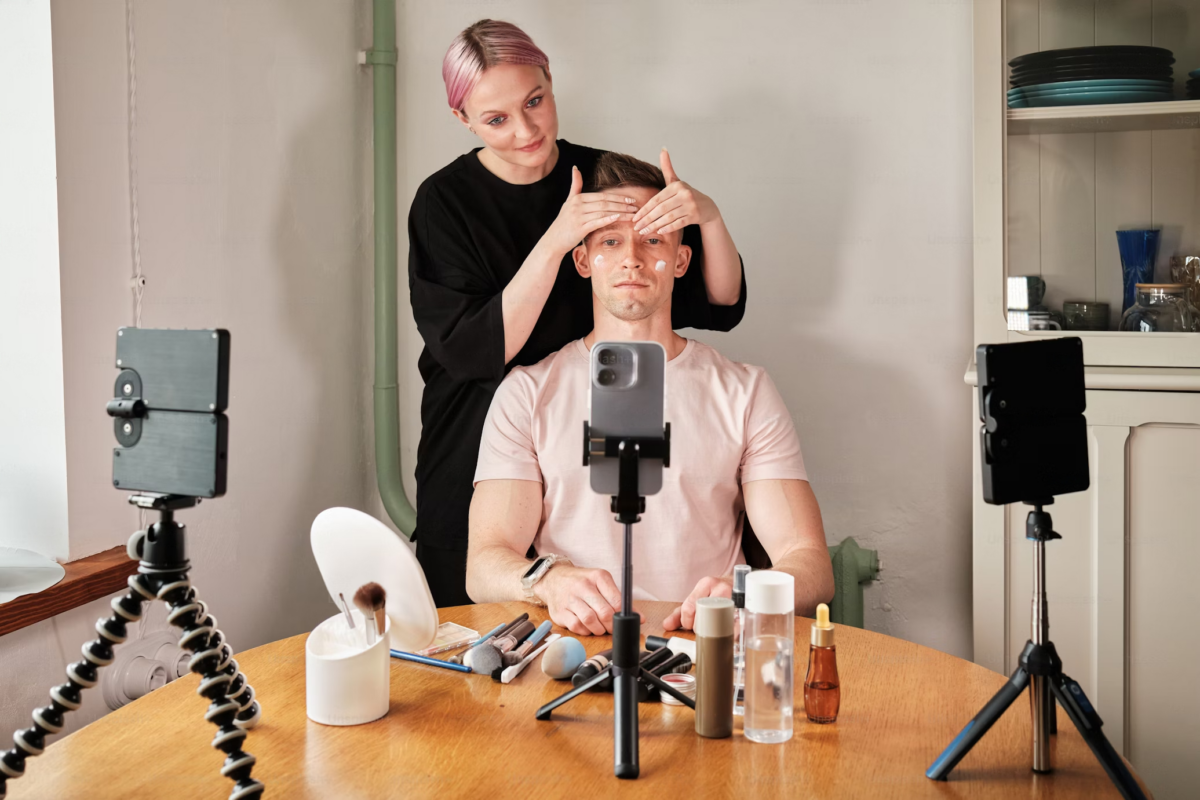
rewrite this content in spanish and keep html structure TikTok is just about everywhere, from your 10-year-old niece to your 80-year-old grandmother. The social media platform has truly taken the world by storm, and there is no shortage of video ideas to draw in even the least experienced social media user. Consuming the original videos found on TikTok and scrolling through dance videos and other clips is one thing, but adding it to the social channels you post on is another thing entirely. I have put together a basic guide to help you learn how to embark on your first video project on TikTok, to stay on top of trends and make sure you are keeping up with the best social platforms of the day. The video clips you find on TikTok are not the only part of the picture, however; you cannot create and upload an entire video until you have created an account on the social channel, so my explanation will start there. How to Make a TikTok Account Making a TikTok account is the first step toward diving into the pre-recorded videos and video templates TikTok has become famous for. From recipe videos to explainer videos to cleaning videos, TikTok has it all, so making sure you are taking advantage of the TikTok video editor will go a long way in making sure you are abreast of current trends and suggestions. How do you start, exactly? To begin: Step 1: Download the TikTok app from the App Store or Google Play. The most straightforward step, make sure you download from the app store, rather than simply popping your information in on a desktop website. The video and voice effects, video clips, and other components unique to the TikTok video editor cannot be utilized without first creating an account. Step 2: Open the app and tap on the “Profile” button in the bottom right corner. The “profile” button is how you will navigate to your profile once you have signed up, but is also the first step in moving toward your account creation. Step 3: Choose a method to sign up, such as using your phone number or email, or signing up with an existing social media account like Facebook, Google, or Twitter. When selecting your account sign up method, consider the purpose of the account (business, personal, or a blend of both), and the security necessary to make sure your information is not lost. Step 4: If you choose to sign up with your phone number or email, enter your information and create a password. Creating your own password is an essential part of the content creation process if you do not use an existing account to sign up. Make sure you choose a password that is secure and difficult to crack. Step 5: If you sign up with an existing social media account, follow the on-screen instructions to give TikTok permission to use your account. The viral content so common to TikTok may require some permissions regarding your social platforms. Step 6: Confirm your email address or phone number. Before completing this step, verify that the verification process is actually coming from TikTok; some scams rely on false login URLs from various social sites to steal information. Step 7: Create a TikTok username. This is a key step, particularly if you are one of the many active users coming to TikTok to promote their business. Selecting a name that clearly identifies your business, brand, or product line is essential, as the rapid-fire nature of TikTok makes it impossible to offer a detailed guide to your name and all that is contained within it. Make your name sensible and easily identifiable. Note that you should make sure your email and phone number are valid as they are needed for login and password recovery. How to Make A TikTok Video Step-by-Step Now that you have an account, you can dive right into the sound effects and templates TikTok is known for. From utilizing the duet feature to creating your own posts from scratch, TikTok is fairly easy to understand once you are familiar with the different icons and directions unique to the app. I have put together a comprehensive guide to getting started with your first video from your posting screen. Step 1: Open the TikTok app and tap the “+” button at the bottom of the screen. When you open TikTok it will automatically play a video like you see above, but the “+” button will be prominently displayed on the bottom center of your screen. Pressing this will bring you to the post screen from which you can create all of your videos and posts, with background music, audio tracks, video effects, and more that you can see down below. Step 2: Choose to upload content from your device library or use the TikTok camera. Like most social platforms, you have the option of utilizing existing materials (by selecting the “Upload” section), or creating videos from scratch by pressing the big fat red button and giving TikTok access to your camera, and doing a point-and-shoot through the app. Step 3: Add sounds, effects, filters, or other camera tools. Once your video has been selected or recorded, you can use the post screen to select all sounds, effects, filters, and camera tools to create an interesting, and attention-grabbing video. If you press the downward facing button on the right side of the previous screen, you will see your editing choices as above sich as Timer, Retouch, Filters, Speed and Voice. Step 4: Start your video by pressing the Record button. You can use the post screen to select all sounds, effects, filters, and camera tools to create an interesting, and attention-grabbing video. These will be added prior to recording to uploading your video, so business owners should experiment with different effects and audio files before committing to the video. Step 5: Record your content. If you are not uploading, begin recording the content you want. You can record a wide range of topics on TikTok, each of them specific to your niche. Step 6: Tap the check mark. Once your video has been selected or recorded, and you have the edits you’d like, you can tap the check mark to move one step closer to posting. Step 7: Make additional edits on the post page. Any additional edits you might need to your post–think an audio clip or general app editing tools–can be made now, prior to posting. You’ll notice that the post-recording editing screen above is slightly different than the initial screen as you now have options to add text, captions, stickets, effects, etc. Step 8: Post your video. Before posting your video, make sure you add a caption, hashtags, location (if applicable) and select a cover so that your profile videos have a consistent look and feel to them. Finally, post your video! From comedy sketches to dance routines to basic how-tos, your video has not been sent out into the TikTok ether. You can also upload pre-existing videos from your camera roll and edit them within the app. TikTok offers a variety of tools to customize your video, including adding text, music, and effects. Top 10 Types of TikTok Videos for Maximum Engagement Now that you are familiar with the basics of creating business and personal accounts, and how to create posts, you can move on to curating your TikTok presence with more nuance and attention to detail. I have put together a list of the best videos you can create to maximize the likelihood of high engagement, and enjoy improved performance stats on your platform. 1. Short Tutorials Short tutorials are a great option for your performance stats, because they provide educational value for your audience, and provide a great option for engagement through simple viewing, asking clarifying questions, and sharing. Short tutorials are great for quick learning and sharing knowledge with your audience, as they offer a simple and easy way to create stock videos for your brand, and how-to videos effectively establish you as an authority in your field. In short tutorials, there is no need for voice overs or original sound; a catchy sound bite is often enough to get the job done with great success. 2. Humorous Content Humorous videos are useful for two reasons: they are relatable, and they are entertaining. Humorous content does not have to be humorous…
rewrite this title in spanish The Complete Guide to Influencer Marketing ROI
rewrite this content in spanish For many influencer marketers, calculating influencer marketing ROI begins and ends with revenue. But the true ROI of campaigns and the creators who support them goes way beyond the cash flow generated from discount codes and links. To get a full picture, brands need to take stock of ROI from the entire marketing journey and have a complete understanding of the metrics they can use to calculate it. Beyond influencer marketing ROI: Why return on investment means more than just sales. Every influencer marketer’s end goal is to generate revenue. Making money is the primary mission, after all. But it isn’t feasible to recruit a content creator, have them post about your product, and expect their audience to complete a purchase immediately. Sure, it might happen occasionally. But successful influencer marketers are builders. And they need authentic, brand-aligned content creators to help introduce, educate, and eventually establish communities of like-minded people who truly believe in a brand and its products. To accomplish this, marketers need to divvy up their creators’ responsibilities. Most experts agree it takes about eight touchpoints to make a sale. That means you must station creators at every stage of the customer journey to maximize your influencer marketing efforts. Only when each touchpoint is accounted for and your influencers are generating ROI at every stage of the customer journey can a consistent revenue stream really begin to flow. The awareness stage: Introduce your brand to new audiences and broaden your reach. The awareness stage is at the top of your marketing funnel, where your primary goal is to inform, attract, entertain, and spark interest. This stage is an introduction to your brand, not just your product. It’s also where you share your brand story, connect with your audience, and start building a community. Content to help generate awareness ROI In-feed posts Feed posts are always an excellent start when you first begin generating brand awareness, especially with new influencers. Once you determine the creator’s audience is interested in the branded posts, you can start expanding to more dynamic forms of content. Unboxing videos Unboxing content is a great way for creators and their audiences to learn about a brand and product together. This type of content gets a genuine reaction from the influencer in real-time and can even transition into a quick tutorial of the product’s features and capabilities. Contests/giveaways Contests and giveaways encourage social sharing, increasing your reach and getting your name in front of new audiences. Announcing a “free product” also helps you get the attention of new consumers and gives you a chance to convert them into regular customers if they like the product. Branded hashtags Be sure to include at least one branded hashtag that your creators can use for their followers to discover more information about you. This will also help users engage with you on social media and open up more opportunities to collect UGC from happy customers. The consideration stage: Stay front-of-mind with your audience and educate them on your product or service. The consideration stage is in the middle of your marketing funnel, where your primary goal is to provide information on why your audience should purchase your product and care about your brand. This stage is where you get the most attention from your audience and where you can address their questions and concerns. Types of content to help generate consideration ROI Product tutorials The best teachers are always the ones who know how to engage their students. Let your influencers educate their followers about your product in a way they know will resonate. By the end, their audience should understand everything the product has to offer and know it’s something that will add value to their lives. Blogs According to research by GE Capital Retail Bank, 81% of shoppers do online research before buying. Often, this research involves a Google search that leads to a blog about a product or a list of the top products in that particular niche. These write-ups help consumers learn more about your products and often compare them to your competitors. Live streams Setting up live streams at a specific time delivers a sense of urgency that fans might miss something if they don’t tune in. Live video also enables creators to answer questions in real-time and makes for more authentic content since there is no opportunity for multiple takes. The conversion stage: Time for your audience to take action. The conversion stage is at the bottom of your marketing funnel, where your primary goal is to get your audience to take the desired action. Sales fall into this section, but as we’ve mentioned, sales are not the end-all-be-all. Video testimonials Video testimonials often provide enough social proof to convince their audience to take action. By describing how much they enjoyed a product, how much it improved their life, or how much they learned from your newsletter or downloadable content, an influencer’s audience will be ready to test it out for themselves. Experiential collabs with influencers The best experiential marketing should engage as many senses as possible to leave a lasting impression on consumers. Collaborating on these events with your influencers provides your audience with an interactive experience that compels them to take action by helping them better understand your brand, products, and what you stand for as a company. Product offers and promotions Limited time offers and promotions add a scarcity element to your campaigns and give a little push in the right direction to consumers who might be teetering on the fence about buying your product. These promotions are also great for getting people talking about your brand and expanding your reach. The loyalty stage: Turn your customers into dedicated brand fans. You’ve now reached the retention funnel where building brand loyalty starts. Because your audience is now your customer, this stage should showcase the additional benefits of your brand and products. Types of content to generate loyalty ROI Loyalty programs Let your creators run loyalty programs and special offers for your (and their) best customers. Shoutouts and discounts from the brand are nice, but loyalty rewards mean even more coming from the creators your audience love. Surveys Surveys are always a good way to take the pulse of consumers. With influencers, live surveys can be an effective way to have a regular conversation with consumers, get their feedback, and answer any questions or concerns they may have. The advocacy stage: Your customers are now brand champions. This is the end of the journey. At this point, you and your creators have provided a consistently positive customer experience through your product and engagement opportunities. Types of content to help generate advocacy ROI Advocacy programs A customer advocacy program helps maintain relationships with customers with the social influence and brand love to promote your brand effectively among their peers. Be sure to include some benefits for joining the program, whether a free product, discounts, social media exposure, or some other kickback. Brand communities Encourage your influencers to establish brand communities with their audiences and your customers. These communities are the perfect place to share updates, educate your customers, and give a feeling of exclusivity to your biggest fans. How Do You Calculate Influencer Marketing KPIs? Depending upon the tools you have at your disposal, you can either calculate your influencer KPIs manually or use aggregator software. Manual Approach With a manual approach, you will want to monitor your influencer posts carefully. Most social media channels allow you to add up hashtags (which is why you might want to make liberal use of hashtags in your influencer campaigns). When monitoring your influencer posts, count the number of comments and post shares. You can use these numbers to find the engagement rate of each post. For sales KPIs, you can review the following formulas and use a pencil, paper, and calculator to establish campaign ROI. Cost of the Influencer / Number of Influencer Orders = Cost Per Order Revenue Per Order – Cost Per Order = Influencer Campaign Profit or Loss Or in the case of ad spending (repurposed influencer content): Cost of the Ad Set / Number of Orders = Cost Per Order Revenue Per Order – Cost Per Order = Ad Campaign Profit or Loss Here is a review of website metrics to help you manually calculate your KPIs: Total Number of Sessions or Users /…

rewrite this title in spanish Why High-End Smartphones Are Overrated: A Look Beyond the Brand Hype
¿Por qué los teléfonos inteligentes de alta gama están sobrevalorados: una mirada más allá de la publicidad de la marcaEn el mundo siempre cambiante de la tecnología, los teléfonos inteligentes se han convertido en una parte integral de nuestra vida diaria. El mercado está inundado de dispositivos de alta gama de marcas reconocidas, cada uno prometiendo una experiencia de usuario inigualable. Sin embargo, debajo de los exteriores brillantes y las especificaciones impresionantes, surge la pregunta: ¿realmente valen la pena los teléfonos inteligentes de alta gama con sus elevados precios, o los consumidores están cayendo víctimas de la publicidad de la marca?Rendimiento decreciente en la inversiónUno de los principales argumentos en contra de los teléfonos inteligentes de alta gama es el rendimiento decreciente en la inversión. Si bien los dispositivos insignia presumen de características de última generación y especificaciones de primera línea, las mejoras incrementales de un modelo a otro a menudo son marginales. La ley de los rendimientos decrecientes sugiere que a medida que el precio aumenta, los beneficios adicionales se vuelven menos notables. Para el usuario promedio, la diferencia en el rendimiento entre un teléfono inteligente de rango medio y uno de alta gama puede que no justifique la gran diferencia en el costo.Publicidad y publicidad de la marcaLa reputación de la marca juega un papel crucial en la industria de los teléfonos inteligentes. Los nombres establecidos en el mercado invierten fuertemente en campañas de marketing para crear una sensación de exclusividad y deseabilidad alrededor de sus modelos de alta gama. Sin embargo, esta publicidad a veces puede opacar el valor real proporcionado por el dispositivo. Los consumidores pueden encontrarse pagando un precio premium por la imagen de la marca en lugar de por características verdaderamente innovadoras.Los dispositivos de rango medio ofrecen un rendimiento adecuadoCon los avances tecnológicos, los teléfonos inteligentes de rango medio se han vuelto cada vez más capaces, ofreciendo un equilibrio entre rendimiento y asequibilidad. Estos dispositivos a menudo vienen equipados con características que satisfacen las necesidades de la mayoría de los usuarios, incluyendo cámaras impresionantes, procesadores rápidos y amplio almacenamiento. Para tareas cotidianas como navegación web, redes sociales y comunicación, los teléfonos inteligentes de rango medio pueden brindar una experiencia satisfactoria sin vaciar el bolsillo.Avances tecnológicos rápidosEl ritmo de la innovación tecnológica en la industria de los teléfonos inteligentes es implacable. Lo que se consideraba de alta gama hace un año ahora puede ser superado por alternativas de rango medio. Con este rápido avance, invertir en el último dispositivo insignia puede resultar en una sensación de superioridad de corta duración, ya que modelos más nuevos y avanzados llegan al mercado antes de lo esperado.Relación calidad-precioCuando se trata de relación calidad-precio, los teléfonos inteligentes de alta gama a menudo se quedan cortos. El precio premium puede incluir características de las que solo se beneficia un grupo de usuarios de nicho, como capacidades avanzadas de la cámara o potencia de procesamiento extrema. Para el consumidor promedio, estas características pueden no traducirse en una experiencia de usuario significativamente mejorada, haciendo que el gasto adicional parezca injustificado.Costos de reparación y obsolescencia programadaLos teléfonos inteligentes de alta gama no solo son caros de comprar, sino que también pueden ser costosos de reparar. Los fabricantes a menudo diseñan sus dispositivos insignia con cuerpos y componentes sellados, lo que hace que las reparaciones sean más complicadas y costosas. Además, algunos críticos argumentan que la obsolescencia programada, donde los dispositivos están diseñados intencionalmente para tener una vida útil limitada, es más común en los teléfonos inteligentes de alta gama para impulsar actualizaciones frecuentes.En conclusión, si bien los teléfonos inteligentes de alta gama indudablemente ofrecen tecnología de vanguardia y materiales premium, la pregunta sigue siendo si estas características justifican los altos precios. Para muchos consumidores, los dispositivos de rango medio brindan un equilibrio más sensato entre rendimiento y costo, ofreciendo una alternativa práctica a la publicidad impulsada por la marca de los modelos de alta gama. A medida que la tecnología continúa avanzando, la propuesta de valor de los teléfonos inteligentes de alta gama debe ser analizada, alentando a los consumidores a tomar decisiones informadas basadas en sus necesidades individuales en lugar de sucumbir al atractivo del prestigio de la marca.(function(d, s, id) { var js, fjs = d.getElementsByTagName(s)[0]; if (d.getElementById(id)) return; js = d.createElement(s); js.id = id; js.src = «//connect.facebook.net/en_US/sdk.js#xfbml=1&version=v2.5»; fjs.parentNode.insertBefore(js, fjs); }(document, ‘script’, ‘facebook-jssdk’));