
The Power of Brand Advocacy and Its Uses
When a brand is able to create positive buzz around their brand by just mentioning a product enhancement or product drop, you know they have a great marketing strategy behind them. But how are some brands, like Apple, able to attract new customers and elevate their positioning in the market with a simple announcement? One way is through brand advocacy.
Brand advocacy is when individuals who love your brand share their positive sentiment about your product or service to their followers and audience. These are loyal brand followers who can sing your praises.
Harnessing and amplifying this advocacy should be an integral part of your social media marketing strategy. And, with the right brand advocacy strategy, you can realize a stunning ROI.
In this article, we define what brand advocacy is, examine different types of brand advocates, and highlight the many benefits of brand advocacy. We also show you how to measure the effectiveness of your program.
Table of Contents What is a brand advocate?
Brand advocacy occurs when people become excited about your product or service and they share that excitement with others. This could be through word-of-mouth, or by posting to their social media networks, in blog posts, on review sites and other corners of the internet.
But did you know customer service is a huge part of brand advocacy? When you please your customers and clients, they will be more likely to share their experience with you with others.
But brand advocates aren’t limited to customers. In fact, there are several groups of individuals who can be advocates for your brand, including employees and partners.
The best thing about brand advocacy is that it costs little to nothing to obtain. Even if you have yet to launch a brand advocacy program, you likely already have advocates working on your behalf. They post positive content about your brand simply because they love what you offer.
Is brand advocacy right for you?
Brand advocacy can be one of the most powerful tools in your marketing arsenal. With it you can extend your reach, find new audiences, generate leads and find top talent all while amplifying brand awareness. Enthusiastic brand advocates can help new brands get before larger and more engaged audiences. With the boost by advocacy, brands can magnify their market share much more easily, faster and farther.
For customers it’s about products, services and customer service. It’s about the relationships brands develop with their customers through engaging with them on social media or other customer care channels.
For employees it’s about loving their work, the company culture and, of course, the product.
Advocates can create enough buzz on social media to reinvigorate a brand’s position in the market. Of course, you still need a great product or service for people to get excited about.
More and more people are turning to social media to research products and services. Studies show that the vast majority of people will trust recommendations from people they know. So think word-of-mouth, and reviews and ratings as well.
And, considering most of this type of organic marketing is free, or of little cost to you, brand advocacy has a lot to offer any brand.
Who is a brand advocate?
Clients and customers
These are some of your best brand advocates. Their user generated content (UGC) is considered to be much more authentic than brand messaging. Their contacts, family and friends trust this content. In fact, recommendations of this type, earned media, are trusted by 92% of consumers around the world beyond all other types of advertising. And 70% of consumers will trust other consumers’ opinions posted online.
This type of advocate works for you right now because they love your product or service. They do this without any thought of reward. Imagine what they could do for you with a little incentive.
Employees
Employees know all about your company, your product or service and your culture. This makes them powerful brand advocates, and perfect to represent you to consumers and potential hires. Not only does this increase brand awareness, but it helps bring in top talent. And, research by LinkedIn has shown that employees have an average of 10 times the connections as their company’s Page followers. This means that what your employees post about the company reaches 10 times more people, and their message can continue beyond that. By encouraging your employees to share news, updates and successes, your brand’s reach can extend to audiences you might not have been able to reach before. Industry partners
Any other organization or company affiliated with your brand can also be a brand advocate. What they say or post about you can improve brand awareness and influence buying decisions. Think: comarketing or cobranding campaigns with your industry partners as an opportunity to also increase your reach.
Influencers
Influencers make great brand advocates because of their large audiences. Harnessing them as part of your marketing and advocacy strategy allows you to target audiences who are interested in your brand’s offerings. Influencers as brand advocates can help you raise brand awareness in specific markets and help you capture a new cohort of consumers.
What does brand advocacy look like?
Some ways clients and customers advocate are by talking up your product or service in person and online and by posting positive reviews. They act as your customer service representatives by answering questions for other customers. Whether on your website or elsewhere, this is powerful PR for you. But how can you harness this advocacy and amplify it?
First, you need to find out who you already have as advocates. Look for those who are leaving positive reviews. Who is liking and sharing your content? Who is producing content about your brand? One excellent way to identify brand advocates is through social listening. Sprout Social’s Social Listening tools let you search for specific terms and hashtags related to your company. You will then be able to tap into conversations online. Once you have an idea who your advocates and audience are, offer incentives for further engagement. Some incentives could include running social media contests, sending company swag, or shout-outs on the company website or social media.
To maintain relationships with current or prospective advocates, respond to reviews, comments and posts quickly. Provide excellent customer service. Conduct surveys and ask for reviews in newsletters, chats, receipts and phone call confirmations. Google provides an easy way for you to get Google reviews through a direct link.
Remember, with brand advocates, it’s all about the relationships you forge.
When we talk about employee advocacy, it’s a bit different. What is employee advocacy? As mentioned earlier, your employees are some of your best advocates because they know about your brand inside out. Some will already be posting about you, but you could harness their networks to increase brand awareness, create a wider personal network for sales team members, and showcase subject-matter expertise for industry leaders. Having employees in an employee advocacy program will be to your benefit.
Data from Sprout’s Employee Advocacy Report reveal that 72% of all employees would post company content on their personal pages if their company wrote it for them. And engaged users (spending 60 minutes or more daily on social media) are 11% more likely to post this content than casual users.
In their role to increase brand awareness, 73% of employees (engaged users) believed that posting company content helped. And 72% believed that it helped them in their social selling. It’s clear from these employee advocacy stats how valuable an employee advocacy program is.
The easiest way to institute such an advocacy program is to use Sprout’s Employee Advocacy. With Advocacy platform, you can provide curated, branded content to your team that they can share with a click or two. You can even create approved message ideas for your employees so they can post with confidence that they are staying on-brand. With Advocacy by Sprout Social, it’s easy to upload photos, videos and links for your employees to share to their networks. And, you can use the “Send to Advocacy” feature from within Sprout to duplicate social posts you’re already sharing to your brand’s social networks.
Why brand advocacy matters for your company
1. Improved brand perception
Brand advocacy improves how people view your company. It increases trust. Instead of your company, a “real person” – a customer, employee or influencer – is extolling the virtues of your company, product or services.
2. Reflection of brand authenticity
For the same reason, people see the information provided by the advocate as more authentic. This reflects well on your company, conferring authenticity to your brand by virtue of this perception.
3. More organic brand awareness
Advocates provide an organic way to grow brand awareness. Brand advocacy creates positive, enthusiastic conversation around your products and services. This is invaluable to increasing your visibility, which can lead to more leads, sales, hiring prospects and growth for your company.
4. Higher likelihood of media attention
The more conversation your advocates generated about you, the more likely the media will notice you. News outlets and publications may start writing about you because of all the talk. Not only does this attention open the potential for new and broader audiences, but it also helps boost your brand’s trust levels in the community.
5. Wider audience reach
Your reach becomes more extensive with brand advocacy. Brand advocates post excited, positive content about your product or services to their own social networks. This gives you access to their friends, family and followers, and to untapped markets.
6. Saves you money
With all this free or low investment marketing, brand advocacy saves you money. Imagine what it would cost you to produce all that organic marketing yourself. This is money you can allocate elsewhere, if needed. Despite what advocacy programs might cost initially to implement, the ROI would be more than worth it.
In fact, read how we use Sprout’s Advocacy to overcome social media challenges and its payoff.
How to determine if brand advocacy is effective
It’s important to have clear goals for your advocacy program. Once those are set, you can better determine which metrics you need to track. Some common metrics that help determine generally if your advocacy program is effective are Number of likes, shares, impressions, hashtags and mentions, as a measure of brand awareness
Number of likes, shares, clicks and comments, as a measure of social engagement
Conversion rates based on completed CTAs
Number of posts and actions of your advocates, which relates to your overall reach. It gives you a sense of an advocate’s number of connections
Online reviews and ratings, as they affect buying decisions
Where your advocates are posting, as this helps understand which channels work best
Net Promoter Score (NPS), at minimum a measurement of customer loyalty, helps to predict the number of brand advocates you have
Earned media, which is publicity or media generated by organic means aside from your marketing efforts
Employee conversion rate, as the percentage of employees actually participating in your employee advocacy program Sprout’s Employee Advocacy measures shares, engagements, potential reach and earned media value automatically. With this dynamic tool you can monitor effectiveness in real-time. And with Sprout’s Advocacy ROI Calculator Tool you can clearly see the benefits of your program.
Amplify brand advocacy on social media to launch your brand to the next level
Brand advocates work for you enthusiastically with or without incentives. Why not take this enthusiasm and ensure that it not only continues, but intensifies? Getting your social advocates to continue and even increase their efforts on your behalf can be as easy as posting their UGC on your company’s social accounts. How far will your social advocacy strategy take you?
With the might of your employee advocates behind you, you can use advocacy to overcome social media challenges. Your social strategy ROI and organic reach can be dramatically improved with brand advocacy. Don’t you think it’s time you upped your advocacy game? Try with a free trial of Sprout Social today. Source link


Pinterest anuncia la expansión del programa Creator Inclusion Fund
Pinterest ha anunciado una nueva incorporación a su programa Creator Inclusion Fund que aborda específicamente este Brindar apoyo a los creadores de comunidades subrepresentadas. Según Pinterest:
«Pinterest anuncia hoy la ampliación de su oferta Creator Inclusion Fund en cinco nuevos países: Canadá, Alemania, Austria, Suiza y Francia. El Fondo es el programa de incubación de Pinterest para empoderar a los creadores de comunidades históricamente marginadas a través de apoyo financiero y educativo”.
Pinterest lanzó el programa por primera vez en 2021 con creadores estadounidenses con la intención directa de “Promocionar a los creadores y las comunidades que han estado desproporcionadamente subrepresentadas en la plataforma. Desde entonces, el programa se ha ampliado para incluir usuarios del Reino Unido y Brasil, con especial atención a los profesionales de la moda, la fotografía, la comida y los viajes.
La última extensión agregará un nuevo elemento de enfoque: «El primer ciclo del Fondo de Inclusión de Creadores de América del Norte en 2023 se centrará en la sostenibilidad a medida que las personas buscan formas de estar más en Pinterest. Amigable con el medio ambiente. Los participantes crearán pines y tableros de Pinterest centrados en el reciclaje, la recolección de alimentos, la agricultura, el ahorro, la jardinería y contenido más sostenible durante la duración del programa”.
Creator Fund es otro elemento del enfoque ampliado de Pinterest para la participación y el empoderamiento de la audiencia, al tiempo que permite que Pinterest garantice que los mejores creadores reciban beneficios más específicos que idealmente los hacen más alineados con la aplicación y crean más contenido para su audiencia.
Y dado que la mayoría de sus usuarios viven fuera de Norteamérica y Europa, tiene sentido que Pinterest amplíe su programa de soporte para garantizar un mejor acceso y visualización dentro de la aplicación.
Según Pinterest, los participantes elegibles de EE. UU. y Canadá pueden usar este formulario para solicitar el Creator Fund, mientras que los fondos en el Reino Unido, Alemania, Austria, Suiza y Francia se abrirán más adelante este año.
Cómo usar las redes sociales para recursos humanos
La forma en que los candidatos investigan, descubren y solicitan puestos en las redes sociales ha reinventado por completo la búsqueda de empleo y la contratación. Es difícil recordar un momento antes de que buscar en LinkedIn fuera un paso esencial para conseguir un nuevo trabajo. Ahora, es la nueva norma.
Como resultado, el uso de las redes sociales para funciones de recursos humanos como el reclutamiento se ha convertido en una práctica estándar, lo que demuestra aún más que las redes sociales ya no están reservadas exclusivamente para el departamento de marketing. De hecho, según The Sprout Social Index™ 2022, aproximadamente un tercio de los equipos de recursos humanos ya se asocian con su equipo social en la estrategia social de la organización. En este artículo, explicamos formas de usar las redes sociales para crear y refinar estrategias de reclutamiento altamente efectivas, ya sea que esté tratando de ocupar puestos de nivel de entrada o roles de C-suite.
Cómo van de la mano recursos humanos, redes sociales y contratación
Según CareerArc, el 86% de los solicitantes de empleo buscan nuevos trabajos en las redes sociales. Estos datos subrayan la importancia de utilizar las redes sociales en sus esfuerzos de reclutamiento.
Al aprovechar las redes sociales, los profesionales de adquisición de talento pueden resolver sus desafíos más comunes, que incluyen: Crear una marca empleadora única
Ampliando su grupo de candidatos
Llegar a diversos prospectos
Nutriendo su cartera de candidatos Las plataformas de administración de redes sociales como Sprout Social van un paso más allá al permitir que los profesionales: analicen a sus competidores, creen campañas de reclutamiento, publiquen sobre puestos vacantes, recopilen información de la audiencia y accedan a herramientas de administración de reputación desde una ubicación centralizada. Las asociaciones entre profesionales sociales y de adquisición de talento son mutuamente beneficiosas, ya que comparten múltiples objetivos.
Por ejemplo, ambos se esfuerzan por aumentar el conocimiento de la marca y generar tráfico en el sitio. Sin embargo, cada equipo aporta conjuntos de habilidades y experiencia únicos a la mesa. Si bien el equipo social es experto en crear contenido y construir relaciones significativas en las redes sociales, los socios de reclutamiento están equipados de manera única para comprender las necesidades de los posibles candidatos. Es un ganar-ganar. Al compartir información vital, estos equipos pueden colaborar para crear una estrategia de reclutamiento en las redes sociales que supere los obstáculos de reclutamiento más apremiantes de una empresa y llene los puestos vacantes con talento de clase mundial.
Aquí hay cuatro formas en que aprovechar las redes sociales para recursos humanos puede ayudarlo a mejorar su rendimiento de reclutamiento.
1. Cultivar una marca de empleador sólida
Así como investiga a un candidato potencial, los buscadores de empleo investigan a fondo a sus posibles empleadores. A menudo, eso comienza leyendo reseñas en redes sociales y otros sitios.
Como dice Julie Valentine, Gerente, Influenciadora de Reclutamiento y Defensa de los Empleados en Sprout, “Los sitios de reseñas como Glassdoor son muy influyentes para quienes buscan trabajo. Es importante que los equipos de reclutamiento se apoyen en estas plataformas”.
Julie describe cómo las revisiones de los miembros del equipo ayudan a posicionar a Sprout como el empleador preferido. “Los candidatos pueden escuchar a nuestros propios empleados en lugar de a los equipos de adquisición de talentos o gerentes de contratación, que los buscadores de empleo saben que les están vendiendo. Las reseñas auténticas y objetivas son formas poderosas de atraer a los mejores talentos”.
Pero recibir críticas entusiastas de los empleados requiere invertir en la marca de su empleador, comenzando con una evaluación honesta de sus fortalezas y deficiencias actuales.
Al controlar las reseñas de los empleados sin filtrar, tiene acceso a comentarios valiosos que pueden ayudarlo a dar forma y mejorar su marca de empleador (y sus resultados de contratación).
Responder e interactuar con sus empleados también tiene un impacto positivo en los posibles candidatos. Según Glassdoor, el 62% de los buscadores de empleo dicen que su percepción de una empresa aumenta después de que un empleador responde a una revisión. El uso de una herramienta como la integración de Glassdoor de Sprout le permite monitorear e interactuar fácilmente con las reseñas de su empleador. Las capacidades de la herramienta incluyen Respuestas guardadas para enviar rápidamente respuestas sobre la marca y la capacidad de enviar reseñas desde Sprout directamente al resto de su equipo.
2. Comprenda cómo se compara con sus competidores
Los posibles candidatos no solo investigan su organización, sino que también comprueban cómo se comparan sus beneficios y su cultura con los de la competencia.
También debería investigar el rendimiento de sus competidores. Conozca cómo se posicionan y cómo sus empleados actuales hablan sobre su experiencia. Obtenga información clave de la competencia mediante la realización de un análisis competitivo de las redes sociales.
Use el análisis para responder preguntas sobre sus competidores como: ¿Cómo clasifican sus empleados actuales su equilibrio entre el trabajo y la vida?
¿Qué ventajas laborales únicas ofrecen?
¿Priorizan las oportunidades de crecimiento?
¿Cómo se reconoce y recompensa el trabajo duro?
¿Cómo ve el futuro de la organización? Con estos conocimientos de la competencia en mente, elabore contenido de reclutamiento social que promueva los beneficios únicos de su marca de empleador. Los informes de la competencia y las herramientas de escucha intuitivas de Sprout le brindan información aún más profunda que la que obtendría investigando manualmente en las plataformas nativas. Con esta capacidad impulsada por IA, la plataforma hace el trabajo pesado por usted. En segundos, aprenda cómo se desempeña su marca de empleador, qué mensajes resuenan con los candidatos y dónde necesita ajustar su estrategia para destacarse de su competencia.
3. Amplíe su grupo de candidatos
A veces puede parecer que está compitiendo por un número finito de candidatos calificados. Aunque las redes sociales rompen las barreras de contratación como la proximidad y el alcance, puede parecer que sus prospectos están restringidos a aquellos que ya están en la red de su marca. Si se está quedando sin contactos, es hora de pedir refuerzos: sus empleados.
Convertir a sus empleados en defensores de la marca en las redes sociales lo ayudará a humanizar su marca, expandir su grupo de candidatos y multiplicar su red de referencia. Cuando los miembros del equipo comparten sus experiencias en las redes sociales, parece genuino, confiable y auténtico. Los datos de una encuesta de pulso de Sprout del primer trimestre de 2023 revelan que el 68% de los consumidores informan sentirse más conectados con las marcas cuando ven que los empleados publican sobre ellas.
Acceda directamente a las redes de sus empleados pidiéndoles que compartan el contenido de su empresa y abran funciones en sus perfiles sociales personales. Solo asegúrese de tener una política de redes sociales para mitigar los riesgos.
Las herramientas de defensa de la marca, como Employee Advocacy de Sprout Social, amplifican su contenido y protegen su marca de las consecuencias al proporcionar mensajes sociales preaprobados a sus empleados. Desde la plataforma, su equipo puede acceder a su contenido más reciente y publicarlo directamente en sus perfiles. En Sprout, utilizamos la defensa de los empleados para superar 14 millones de impresiones y lograr $455,000 en valor de medios ganados en 2022. Nuestros esfuerzos aumentaron la conciencia de los beneficios, la cultura y los puestos vacantes de Sprout y nos ayudaron a expandir nuestro equipo con las mejores nuevas contrataciones de su clase.
Como dice Madeline Keen, gerente de contratación técnica y defensora de los empleados en Sprout, dice: “Desde la plataforma de defensa, los miembros de nuestro equipo comparten artículos sobre nuestra cultura, desde historias de empleados hasta elogios, y ofertas de trabajo de máxima prioridad. Esto amplía nuestro alcance a candidatos sin explotar más allá de la red del equipo de reclutamiento”.
4. Construya conexiones continuas con posibles candidatos
Los cambios en los procesos de contratación en los últimos años han hecho que sea fundamental para los profesionales de adquisición de talento construir relaciones significativas a largo plazo con candidatos altamente calificados en las redes sociales. Como explica Haley Ennes, gerente sénior del programa Habilitación de reclutamiento en Sprout, «El mercado laboral ha cambiado drásticamente y la línea entre candidatos activos y pasivos se ha vuelto borrosa».
Los profesionales de la adquisición de talento deben fomentar las relaciones antes de que finalmente puedan cerrar el trato. Julie agrega: “Es importante construir relaciones auténticas con los mejores talentos a los que nos dirigimos. Al compartir regularmente las noticias y actualizaciones de la empresa en las redes sociales, mantenemos nuestra marca en primer plano. Promovemos continuamente nuestra cultura y nuestra marca de empleador hasta que sea el momento adecuado, entonces tenemos nuestro pie en la puerta y estamos listos para entablar conversaciones que nos ayuden a convencer a los mejores talentos de Sprout como su opción ideal”. julio san valentin Gerente, Reclutamiento, Sprout Social Según una encuesta de pulso de Sprout del primer trimestre de 2023, dos tercios de los consumidores están de acuerdo cuando las marcas publican sobre la cultura de la empresa, lo que afecta su conexión con la empresa.
Para fomentar las conexiones y promover aún más su marca de empleador, algunas empresas crean cuentas de «carreras» separadas, como lo demuestra este ejemplo de Caesars Entertainment. En la página, Caesars publica los perfiles de los miembros del equipo y las vacantes, contenido que se adapta bien a los seguidores de la página. Mientras que otras empresas, como NJ TRANSIT, utilizan sus cuentas de marca para respaldar la contratación de conductores y operadores. Cuando comenzaron a usar las redes sociales para ayudar con la contratación de operadores de autobuses, vieron un aumento del 60 % en los currículos.
Con la ayuda del software unificado de administración de redes sociales como Sprout, los equipos de talento están capacitados para crear y administrar contenido de reclutamiento, incluso si no son profesionales de las redes sociales. Desde el calendario de publicación de Sprout, diseñe e implemente campañas de reclutamiento efectivas de principio a fin. Utilice flujos de trabajo de aprobación de mensajes para obtener el sello oficial de aprobación del equipo social y otras partes interesadas. Mientras tanto, todos los comentarios de publicaciones, mensajes directos y menciones de marca se unificarán en la Bandeja de entrada inteligente. Allí, puede responder preguntas y fomentar el compromiso con su comunidad. Esto es especialmente importante para construir relaciones con los mejores talentos. Use Sprout Social para mejorar la forma en que aborda las redes sociales para recursos humanos
Las redes sociales son una parte integral de cualquier estrategia de reclutamiento exitosa. Como dice Madeline, «tanto las redes sociales como la adquisición de talento se tratan de construir conexiones significativas».
En 2023, no hay mejor lugar para encontrar y fomentar relaciones con posibles candidatos que las redes sociales.
¿Desea obtener más información sobre cómo las redes sociales pueden respaldar sus esfuerzos de contratación y otros objetivos de recursos humanos? Obtenga una demostración personalizada de Sprout Social de un miembro de nuestro equipo hoy. Source link

dr. Guía de hábitos saludables para el cuidado de la piel de Brad Yentzer
dr. Guía de hábitos saludables para el cuidado de la piel de Brad Yentzerdr. Brad Yentzer es un reconocido dermatólogo con más de 70 publicaciones y referencias sobre la salud de la piel en Ithaca, Cortland, Dryden y el área de Nueva York. Está certificado por la Junta Estadounidense de Dermatología y ha dedicado su práctica a la atención centrada en el paciente. Su guía de hábitos saludables para el cuidado de la piel brinda información sobre las afecciones comunes de la piel y cómo tratarlas, así como los pasos preventivos que puede tomar para mantener una piel saludable. Con la pericia del Dr. Yentzer en el campo de la dermatología, puede identificar los cambios en su piel mientras se beneficia de sus valiosos consejos sobre las opciones de tratamiento adaptadas específicamente a cada paciente.dr. Brad Yentzer sobre los beneficios de los hábitos saludables para el cuidado de la pielLos hábitos saludables de cuidado de la piel pueden proporcionar muchos beneficios. Tomarse el tiempo para desarrollar y mantener prácticas saludables para el cuidado de la piel puede ayudar a las personas de todas las edades a verse y sentirse mejor. El uso regular de una buena rutina de cuidado de la piel ayudará a mantener su piel con un aspecto joven, radiante y radiante. Además de mejorar el cutis, también puede ayudar a reducir el riesgo de desarrollar ciertas afecciones de la piel como acné, eccema, psoriasis e incluso envejecimiento prematuro.Una buena rutina de cuidado de la piel saludable debe incluir la limpieza con un limpiador apropiado para tu tipo de piel, seguido de una exfoliación o exfoliación para eliminar las células muertas que pueden obstruir los poros y causar irritación y brotes. Esto debe ir seguido de un tónico para restablecer el equilibrio del pH en la capa epidérmica de la piel. La crema hidratante también es esencial para una piel de aspecto saludable, ya que ayuda a mantener la tez hidratada y evita que el agua se evapore de la superficie de la cara. El protector solar protege contra los rayos UV, que son los responsables de dañar las células de nuestra piel; El uso diario de protector solar puede ayudar a proteger contra el fotoenvejecimiento (formación de arrugas) causado por la sobreexposición a los rayos UV.El cuidado de una piel saludable también incluye una dieta balanceada rica en vitaminas, minerales y antioxidantes, ya que estos nutrientes son esenciales para que tu piel luzca saludable. Comer muchas frutas frescas, vegetales, granos integrales, proteínas magras, nueces y semillas le proporcionará a su cuerpo nutrientes esenciales, incluida la vitamina A, que ayuda a reducir las arrugas y fomenta el crecimiento de nuevas células. dr. La Guía de hábitos saludables para el cuidado de la piel de Yentzer también recomienda beber mucha agua durante el día, ya que ayuda a eliminar las toxinas de nuestro cuerpo y ayuda a que nuestras células retengan la humedad para mantenerlas tersas e hidratadas.En general, la Dra. La Guía de hábitos saludables para el cuidado de la piel de Yentzer que sigue una rutina constante, diseñada solo para usted, es la clave para mantener una piel con un aspecto y una sensación hermosos. La incorporación de técnicas de limpieza adecuadas junto con un humectante adecuado puede marcar la diferencia para lograr hermosos resultados sin quitar los aceites esenciales de la barrera protectora de nuestra piel, exfoliarlos en exceso o usar productos agresivos que irriten las áreas sensibles de la cara y causen daños, como los ojos o las labios. El conocimiento del Dr. ¡Brad Yentzer en el campo de la dermatología ofrece información valiosa para establecer las mejores prácticas en el cuidado de nuestros delicados rasgos faciales para que podamos disfrutar de resultados radiantes ahora y en el futuro!Enfermedades comunes de la piel y cómo tratarlasLas afecciones comunes de la piel, como el acné, el eccema, la psoriasis, la rosácea y la dermatitis de contacto, pueden ser angustiosas para las personas afectadas. dr. Brad Yentzer es un experto en la mejor manera de tratar estas condiciones.El acné es una afección común de la piel caracterizada por glándulas sebáceas inflamadas o infectadas, que generalmente aparecen en la cara, el pecho y la espalda. El tratamiento del acné generalmente involucra medicamentos de venta libre que contienen ingredientes como peróxido de benzoilo, antibióticos o una combinación de ambos. En casos más severos, el Dr. Yentzer puede recetar antibióticos orales o retinoides tópicos para reducir la inflamación y secar la piel.El eczema es otra condición común que causa enrojecimiento, picazón y descamación de la piel. El plan de tratamiento del Dr. Yentzer a menudo incluye humectantes para mantener la piel hidratada mientras reduce los síntomas. cremas recetadas con corticosteroides para reducir la inflamación; antihistamínicos para aliviar la picazón; y baños de lejía para reducir las bacterias en la superficie de la piel. dr. Yentzer también puede brindar asesoramiento sobre cambios en el estilo de vida, p. B. para evitar jabones fuertes o detergentes que tienden a irritar la piel propensa al eccema.La psoriasis es una enfermedad autoinmune que causa parches engrosados de piel roja, seca y escamosa. dr. Yentzer generalmente recomienda tratamientos tópicos como emolientes (humectantes), análogos de vitamina D (para reducir la inflamación), corticosteroides tópicos (para reducir la hinchazón) y suplementos de alquitrán (para retardar el crecimiento celular). En los casos en que los tratamientos tópicos no sean efectivos, puede recomendar fototerapia o medicamentos sistémicos como metotrexato, ciclosporina y productos biológicos para suprimir los procesos de respuesta del sistema inmunitario que conducen a un brote de psoriasis.La rosácea es otra afección inflamatoria común de la piel caracterizada por enrojecimiento facial y pequeños bultos en la nariz y las mejillas que se inflaman regularmente en respuesta a desencadenantes como bebidas calientes o comidas picantes. dr. Yentzer a menudo prescribe cremas tópicas que contienen ácido azelaico o metronidazol, que pueden ayudar a reducir el crecimiento bacteriano pero también tienen propiedades antiinflamatorias; También se pueden recetar tabletas de antibióticos por vía oral si es necesario. La terapia con láser también se puede utilizar para reducir la vascularización que se observa en la rosácea, lo que da como resultado menos enrojecimiento facial y una mejor textura del cutis.La dermatitis de contacto se produce cuando nuestra piel entra en contacto directo con sustancias irritantes como detergentes, disolventes o guantes de látex, lo que provoca erupciones inflamadas y con picor en nuestro cuerpo, incluidas las manos, las palmas de las manos, las plantas de los pies, etc. Yentzer podría sugerir eliminar los irritantes potenciales de su hogar. Ambiente de trabajo con toallitas húmedas/toallas de papel, etc. También puede recomendar cremas tópicas con corticosteroides junto con emolientes/humectantes según sea necesario y baños de avena si siente mucha picazón en el cuerpo.Consejos para detectar cambios en la pieldr. Brad Yentzer aconseja que las personas sean conscientes de los cambios en su piel, como: B. la aparición de nuevos lunares o pecas, cambios en lunares existentes, crecimientos o lesiones, oscurecimiento de manchas existentes, heridas que no cicatrizan y otras irregularidades. Aconseja a los pacientes que presten especial atención a las irregularidades en el tamaño, la forma y el color de las marcas de nacimiento u otros crecimientos. También sugiere monitorear cualquier cambio en la textura y buscar picazón, sangrado o formación de costras en un área.dr. Yentzer enfatiza que es importante estar al tanto de estos cambios en su piel y programar una visita a su dermatólogo si nota algún cambio en su piel. Él enfatiza que la detección temprana del cáncer de piel, así como de muchas otras enfermedades y afecciones relacionadas con la piel, es crucial, ¡así que manténgase alerta! dr. Yentzer brinda a sus pacientes una atención integral, aconsejándolos sobre la mejor manera de controlar su piel en el hogar y cómo tomar medidas preventivas como la protección solar e identificar posibles signos de enfermedades en una etapa temprana. Con la pericia del Dr. ¡Brad Yenter, puede estar seguro de que está recibiendo atención de calidad basada en evidencia en cada paso del camino!Medidas preventivas que puede tomar para mantener una piel saludabledr. Brad Yentzer recomienda tomar medidas proactivas para proteger y mantener una piel sana. Sugiere usar protector solar todos los días, incluso en días nublados, para proteger la piel de los dañinos rayos UV. También es importante evitar la luz solar directa durante las horas pico, entre las 10 a. m. y las 4 p. m., cuando los rayos del sol son más fuertes. También aconseja limitar el tiempo en las camas de bronceado, ya que pueden causar daños a largo plazo en la piel y aumentar el riesgo de cáncer de piel.Además, alienta al Dr. Yentzer aconseja a los pacientes que usen ropa protectora, como sombreros o mangas largas, cuando estén al aire libre.Es importante mantener la piel limpia e hidratada usando limpiadores suaves y humectantes apropiados para tu tipo de piel. dr. Yentzer recomienda evitar jabones fuertes u otros productos que puedan causar irritación o sequedad en la piel. También sugiere usar agua tibia al ducharse o bañarse, ya que el agua caliente puede eliminar los aceites esenciales de la barrera protectora de la piel, dejándola vulnerable a los irritantes y bacterias externos. dr. Yenter también fomenta la exfoliación regular de las células muertas de la piel para revelar nuevas células sanas debajo mientras apoya la firmeza y elasticidad de la piel; esto debe hacerse con una exfoliación suave varias veces por semana dependiendo de las necesidades específicas de cada individuo.Además, la Dra. Yentzer brinda una dieta balanceada llena de antioxidantes que ayudan a combatir el daño de los radicales libres causado por factores estresantes ambientales como la contaminación o la exposición al sol, al mismo tiempo que proporciona los nutrientes necesarios para los procesos saludables de renovación celular en el cuerpo. ¡Tomar medidas preventivas es clave cuando se trata de mantener una piel con un aspecto saludable! dr. Bradley Yenter brinda atención integral con énfasis en la atención centrada en el paciente con tratamientos basados en evidencia específicamente adaptados a la situación única de cada paciente para garantizar que reciban un servicio de calidad en cada paso del camino hacia una piel de aspecto más saludable.(function(d, s, id) { var js, fjs = d.getElementsByTagName(s)[0]; if (d.getElementById(id)) return; js = d.createElement(s); js.id = id; js.src = «//connect.facebook.net/en_US/sdk.js#xfbml=1&version=v2.5»; fjs.parentNode.insertBefore(js, fjs); }(document, ‘script’, ‘facebook-jssdk’));

Inversiones digitales fuera del hogar: cómo las redes sociales amplifican los esfuerzos
El futuro de la publicidad exterior digital es más brillante que una valla publicitaria de Times Square. A medida que continúan las condiciones económicas inciertas y florecen las innovaciones tecnológicas, la publicidad exterior digital se está convirtiendo en una forma popular de marketing digital.
Según el informe del mercado de publicidad exterior digital, se espera que el mercado de publicidad exterior digital crezca a una tasa de crecimiento anual compuesto de más del 10% para alcanzar un tamaño de mercado de más de $33 mil millones en 2026. Este crecimiento se debe en parte impulsado por las oportunidades de datos que ofrece la publicidad digital fuera del hogar, las marcas buscan crear decisiones bien informadas que protejan mejor sus inversiones.
En este artículo, profundizaremos en los beneficios del uso de publicidad exterior digital y ejemplos destacados de campañas para ayudar a inspirar su estrategia. También profundizaremos en cómo las redes sociales pueden reforzar y amplificar las campañas digitales fuera del hogar.
¿Qué es la publicidad exterior digital?
La publicidad exterior digital se refiere a la señalización electrónica que se encuentra en espacios de alto tráfico y acceso público, como centros comerciales, universidades, gimnasios, gasolineras, etc. Incluye, entre otros, vallas publicitarias digitales y pantallas en tiendas, pantallas de ascensores y pantallas de carga de vehículos eléctricos (EV).
Los medios tradicionales fuera del hogar (OOH, por sus siglas en inglés) se han centrado en la señalización estática, como vallas publicitarias y carteles de vinilo. Los medios digitales para exteriores son dinámicos y presentan vías únicas para estrategias omnicanal que incorporan teléfonos inteligentes, tabletas, computadoras portátiles, etc., por lo que hay muchas pantallas que las marcas pueden usar para llamar la atención.
Beneficios de la publicidad digital exterior (DOOH)
Más marcas están invirtiendo en publicidad exterior digital porque hay muchos beneficios.
1. La automatización y la tecnología agilizan la ejecución
Muchas plataformas digitales para exteriores y el software que las impulsa están automatizados, lo que elimina una serie de desafíos que enfrentan los especialistas en marketing al planificar, contratar y lanzar campañas. Los especialistas en marketing pueden administrar la estrategia, la activación, los informes y la optimización en una sola ubicación mientras utilizan la automatización y los datos para impulsar la toma de decisiones. Y en lugar de trabajar con múltiples proveedores, los especialistas en marketing tienen la opción de usar una plataforma para planificar contenido para una variedad de tipos y tamaños de pantalla.
Esencialmente, la automatización digital fuera del hogar hace que las campañas omnicanal sean mucho más fáciles. Por ejemplo, si una marca minorista quisiera combinar campañas móviles con exteriores digitales, podría colocar una pantalla interactiva en un centro comercial. Después de interactuar con la pantalla, el consumidor puede escanear un código QR que lo envía a una página de destino o una llamada a la acción de un anuncio móvil.
Y gracias a la tecnología actual, los especialistas en marketing pueden programar y administrar de forma remota campañas digitales para exteriores en todas las ubicaciones en cuestión de clics.
Hay muchas plataformas digitales programáticas fuera del hogar, pero Volta es un gran ejemplo en términos del tipo de servicios que ofrecen estos tipos de proveedores. Como empresa de medios y carga de vehículos eléctricos líder en la industria con más de 5000 pantallas, Volta es una plataforma popular elegida para las activaciones DOOH.
En octubre de 2022, la empresa anunció campañas creativas en 3D, junto con activaciones de códigos QR y opciones creativas dinámicas, como activadores meteorológicos en tiempo real, que permiten a las marcas emplear anuncios basados en el clima. También ofrecen reorientación móvil para que las empresas puedan volver a conectarse con los consumidores después de ver un anuncio en una pantalla de Volta.
2. Facilita el seguimiento de los KPI relevantes y el impacto comercial directo
Dado que la publicidad exterior digital combina los ámbitos físico y digital, las marcas tienen acceso a una gama más amplia de métricas. Junto con el compromiso y las conversiones, los especialistas en marketing pueden usar una variedad de indicadores clave de rendimiento (KPI) para medir la efectividad de la campaña DOOH, incluido el aumento de ventas, las descargas de aplicaciones y la conversión (conversiones web, acciones en la aplicación, descargas, etc.).
Dado que muchas plataformas están automatizadas, el seguimiento de las métricas del embudo superior e inferior es más fácil. Con acceso a una variedad de métricas, ilustrar el rendimiento y el impacto comercial directo se vuelve más claro. Al revisar los datos sobre las tendencias de los consumidores, las marcas pueden tomar decisiones informadas sobre sus ubicaciones porque pueden identificar el mejor momento y lugar para atraer a su público objetivo.
Por ejemplo, una marca de ropa deportiva podría ver las horas pico de los lugares frecuentados por su público objetivo (gimnasios, tiendas naturistas, estudios de yoga/pilates, etc.) para optimizar los tiempos de publicación de una campaña.
3. Impulsa la innovación y la personalización que su público anhela
Si el metaverso fue la palabra de moda de 2022, 2023 es el año de la inteligencia artificial (IA) y el aprendizaje automático (ML). Con la afluencia de IA, ML y otras tecnologías emergentes como la realidad extendida (XR), las marcas pueden crear anuncios personalizados más atractivos que mejoran la percepción de la marca. A medida que la tecnología y las necesidades de los consumidores se vuelven más sofisticadas, las marcas deberán apoyarse en la innovación para mantenerse a la vanguardia y cumplir con las expectativas de los consumidores. Las marcas ya están incorporando OOH digital en entornos de metaverso, desdibujando aún más la línea entre las experiencias en línea y de la vida real.
Ejemplos inteligentes de publicidad exterior digital
Veamos algunos de nuestros excelentes ejemplos favoritos de campañas digitales para exteriores:
mcdonald’s
La campaña “Ofertas atrapadas en el tiempo” de McDonald’s en Suecia fue una respuesta creativa para ayudar a los consumidores a lidiar con la inflación. La campaña usó Google Street View para permitir que las personas retrocedieran en el tiempo y vieran anuncios antiguos para exteriores desde 2009 hasta 2022. Las vallas publicitarias se modificaron digitalmente en Street View para mostrar los anuncios antiguos. Una vez que un cliente identificó cuándo se publicó el anuncio por primera vez, podía reclamar la oferta a través del sitio web de la campaña o la aplicación de McDonald’s.
sea-doo
Las plataformas digitales para exteriores pueden ayudar a las marcas a aprovechar el marketing basado en el clima mediante el uso de desencadenantes como la temperatura y la precipitación para proporcionar anuncios relevantes en tiempo real para audiencias objetivo automáticamente.
Sea-Doo, una marca canadiense de embarcaciones y embarcaciones personales, se asoció con Vistar Media para crear una campaña digital exterior activada por el clima.
Mediante el uso de las herramientas de selección de clima y punto de interés de Vistar Media, la campaña de Sea-Doo generó un aumento del 80 % en la intención de compra y un aumento del 43 % en la consideración de la marca. La campaña fue tan impactante que fue nominada a «Mejor uso de DOOH» por los Drum Awards for Digital Advertising 2022.
Limosna
Dole se asoció con Volta para impulsar las ventas durante la temporada navideña de invierno. Con base en el estudio de caso, la compañía de alimentos usó las ubicaciones en el frente de la tienda de Volta para resaltar varios productos de Dole para convertir a los compradores. Dole obtuvo un aumento de ventas del 8 %, un 13 % de nuevos compradores y un aumento del 8,5 % en la participación de categoría.
¿Cómo pueden complementarse la OOH digital y las redes sociales?
Hemos cubierto los beneficios de las campañas digitales para exteriores y algunas marcas interesantes para modelar, pero ¿cómo se destaca en el mar de pantallas? La clave son las percepciones de las redes sociales.
Amplíe su contenido social orgánico en espacios específicos
Los especialistas en marketing se están apoyando en campañas holísticas y omnicanal, especialmente en el clima económico actual, lo que significa que necesitan llegar a grandes audiencias objetivo con intención y precisión. Aproveche su presupuesto de medios pagados impulsando contenido que ya ha demostrado su eficacia en las redes sociales.
Dentro de Sprout, puede identificar publicaciones de alto rendimiento para TikTok, Instagram y otras redes sociales, todo dentro de una plataforma, por lo que la planificación de campañas DOOH omnicanal es aún más eficiente.
Al usar los informes de rendimiento pagados de Sprout, puede ver qué contenido resuena más y evaluar los próximos pasos para reutilizar el contenido en un espacio físico. Use los datos sociales para hacer mejores inversiones digitales en OOH
Junto con la automatización, la belleza de la publicidad exterior digital es que las marcas pueden ser increíblemente precisas sobre los mensajes que muestran en ubicaciones específicas. Pero puede aprovechar los datos sociales para respaldar aún más sus decisiones sobre qué contenido creativo impulsar.
Las herramientas de escucha de Sprout Social se basan en flujos de trabajo inteligentes y tecnología impulsada por IA para que pueda obtener la inteligencia comercial que necesita para mejorar su estrategia y hacer inversiones DOOH más inteligentes.
Por ejemplo, los conocimientos de la Descripción general de ubicaciones pueden descubrir tendencias y eventos que se desarrollan en países y ciudades específicos, lo que facilita la identificación de una compra de anuncios OOH digital. El futuro del exterior digital
A medida que echamos un vistazo a la bola de cristal de DOOH, hay una gran oportunidad para activaciones más creativas e innovadoras. El uso de datos e investigaciones para respaldar sus decisiones de inversión es una forma clave de garantizar que sus inversiones en DOOH tengan un futuro brillante.
¿Está buscando más formas de respaldar sus decisiones comerciales y de marketing con datos? Continúe su viaje con nuestro kit de herramientas basado en datos definitivo para especialistas en marketing: está repleto de recursos para que pueda planificar con confianza. Source link
Twitter publica los datos de su algoritmo de clasificación de tweets en GitHub, proporcionando más transparencia en el proceso
Tal como lo prometió el CEO de Twitter, Elon Musk, a principios de este mes, Twitter lanzó hoy su código de algoritmo de recomendación en GitHub para que todos lo vean, al mismo tiempo que lanzó una nueva descripción general de cómo funciona su algoritmo de recomendación de tweets, brindando nuevos conocimientos sobre el orden en que se muestran los tweets. . Como lo explica Gorjeo:
«En GitHubencontrará dos nuevos repositorios (repositorio principal, ml repositorio) que contiene el código fuente de muchas partes de Twitter, incluido nuestro algoritmo de recomendación que impulsa los tweets que ve en la línea de tiempo Para usted. Para este lanzamiento, nuestro objetivo fue proporcionar el mayor nivel de transparencia posible y excluir cualquier código que pudiera comprometer la seguridad y la privacidad del usuario o la capacidad de proteger nuestra plataforma de los malos actores, lo que incluye socavar nuestros esfuerzos para combatir la explotación y manipulación sexual de los niños. ”
También es importante tener en cuenta que Twitter no ha asociado la información de peso con cada elemento, es decir, cuánto peso tiene cada factor para impulsar los resultados de salida finales. No son todos los detalles, pero proporciona una visión general de cómo funcionan los algoritmos de Twitter, mientras que Twitter también tiene una explicación más laica del sistemapara que la gente entienda cómo decide lo que ve en su línea de tiempo cada vez que abre la aplicación.
cuenta Gorjeo:
«La base de las recomendaciones de Twitter es un conjunto de modelos y funciones centrales que extraen información latente de los datos de interacción, usuarios y tuits. Estos modelos tienen como objetivo responder preguntas clave sobre la red de Twitter, tales como: «¿Cuál es la probabilidad de que interactúes con otro usuario en el futuro?» o «¿Cuáles son las comunidades en Twitter y qué tweets son tendencia en ellas?» Responder con precisión a estas preguntas permite que Twitter brinde recomendaciones más relevantes.”
Ese último elemento es importante y se alinea con lo que Ryan Broderick de Garbage Day encontró en sus experimentos de prueba, que ahora gana terreno a través de un tweet.
Como lo resume Broderick:
“Twitter usa subreddits invisibles a través de temas para organizar algorítmicamente los tweets. Debido a que la página Para ti ya no es cronológica, los tuits virales ya no pueden ser tan oportunos como solían ser. Deben ser de hoja perenne. Ayuda si comentan sobre algo que ya se está volviendo viral. Y realmente ayuda si publica un hilo, se responde a sí mismo o crea algún tipo de discusión en las respuestas. El video también parece tener un mayor énfasis ahora.”
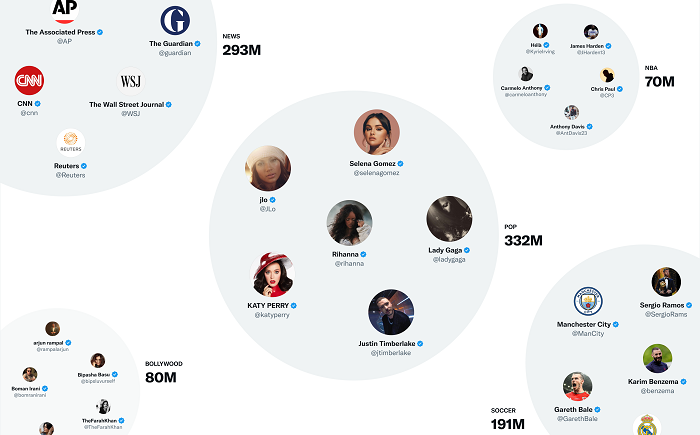
Resulta que Ryan tenía razón: Twitter ahora está tratando de promocionar más tweets en el feed «Para ti» en función de la participación en el tema, que Twitter define a nivel de cuenta al filtrar cuentas específicas en categorías de temas y luego usarlas como una guía para la categorización. utiliza el tema probable de cada uno de tus tweets. cuenta Gorjeo: «Una de las áreas de inserción más útiles de Twitter es SimCluster. SimClusters descubre comunidades ancladas por un grupo de usuarios influyentes utilizando un algoritmo de factorización de matriz personalizado. Hay 145.000 comunidades que se actualizan cada tres semanas. Las comunidades varían en tamaño desde unos pocos miles de usuarios para un solo grupo de amigos hasta cientos de millones de usuarios para noticias o cultura pop. Cuantos más usuarios de una comunidad les gusta un tweet, más se atribuye este tweet a esta comunidad”.
La imagen de arriba muestra algunas de las «comunidades» o colecciones temáticas más grandes de Twitter, basadas en el filtrado algorítmico de Twitter. Según Twitter, este enfoque se ha convertido en un factor clave para decidir qué tweets «fuera de la red» incluir en su feed «Para usted», o qué tweets mostrarle de cuentas que no sigue. Y a medida que más y más de estas recomendaciones se incluyen en los feeds de los usuarios, se ha convertido en un mayor impulsor de la visibilidad de los tweets, aunque eso está a punto de cambiar nuevamente, ya que Twitter restringe aún más las recomendaciones «para ti» a los tweets de cuentas de suscriptores de pago.
No está claro cómo afectará esto a la experiencia de Twitter al momento de escribir este artículo, pero al menos cambiará fundamentalmente el feed For You al limitar el grupo de tweets de origen de los que Twitter puede extraer.
Y si las celebridades en particular no pagan o dejan de twittear como resultado, ese impacto podría ser significativo. Esta es la revelación más importante de la descripción algorítmica de Twitter, aunque la documentación contiene varias otras notas y puntos interesantes: Por cada sesión de usuario de Twitter extrae alrededor de 1500 tweets que cree que son potencialmente de interés para cada persona antes de ser clasificados en el feed «Para ti» La línea de tiempo For You actualmente consta de un promedio de 50 % de tweets dentro de la red (personas que sigues) y 50 % de tweets fuera de la red.
Twitter también predice la probabilidad de una interacción entre dos usuarios. «Cuanto mayor sea el Real Graph Score entre usted y el tweeter, más tweets incluimos».
Otro factor son los tweets con los que interactúan las personas a las que sigues, lo cual no es una revelación, solo una nota.
La clasificación de tweets se realiza utilizando una «red neuronal de aproximadamente 48 millones de parámetros que se capacita continuamente en las interacciones de tweets para optimizar la participación positiva (por ejemplo, me gusta, retweets y respuestas)». Sin embargo, no hay indicios de cómo determina Twitter entre interacciones positivas y negativas en este contexto. Eso proporciona un contexto interesante sobre cómo Twitter clasifica los tweets y maximiza la exposición en el feed principal «Para ti», aunque eso cambiará el 15 de abril, cuando Twitter cambie para mostrar solo los tweets de los usuarios que pagan en sus recomendaciones «Para ti».
Lo que en cierto modo hace que muchas de estas ideas sean redundantes, aunque creo que si la teoría de trabajo es que la mayoría de los usuarios finalmente pagarán, esto podría seguir siendo indicativo durante algún tiempo.
Excepto que no lo harán. Menos del 1% de los usuarios de Twitter son actualmente pagar por twitter azuly aunque la decisión de eliminar las marcas azules «antiguas» y revertir el proceso de clasificación «Para ti» proporcionará una adopción adicional, parece poco probable que Twitter Blue se convierta en una consideración importante para la gran mayoría de los usuarios de Twitter.
Creo que el otro elemento a considerar en este sentido es que la gran mayoría de los tweets provienen de muy pocos usuarios, y la mayoría de los perfiles de Twitter rara vez tuitean ellos mismos. Entonces, tal vez Twitter solo necesita que un grupo más pequeño de usuarios se registre en Blue para que sea un elemento más importante en las clasificaciones de tweets. Sin embargo, todavía parece poco probable obtener mejores resultados al resaltar el contenido más relevante de toda la aplicación.
Independientemente, parece que Twitter está avanzando, y ahora los desarrolladores externos tienen más información sobre cómo funciona el algoritmo de Twitter, lo que conducirá a una nueva avalancha de ideas y sugerencias sobre cómo jugar el sistema.
Twitter espera que también ayude a mejorar sus algoritmos rápidamente. Tal vez eso también suceda. Tenemos que esperar.

Invertir en IA | brote social
Desde el día de Año Nuevo de 2023, se han enviado más de 5 millones de mensajes que hacen referencia a ChatGPT solo en Reddit, Twitter y YouTube. El chatbot de inteligencia artificial ha demostrado cuán lejos ha llegado la IA en los últimos años, cautivando tanto a los consumidores como a los ejecutivos de C-suite.
El entusiasmo generalizado por las herramientas de IA generativas y otras multipropósito es más que solo buenas relaciones públicas. Más bien, es indicativo de un cambio tectónico en la forma en que las empresas diseñan software, cómo las empresas invierten en tecnología y cómo los usuarios individuales dedican su tiempo y energía.
El desarrollo de IA fue una vez un ejercicio de costo prohibitivo e intensivo en tiempo que arrojó resultados muy específicos. En el futuro, el trabajo de los gigantes tecnológicos hará que la funcionalidad de IA sea ampliamente accesible y aplicable a una variedad de industrias, funciones y necesidades.
Para Sprout Social, esto presenta una gran oportunidad para crear soluciones que ayuden a los equipos a trabajar de manera más inteligente, desbloquear la creatividad y aumentar exponencialmente el impacto comercial de las redes sociales. Para nuestros clientes actuales y futuros, ahora es el momento de comenzar a planificar la adaptación y empoderar a sus equipos con las herramientas que necesitan para hacerlo.
Una nueva era en la innovación de la IA
Estamos en medio de un cambio radical en la IA que hará avanzar el software de manera más espectacular que en cambios anteriores, como la introducción de interfaces gráficas de usuario (como Windows y Mac) o el paso de la informática de escritorio a la móvil.
El aprendizaje automático apareció silenciosamente en el software convencional durante la última década. En este tiempo, las empresas de software desarrollaron herramientas internas para automatizar el proceso de obtener información de conjuntos de datos masivos o para personalizar mejor las experiencias. Estos modelos venían con una etiqueta de precio alto para construir y entrenar, y por lo general abordaban una oportunidad.
Los últimos meses marcaron el comienzo de un nuevo capítulo. Los avances en los modelos de lenguaje grande (un subconjunto de la IA) están haciendo posible ir más allá de las soluciones diseñadas para resolver problemas de nicho. Compañías como OpenAI, Google y sus pares están construyendo modelos multipropósito altamente capaces que pueden abordar una amplia gama de casos de uso. Más que nunca, estas innovaciones están disponibles para que los proveedores de software de todos los tamaños las integren en sus propias plataformas. De repente, todo el mundo tiene las herramientas para crear funciones respaldadas por IA.
Las plataformas no se diferenciarán simplemente por tener capacidades de IA, sino por cuán cuidadosamente integran la IA en la experiencia del usuario final.
Construir con IA no significa que dejemos de diseñar para humanos
Liberar todo el potencial de la IA ya no se trata de características puntuales y «caballos más rápidos». Las empresas de software tienen la obligación de experimentar con estas nuevas innovaciones y brindarles a los clientes la oportunidad de experimentarlas por sí mismos. La innovación más emocionante no es muy emocionante si no puede confiar en que funcionará según lo prometido.
En Sprout, tenemos una base de aprendizaje automático patentado del que se benefician los usuarios, a través de características como tiempos de envío óptimos, análisis de opiniones y filtrado de contenido explícito. La plataforma de Sprout procesa más de 50 000 publicaciones sociales por segundo dentro de Listening y un promedio de 600 millones de mensajes diarios, lo que ayuda a las marcas a descubrir información clave sobre el negocio, la audiencia y la competencia con mayor rapidez. Nuestra adquisición de Repustate solo amplificará estas características en nuestros productos de participación, atención al cliente y escucha.
Esta nueva fase de IA cambiará la forma en que construimos software, pero no cambiará nuestro enfoque extremo en el diseño centrado en el usuario. En cambio, tendremos que ser aún más intencionales sobre cómo los humanos y la IA colaboran dentro del ecosistema de Sprout.
Los enfoques de diseño evolucionarán y deberían evolucionar, pero el objetivo final sigue siendo el mismo: hacer que las personas que utilizan nuestro producto sean más eficaces. La IA debería servir como un exoesqueleto, una capa que mejora sus fortalezas existentes, o ser un asistente que lo protege de tareas tediosas, preservando su tiempo y energía para concentrarse en un trabajo verdaderamente creativo.
La seguridad y la responsabilidad seguirán siendo primordiales también. Herramientas como ChatGPT pueden exhibir un rendimiento a nivel humano en muchas tareas, pero (como los humanos) tienen sus fallas, entre ellas la perpetuación de sesgos y la desinformación «alucinante».
La IA no está lista para representar su marca o cultura comercial por sí sola. Depende de nosotros enviar productos que mantengan al usuario responsable y en control, al mismo tiempo que eliminamos el esfuerzo manual requerido para filtrar miles de mensajes o el miedo a una ventana de redacción en blanco.
Líderes empresariales: Prepare a sus equipos para un nuevo mundo laboral
La IA cambiará nuestra relación con el software, ya sea un vendedor, un agente de atención al cliente o un analista de datos. Antes de revisar las pilas tecnológicas o reescribir las descripciones de los puestos, los líderes deben reflexionar sobre cómo estas capacidades emergentes cambiarán la naturaleza del trabajo de sus equipos.
Deberías preguntarte:
¿Tenemos un espacio seguro para experimentar?
Cuando se trata de IA, nadie tiene todas las respuestas todavía. Pero las empresas deben alinearse con socios dispuestos a educar e incluso co-crear soluciones.
En Sprout, la innovación rápida nunca se logrará a expensas de la calidad o la seguridad de la marca. Aprovecharemos las oportunidades para invitar a nuestros clientes al proceso de aprendizaje, incluidas las versiones beta para explorar y probar nuevas funciones. Las características habilitadas para IA más efectivas se reducirán a la interfaz de usuario y al diseño del flujo de trabajo. Y el mejor diseño no surge por accidente ni en el vacío. Los comentarios de los clientes moldean constantemente nuestra hoja de ruta, nuestras prioridades y cómo cobra vida la funcionalidad.
¿Dónde puede la IA complementar a nuestra gente?
Especialmente en las redes sociales, los consumidores esperan cada vez más que las marcas se presenten como más humanas, más auténticas. Compare eso con la necesidad de eficiencia y escalabilidad de las empresas. Este tira y afloja es donde la IA puede ofrecer un valor tremendo.
Mire a su equipo e identifique dónde necesitan más ayuda hoy. ¿Qué aspectos de sus trabajos son los más arduos? ¿Qué ayudaría a su equipo a brindar un mejor soporte a sus clientes, incluso de manera incremental? Esta es una oportunidad para hacer borrón y cuenta nueva y reconfigurar radicalmente los procesos o tareas que no están sirviendo a sus empleados.
¿Estamos invirtiendo en valor duradero o atractivo cosmético?
Estamos solo al comienzo de esta nueva era de IA. Los líderes deben mantenerse ágiles en previsión de avances constantes en los próximos meses y años. La IA cambiará en gran medida la forma en que funciona el software y cuántos trabajos se realizan, pero no está claro cómo, cuándo ni a qué ritmo.
Esto tendrá implicaciones para las inversiones en tecnología que realice en el futuro. Históricamente, las empresas han pagado por modelos de IA personalizados o han dedicado largos períodos de tiempo a entrenar modelos para sus circunstancias únicas. Estas soluciones a medida pueden tener una vida útil corta en el futuro y no estarán equipadas para evolucionar con sus necesidades cambiantes. Busque una herramienta que impulse el impacto comercial dentro de seis, 12 y 24 meses, en lugar de conformarse con una que marque las casillas correctas hoy. Versatilidad y adaptación son el nombre del juego.
¿Nos estamos preparando para el éxito a largo plazo?
Con cualquier tecnología nueva, deberá crear reglas de participación claras. ¿En qué escenarios y en qué medida es aceptable ceder el control a una herramienta de IA? ¿Dónde están las transferencias entre la salida de IA y la edición o el pulido humano? Más importante aún, ¿puede la plataforma en la que invierte incorporar estas líneas de demarcación en toda la interfaz de usuario?
Cuando contrata IA, también está contratando a la empresa que la fabricó. Es esencial invertir en un socio de software que trabajará con usted para determinar cómo la IA puede satisfacer mejor sus necesidades. Como cualquier dinámica de oficina, las cuestiones de control, propiedad y responsabilidad surgirán inevitablemente una vez que se desvanezca el entusiasmo inicial. Cuando surjan esos problemas, querrá un socio de software con empatía por sus preocupaciones y una sólida experiencia en ayudar a los clientes a navegar por entornos en constante cambio.
Haciendo apuestas inteligentes
La IA cambiará fundamentalmente la forma en que operamos nosotros y nuestros clientes. Abre la puerta a avances inimaginables en productividad e innovación de marca.
Como ya estamos comenzando a presenciar, están surgiendo capacidades innovadoras de IA en una variedad de espacios. Pero, ¿de qué sirve cualquier tecnología si los usuarios no la adoptan? ¿Qué tan valiosa es cualquier inversión si no genera un impacto tangible para su negocio o no es confiable?
En Sprout, es nuestra responsabilidad crear soluciones impulsadas por IA que marquen una diferencia significativa, ya sea que muestren datos sociales en toda su organización más rápido o que faciliten a sus equipos la identificación de tendencias o posibles crisis antes de que lleguen a su punto máximo.
Para los líderes, es su responsabilidad comenzar a prepararse para el cambio. Eso se vuelve mucho menos intimidante y mucho más emocionante cuando apuesta por herramientas y socios que trabajan con, no en contra, de su equipo.
Suscríbase a nuestro boletín semanal para mantenerse actualizado con las últimas funciones, actualizaciones de productos y noticias de la compañía de Sprout. Source link

How to Make a Gif (iPhone, Photoshop and More)
GIFs are a great way to increase social media engagement by drawing attention to your social posts. These short, frequently humorous, looping, silent, animated clips are easy and often free to make. They are used to express emotion, reaction, and personality. But they can also draw attention to something, such as a product or brand attribute.
Animated GIFs can also help your audience understand your data and concepts. Using GIFs to explain facts or liven up statistics can be a vital component of your overall social strategy.
In this article, we’ll explain how to make a GIF in a number of ways, including with Photoshop and iPhone. And we’ll show you how to use your GIFs on social networks from your PC or phone. You will also learn how to make a high-quality GIF, and we’ll review several of the best GIF creation tools.
Table of contents What is a GIF?
GIF (Graphics Interchange Format) is an image file that can hold multiple images, which can then be animated, much like a flipbook. Steve Wilhite invented the GIF format, and it has survived since 1987 in essentially the same form. The World Wide Web didn’t come along for two more years.
GIF’s 8-bit format only supports 256 colors, whereas other, newer image formats support millions. This limitation in the range of colors can cause the images to have poor resolution. And, every time a GIF is shared, saved, or re-uploaded it will look worse because it gets compressed. Still, GIFs remain wildly popular on social media, web pages and in emails. How to make a GIF
Making a GIF is not a complicated process so long as you know the steps for whatever device you wish to use. Let’s begin with how to create an animated GIF on your phone.
How to make a GIF on iPhone
There are three ways to make a GIF on iPhone. The first is to turn your Live Photos into GIFs. Live Photos record 1.5 seconds before and after the shot, so they can create a GIF effect when set to loop. Open the Live Photo you’ve chosen for your GIF, tap on the Live Photos button at the top left of your screen, and at the drop-down menu, tap Loop. Unfortunately, a GIF made in this fashion will not play on non-apple devices.
To be able to use your GIF wherever you want, you’ll have to use a third-party app, which is the second method to make a GIF on iPhone.
These apps will help you create a GIF from your video or pictures and download it to your camera roll. Some examples of apps are GIF Maker-ImgPlay and EZGIF for iPhone and Android.
The third method to make a GIF on iPhone is to use iPhone’s Shortcuts app. With this app you can convert Live Photos, images and videos to GIFs without the need for a third-party app. To do so, follow these steps. Open Shortcut and go to the Gallery tab
From here you have four choices depending on what you want to do. You can search for the Make GIF, Convert Photos to GIF, Video to GIF or Burst to GIF. The Make GIF shortcut will allow you to make GIFs from Live Photos and videos. The Convert Photos to GIF shortcut allows you to make GIFs from a number of your selected photos. The Video to GIF and Burst to GIF shortcuts do as their names imply.
Once you’ve selected your shortcut, tap Add Shortcut. This will add it to your MY Shortcuts tab where you will then tap on it.
With the Convert Photos to GIF shortcut, select your photos then tap Add on the top right of the screen. You’ll get a preview of your GIF. Don’t tap Done yet or it won’t save. Tap the Share icon in the top right and select Save Image. This will save your GIF to your Photos. Also, you can send it to others through Messages or apps like Messenger.
With the Make GIF shortcut, select a Live Photo and tap Add as before. This shortcut will send your GIF to your photo album. These GIFs will play automatically, even on non-Apple devices.
Use the Burst to GIF shortcut the same way. You’re likely to get a smoother animation using pictures taken in continuous shooting or burst mode. This is because the movement will be less jerky than if you use photos taken farther apart.
With the Make GIF shortcut, once you’ve tapped OK to give permission to access your Photos app, you will see all the videos in your library.
Once you’ve chosen the one you want to make into a GIF, use the sliders to crop the part of the video you want for your GIF. Tap Save.
A preview will be available within the Shortcuts app. Tap Done. How to make a GIF on Android
Making a GIF on Android devices depends largely on the device. For instance, following these steps, you can make a GIF on a Samsung Galaxy device from the Gallery app. In the Gallery app, long press on an image to select multiple photos. Tap the 3 dots at the bottom right of the screen.
Select Create.
Review and edit your GIF. Then tap The GIF image that appears in your Gallery app. To make a GIF on Android phones with the Google Photos app, follow these steps. In the Google Photos app, at the bottom, tap Library > Utilities.
Under Create New, select Animation.
On the top right, tap Create. You can also use third-party apps to make GIFs to save to your Android devices. Some free options are Ez GIF Maker and GIF Maker-GIF Editor.
How to make a GIF in Photoshop
Learning to make a GIF in Photoshop is a little more complex than the above methods. You have to work with layers. Follow these steps. Copy and paste your chosen photos into a new folder.
Select File > Scripts > Load Files into Stack
Choose the folder you made, open it, and the photos will come out in different layers.
Choose Window > Animation or Window > Timeline
The Animation, or Timeline panel will come up at the bottom of the screen
Select Create Frame Animation.
Select Make Frames from Layers in the Timeline panel.
You can adjust the playing time of each frame as well as the speed. To do so, choose Select All Frames in the top drop-down menu. You can adjust by clicking on the dropdown menu at the bottom of each frame.
Choose the Repeat menu in the Timeline panel and select Forever.
You can preview your GIF by hitting Play on the Timeline.
To save your GIF select File > Export > Save for Web (Legacy). There are free alternatives to Photoshop if you want this level of control without the cost. GIMP, an open-source image editor, is one such alternative.
How to make a GIF from a video
Making a GIF from a video isn’t much different than from photos. iPhone has a specific shortcut for that function: Video to GIF. On Android, the process may differ a bit according to your hardware and software. Open Gallery
Open your Videos folder
Select the video for your GIF and tap Play Video
Tap GIF, which will start creating your GIF
Then you can adjust both the length and speed of your GIF
Tap Save, and it will save to your Gallery Now your GIF is ready to share.
However, it’s essential to understand that videos are subject to copyright laws. Using them without the creator’s or actors’ permission could cause problems, especially if your GIF is for commercial use. There are exceptions such as creative commons, of course, but it might not be worth trying to rely on the somewhat nebulous “fair use”.
In that regard, using images and videos from your prior social posts to make GIFs is a great way of repurposing content for social media.
Tips for making your GIFs higher quality
First, it’s important to understand that size matters when it comes to GIFs. If a GIF file is too big, it can cause pages to load slowly and even have a negative effect on SEO. So, there is a balancing act between optimizing your GIF for size and optimizing its quality.
For instance, you may need to meet the size requirements of a particular network. In that case, you can do several things to retain quality while reducing the size of your GIF.
The quality of a GIF diminishes in two ways. First, by getting compressed each time it is shared, saved, downloaded or uploaded. And second, by using too many colors in the GIF.
So, one of the ways to improve the quality, and reduce the size, is to reduce the number of colors used in the GIF. Play with the presets available in some of the more advanced GIF-making tools to help reduce the number of colors used in your GIFs.
Another way to optimize the size of your GIF file is to reduce the number of frames in the animation. You don’t want to reduce them too much, or you’ll make the GIF choppy. You can use an online GIF compressor like EZGIF to reduce the size of the GIF file by 30–50%. Best GIF creation tools
We’ve already talked about some of the ways GIFs can spice up your brand’s offerings on social. Here are seven more of the best free and low cost GIF creation tools to help you in building social media presence.
Make a GIF
With Make a GIF, you can make animated GIFs from images or URLs from YouTube or Facebook videos. You can also make them from your own webcam videos. And, like several GIF makers, they have an extensive collection of premade GIFs you can share.
EzGIF
This is a simple-to-use, free GIF maker and image editor. It can flip an image, reverse, resize, crop, optimize and apply effects and text. You can adjust the animation speed and frame order of the images you upload. With videos, you select the part you want by entering the start and end times. You can control the frame rate.
This tool will convert GIFs to MP4 or WebM videos, which, as stated above are of higher quality. You can also use this tool to edit, shorten or merge existing GIFs. Best of all, it doesn’t apply a watermark to your GIF as some GIF makers do. This is great for making GIFs for your social media content.
ScreenToGif
This unique, free, open-source GIF creation tool allows you to record your screen and make a GIF from all or a piece of it. You can do the same thing with the drawings on your sketch board. In fact, it will capture your drawings as you draw them. Additionally, you can make GIFs from your webcam videos. When you edit, you can manipulate individual frames and images. You can apply captions and text. Share directly to Twitter, Facebook, LinkedIn and Reddit.
Imgflip
This creation tool has both video-to-GIF and image-to-GIF capabilities. You can use photo or video files from your devices (PC, iOS or Android), or you can paste in the URL of a video.
You can customize your GIF with text, images, stickers, drawings and animations. But, Imgflip will put a watermark on your GIF unless you purchase a Pro account.
Like Make a GIF, they have a whole library of GIFs for you ready to share.
Freegifmaker.me
Making GIFs with this tool is pretty straightforward. You can either make a GIF from images or from a YouTube Video.
If you’re using a YouTube link, you’ll wait for the video to load, then enter the start time and duration for your GIF. That’s it. There are several effects you can apply, including swirl and zoom. Finally, you can reverse a GIF from your device or from a URL. Quite simple.
Gifs.com
With GIFs.com, so long as you have the URL, you can make GIFs from videos from just about anywhere, including YouTube, Vine and Instagram. And you can drag and drop images or select them from your PC.
Of course you can add captions and stickers to your GIFs, or even make them black and white. You can also make animated stickers. This tool maker has an embed player that you can install to play your GIFs on your website.
Giphy
Giphy lets you make GIFs from images or videos, as well as from URLs. These URLs can be from YouTube or many other sites, including from Giphy’s large library of GIFs. You can apply a caption, text, filters, and other effects, including freehand drawings. And, it can produce GIFs in the WebM format for higher quality GIFs.
You will be able to add tags to your GIF as well as a source URL to give credit to the original source. And, as recommended by Giphy, you can change your GIF from Public to Private so no one but you will be able to see and share it. You can share directly to Facebook, Twitter, Instagram, Pinterest, Tumblr, Reddit and more. Many of these GIF making tools allow you to attach tags to your GIFs. It is good social content strategy to tag them with keywords your audience uses to search your brand or product. Then, when people search for those, your GIF and any related content will pop up.
How to use your GIFs on social media
Each social media network is a bit different. Some have embraced GIFs, some have not. Most at least have the ability to use integrated GIF content to share in comments and sometimes posts.
How to use your GIF on Instagram
Instagram doesn’t accept the GIF format yet. So, you do need to know how to get your GIFs on the network. And let’s face it, it isn’t always easy to get your audience’s attention on Instagram when everyone is posting images and videos. But with the popularity of GIFs, you can stand out and increase your Instagram engagement.
To get your GIFs on Instagram, they must be MP4 files. You will have to either create your GIF as an MP4 file within any of the GIF creation tools that support this, or convert it to MP4 later. There are plenty of converters out there, like VideoPro Converter. Once you have it in the correct format, you can post it to your Instagram Stories, Profile or Newsfeed. Some mobile apps, like Giphy’s, will convert your GIF and save it to your camera roll so you can post from there.
Don’t forget to add those keywords as hashtags to your GIFs so people will find your GIFs and content in searches.
How to use your GIFs on Twitter
There are two ways to add a GIF to your Tweet. But first understand that you can’t add a GIF to a Tweet with more than one image, or one with another GIF. You may, however, add a GIF to a Direct Message. Twitter also has an integrated collection of premade GIFs you can use in your Tweets and DMs.
The first way to attach a GIF to your Tweet is to paste your GIF’s URL at the end of the Tweet. You can get the URL from the site where you created and uploaded your GIF. Remember to always mark your GIFs as private so no one else can see or use them.
The second way to add a GIF to Twitter is to start by downloading it to your PC or phone. Then add it to your Tweet in the same manner that you would add an image. This method is most helpful for those who haven’t uploaded their GIF to a creation tool’s library.
How to use your GIFs on Facebook
On Facebook, it is simple to upload your GIF to a post or comment. Use the photo/video options for each. This works for both PC and mobile. You only need to have your GIF downloaded to the appropriate place, i.e., the camera roll for mobile.
You can post a GIF by its link (URL) as text to your post. Once the GIF shows up, you can delete the link and add other text and it won’t affect the GIF. Do the same thing with comments, except remove the link at the image preview stage.
Facebook also allows you to use GIFs as your Profile Picture, Cover Video, and as Facebook ads. Your Profile GIF may not play automatically for all users. So, choose a custom thumbnail. You even have the option of making your GIF Profile temporary.
As with Twitter, Facebook has an integrated library of GIFs you can use by selecting GIF from the More option of Add to Your Post.
How to use your GIFs on LinkedIn
As of February 2023, LinkedIn does not support GIF files for Logo Images or Cover Images. But, you can add them to your posts, articles and article thumbnails. And, if you add them before your title, the GIF will display at the top, catching attention right away.
You can add GIFs to LinkedIn like images or by pasting the link into your post or article. Add a GIF to a comment by adding it as an image. LinkedIn also has premade options available for your use in comments and DMs.
How to use your GIFs on YouTube
It is possible to add a GIF to your YouTube video at a site of your choosing. But, you will need a video editor to do so. There are both paid and free options available on the web.
Your brand’s ability to post engaging GIFs on social media networks is only growing. You can greatly benefit from an effective content calendar to help you plan and implement your social posts. With Sprout Social’s comprehensive Social Media Publisher you can plan, compose and post your social content across all social networks from a single tool. It will even determine the optimal send times for each of posts with ViralPost®. Imagine what GIFs can do for your social media engagement
GIFs have become an integral part of the social media landscape. They bring laughter and fun. This is something from which even the most serious posts can often benefit.
You can use GIFs to promote your brand, or get your point across in a few seconds of carefully curated images. And because GIFs are so simple and inexpensive, it’s easy to incorporate them into your social media marketing strategy.
Posts with images get a 98% higher comment rate on LinkedIn. And Tweets with videos get ten times more engagement on Twitter.
Yes, it’s true that GIFs are often humorous or even silly. But they can also be thoughtful and informative. And, they are indisputably eye-catching. Can you afford to ignore this phenomenon? Source link
10 Skills Every Social Media Manager Must Have
Social media skills have evolved dramatically over the past few years. Social network fragmentation, dynamic search engine optimization (SEO) changes, ever-growing content trends, emerging technologies and other complexities in the field have made it necessary for social media managers (SMMs) to sharpen and diversify their skills to keep up their game and be future-ready.
In this article, we’ll explore how the role has changed over time and what social media skills need to be in your toolkit for success.
How have social media manager skills evolved?
A social media manager has to be a marketer, strategist, copywriter and a customer service rep—and excel at each of them. Managing all these diverse responsibilities requires you to be agile and adept at new skills that are becoming more critical by the day. A LinkedIn report shows that social media manager skills requirements in the US have changed an average of 24.9% since 2015. Some of the top new skills mentioned include social media outreach, social strategy, social media communications and platform expertise like Instagram.
Other pertinent skills include project management and the ability to conduct nuanced audience research with AI-driven technology to create more data-driven social strategies. Whether you are planning to become a social media manager or want to sharpen your skills for 2023 and beyond, here is a thoughtfully compiled list of the top skills every social media manager must have to thrive.
Level up your social media skills with the right social tools
As you master the skills in this article, start leveraging a social media management tool to further your social success.
Test out Sprout social with a free trial, or schedule a demo to learn more.
1. Communication
Of all the social media skills, I believe effective communication skills are by far the most important. From writing a brief to compiling a social listening analysis for leadership, social media managers have to communicate ideas effectively to a wide range of stakeholders. Communications skills are even more indispensable when you consider the breadth of internal and external audiences SMMs collaborate with on a regular basis, from teams as diverse as the legal and creative departments, to your followers and even social platform partners. There are two crucial things to keep in mind here: When communicating externally on social media, ensure you’re consistent. For example, employ a consistent brand voice when communicating with followers on social media. This holds true whether you’re publishing a planned post, dropping what you’re doing to hop on a trending topic or handling a customer complaint. You also need to be consistent in your communication with external stakeholders such as creators or influencers. Clearly define expectations and campaign goals, and how you’ll collaborate with them. When communicating internally, articulate your ideas and plans to decision-makers and cross-functional partners. This could be about your social media strategy, content distribution plan or the revenue impact you expect from a campaign. Resources to build your communication skills Presentation template: Use this social media strategy deck template to effectively communicate your social strategy to the leadership team. TED Talks on communication: Hear from some of the world’s most inspiring speakers on improving your social conversations, digital communications and storytelling abilities. 2. Writing
Social media managers have to be excellent copywriters who embody and enhance their brand’s voice on social. From witty, attention-grabbing ad copy to timely commentary, you should know how to write concise copy that speaks to your audience. Whichever social networks you use, effective writers know how to tailor their writing for different audiences and platforms. For example, while you can use up to 2,200 characters in your Instagram captions, data has shown that the most engaging length is between 1-50 characters.
While writing is an important social media skill for creating engaging content and conversations, it’s also important for building your social media career. The ability to express yourself clearly in reports, emails and presentations will help your ideas make an impression.
Don’t hesitate to use AI-based content tools and other helpful apps that can assist you in ideating a topic or providing inspiration when you need it. If you do use AI tools to generate content, you will need editing skills to review and proofread the copy to ensure that it is aligned to your expectations and brand voice.
Resources to help with writing Grammarly: This free tool checks your grammar and proof reads your content while giving you prompts to make your copy more compelling.
Copy AI: This free AI-driven tool can generate creative Instagram captions.
Hemingway Editor: Use this website and app to make your writing more concise and readable. While it is geared more for long-form writing, you can also use it for creating impactful social media posts.
Merriam-Webster’s Twitter feed: Broaden your vocabulary with words of the day, learn the difference between similar terms and enjoy a little snark when this dictionary Tweets about misused or made-up words in the news cycle. 3. Creativity
Differentiation is one of the biggest challenges for brands in the saturated social media space. That’s why it’s critical to create content that’s exciting, valuable and relevant. It takes creativity to: Plan innovative social media ideas Produce visually appealing multimedia content
Consider every aesthetic detail of a social post, from images to links to copy formatting
Lead productive brainstorms that bring out teammates’ best ideas
Hone and expand your brand’s voice and persona Infusing creativity across multiple projects can seem daunting to even the most seasoned social media manager. That’s where technology becomes your best friend. There are several AI-based creative apps for design and copy that can be your sparring partner to kick start your creative process.
On par with being creative is having a sense of humor and the ability to improvise in any given situation. Resources to flex your creativity Creative Mornings events: Creative Mornings is a global breakfast event series for the creative community. Join a local event or the online community to connect with other curious, creative leaders in marketing, design and social.
Vidyo: This easy-to-use AI tool helps time- and resource-strapped teams create social-ready short-form videos from longer content. Illustroke: Use this tool to create quick AI-generated illustrations from text prompts to provide your design teams with more tangible direction.
Fast Company and Campaign: These two publications offer thoughtful commentary and criticism on the creative ad world. Read for insight into brand and creative strategy, industry-leading campaigns and thought leadership.
Sprout Insights Blog: You can find curated articles on content ideas for a variety of social platforms on our blog. Also check out this great video on how you can generate clever content and never run out of ideas.
Improvisation classes: Taking improv classes can teach you how to problem-solve in a different way and give you more confidence in managing customer responses on the fly. 4. Efficiency and project management
As a social media manager, not only do you have to conceptualize campaigns and distribution rhythms, but you also have to lead and execute these plans from start to finish. To do this at scale, project management is a required social media skill. Becoming efficient at project management can also pave the road for future leadership roles in social.
Among the many time and project management tools available, such as Asana or Monday.com, a social media calendar (like the one in Sprout) can be super helpful in managing your different social tasks. You can use it to manage your campaigns more efficiently, keep all your collaborators on the same page, track your progress with different filters and more. Resources to improve your project management skills: Asana Project Management: Use this tool to plan and manage your projects from start to finish.
Pomodoro Technique and time-boxing: Sometimes you’ve got 50 messages to write and schedule all at once. Setting aside a limited block of time to work on a task helps keep things moving.
Social Media Campaign Brief Template: Use this customizable social campaign brief template to organize campaign details, creative direction and other important directives. 5. Marketing strategy
Social sits at the intersection of marketing, customer experience and sales. It is also a source of valuable business intelligence. According to The Sprout Social Index™ 2022 social teams rank “proving ROI” as the third biggest challenge when it comes to strategy building. Marketing acumen combined with social intelligence can fill this gap to inform a more successful marketing strategy that is data-driven and customer-centric.
To create a social strategy that drives the most business impact, it’s important to incorporate both traditional and digital marketing approaches. This could mean documenting how your social efforts intersect with other tactics such as email nurtures, paid campaigns, corporate events, webinars and more.
More resources that you can leverage Sprout’s YouTube channel: Our YouTube channel is an excellent resource for videos on leveling up your social marketing strategy.
Marketing influencers: Leaders like Joe Pulizzi and Seth Godin have stood the test of time with marketing wisdom all social pros can use.
Textbooks and marketing courses: I find myself referring to my old sociology and marketing research textbooks all the time. If you’re learning on the job, check out LinkedIn Learning courses on marketing and strategy.
Books by Malcolm Gladwell: Read “The Tipping Point” or “Outliers” to strengthen your understanding of human behavior and marketing. 6. Customer care
Customer care is one of those social media skills that combines customer service, people skills and an eye for uncovering opportunities. That’s why developing a social customer care strategy is an integral part of a social media manager’s job description.
Our Index shows that 44% of marketers use social data to inform customer experience. Brands also report that 53% of their social strategy is driven by insights from the customer service team. To truly be customer-centric, you must put the voice of the customer (VoC) at the core of your strategy. Studies also suggest more than three-quarters of consumers expect a response on social within 24 hours. This means, not only do you have to listen to and understand the concerns of your customers, but also be proactive in your approach to handling emergencies.
For example, when a frustrated customer reached out to Delta Airlines on Twitter, the company responded immediately in a respectful manner, validating the customer’s feelings while offering the needed assistance. As a social media manager, you are the brand’s biggest champion. Understanding customers and their perspectives enables you to make a positive impact in the hearts and minds of your community. Additionally, personalizing your interactions by referencing conversation history can help take an everyday interaction and turn it into an extra special moment.
Resources to enhance your customer care skills Zendesk’s Relate blog and events: Check out Relate for consistently great content on relationships, customer service and leadership.
Podcasts: Customer care starts with customer understanding. Some of our favorite podcasts on this topic include Hidden Brain, Invisibilia and What It Means. You can check out our full list of favorite podcasts here. 7. Audience research and making connections
Researching your audience for brand experience (BX) intelligence is a critical part of a successful social strategy. These insights are even more vital when derived from social listening through machine learning (ML) processes like Sprout’s social listening solution, which uses natural language processing (NLP) to extract rich brand and voice of the customer insights.
This is because audience insights can inform everything, from the content formats you choose and trends you jump on, to the best times to post for your brand. Establishing and building relationships with your audience is core to social media skills you must have in your arsenal. According to the Q1 2023 Sprout pulse survey, 77% of consumers are more likely to increase their spending with brands if they feel connected to them, up from 57% in 2018. That’s why social media managers need to be comfortable using AI-enabled tools to gather and act on VoC insights. This powerful, customer-driven, data-backed guidance can help you understand trends in audience behavior at scale but also fine-tune your brand’s social presence. These AI algorithms can also scan audience sentiment to discover which influencers are the best fit for your brand, so you can make strategic partnerships based on audience insights.
You can also measure brand sentiment through AI-based sentiment analysis. Proactively keep track of how audiences feel about your brand at any given time and also dig deeper to investigate why audience sentiment is dipping or spiking. As a social media manager, your quantitative and qualitative audience insights give you a holistic understanding of what your audience wants and needs.
Resources for understanding & connecting with your audience Step-by-step social listening workbook: This workbook can help you get clear insights into what audiences think about your brand and how you can optimize your strategy accordingly.
The Sprout Social Index™: Our annual report on the state of social contains data and insights on what consumers really want on social and what marketers are doing. 8. Agility
The social landscape moves fast and even best laid plans can become irrelevant. This is why the ability to quickly pivot and react to new trends, opportunities or crises is a fundamental social media skill. Being flexible can help you decisively respond to a frustrated customer (or an appreciative fan) in equally empathetic and personalized ways. But it’s also important to be agile when it comes to your long-term social strategy. Social strategies have to be as dynamic as the platforms they are executed on. As a social media manager, it’s important to experiment with different tactics, or even shake up your strategy entirely to adapt to new trends or competitive forces. Learning from your data by listening to customer feedback and keeping a pulse on your competitors in a timely manner can make you a more nimble and hands-on social marketer.
Resources Know Your Meme: This site can be helpful in keeping up with daily development of new memes.
The Twitter Trends sidebar is a useful resource to keep an eye on when looking for emerging trends and new content.
Google Alerts: Enter keyword alerts for a variety of reasons: keep up on company mentions on the internet, industry news and world news. 9. Data analysis
We’re all familiar with end-of-month reporting, but skillful social media managers regularly look at data and apply it in their strategies to accomplish goals.
The impact is even more significant when your metrics include quantitative and AI-enabled qualitative data derived through social listening, such as sentiment mining of comments and posts. This gives you an accurate picture of your engagement levels and the “why” behind them. It also gives you tangible customer experience (CX) data to share with your stakeholders and cross-functional collaborators. As the importance of social listening grows and brands feverishly compete for audience interactions, analyzing both quantitative and qualitative data will help you make a lasting impact on social. It will help you identify emerging trends and develop recommendations based on the voice of the customer to build a successful plan of action personalized to your audience and brand.
Resources for building your data analysis skills Marketer’s Ultimate Data-Powered Toolkit: This powerful toolkit is full of advice on how to use analytics to your advantage, from industry leaders including HubSpot, Litmus, Unbounce, Vidyard and ZoomInfo.
Data storytelling: This article shows you how to build effective data storytelling so that you can communicate your data-driven strategy in a way that resonates with members in and around the marketing team. 10. Budget Management
As a social media manager, you have to expertly plan and manage funds for various programs including organic and paid media spending. This includes managing the budget for content especially if influencers or brand amabassadors are involved in your project, or if you need to hire freelance professionals. These costs may vary based on where you are located, the size of the influencer’s following and how freelance writers or editors charge their fees. You may have to decide which creator partnerships to prioritize based on available resources and production costs. To plan and allocate your spending wisely, you need to first thoroughly understand the goals of the project and conduct a social spend audit to compare the expenses from previous months or quarters. This will give you a better idea of which expenses are a one-time spend and which are ongoing.
Resources to enrich your social media skills for budgeting Annual Social Media Budget Template: Use this handy template to plan your annual social media spend so you can allocate your finances wisely, measure ROI and justify more investments in the future.
Organic vs paid media: This article highlights everything you need to keep in mind when planning a hybrid social media strategy.
Pattern89 AI Social Ad Budgeting Tool: This clever AI-powered social media budgeting tool helps you manage your paid social ads. You can optimize bids, plan spend and choose from the channels it recommends based on your audience. The tool is now part of ShutterStock. Build your social media skills to transform your career
Social is a career path of lifelong learning, whether it’s your first social media manager role or you’re already a pro. Continuing to hone your social media skills will benefit you at every stage of your career. For example, if you’re already highly organized and efficient, you can spend time developing other skills such as building your personal brand, or preparing to move into people management. Mastery within an area of social media might open the door to your next career move. If you’re phenomenal at data analysis, perhaps you’d make a great social strategist. Or if audience research and connection are your forte, you might be an incredible community manager. Whatever your social media skills are, there is always room to grow.
To learn more, read this guide to building a long-term career in social. Source link

Optimice su negocio con el software de automatización de ofertas
Optimice su negocio con el software de automatización de ofertaspor Andy | 28 de marzo de 2023El software de automatización de cotizaciones se está convirtiendo rápidamente en una herramienta imprescindible para empresas de todos los tamaños. Este tipo de software agiliza el proceso de cotización, asegurando que toda la información requerida se incluya y se presente de manera profesional. Al automatizar esta tarea, las empresas pueden ahorrar tiempo, esfuerzo y dinero sin dejar de lograr resultados de alta calidad. Este artículo analiza los beneficios del software de automatización de ofertas y brinda consejos sobre cómo usarlo de manera efectiva.El software de automatización de cotizaciones permite a las empresas crear documentos de aspecto profesional de forma rápida y sencilla. Por lo general, viene con plantillas personalizables con campos para ingresar datos como información del cliente, opciones de precios y condiciones de pago. La automatización también elimina muchas de las tareas manuales asociadas con la cotización, como B. Formateo, revisión, edición e impresión. Mediante el uso de este tipo de software, las empresas pueden reducir significativamente su carga de trabajo y seguir brindando ofertas de calidad adaptadas a las necesidades de cada cliente.Además, el software de automatización de ofertas puede ayudar a mejorar la comunicación entre la empresa y sus clientes. El sistema automatizado permite a los clientes acceder a sus ofertas en línea en cualquier momento, lo que les permite revisarlas rápidamente sin necesidad de asistencia adicional por parte de la empresa. Además, el software de automatización de ofertas brinda a las empresas comentarios en tiempo real de los clientes durante el proceso de creación de ofertas, para que puedan ajustar sus documentos en consecuencia antes de enviarlos para su aprobación o firmarlos ellos mismos.¿Qué es el software de automatización de ofertas?El software de automatización de propuestas es un tipo de tecnología que se utiliza para simplificar y agilizar el proceso de creación de documentos como propuestas, contratos y otros acuerdos relacionados con el negocio. El software permite a los usuarios crear y gestionar documentos de forma rápida y sencilla mediante la automatización de algunos de los tediosos procesos asociados con la creación de documentos. Se puede utilizar para una variedad de propósitos, incluida la redacción de propuestas para clientes, la preparación de contratos para proveedores o vendedores y la creación de presentaciones de ventas.El principal beneficio de usar un software de automatización de ofertas es que ahorra tiempo. Al automatizar algunas de las tareas más tediosas asociadas con la creación de documentos, como B. formato, entrada de datos y revisión, los usuarios pueden concentrarse en aspectos más importantes del proyecto. También reduce los errores al proporcionar verificaciones automatizadas que ayudan a garantizar la precisión y consistencia del documento. Además, el software de automatización de ofertas también puede proporcionar plantillas que facilitan la creación de documentos coherentes en varios proyectos.El software de automatización de cotizaciones puede ayudar a las empresas a optimizar sus operaciones al reducir la cantidad de trabajo manual asociado con la creación de documentos al tiempo que garantiza la precisión y la coherencia de todos los documentos producidos. De esta manera, las empresas pueden ahorrar tiempo mientras mejoran la eficiencia y la productividad dentro de su organización. Además, este tipo de tecnología reduce los errores al proporcionar controles automatizados que ayudan a garantizar la precisión de todos los documentos creados.Beneficios de usar un software de automatización de ofertasEl software de automatización de cotizaciones se está volviendo cada vez más popular en la optimización de los negocios. Este tipo de software automatiza el proceso de creación, gestión y entrega de cotizaciones, ahorrando tiempo y esfuerzo a las empresas. Mediante el uso de procesos automatizados para crear cotizaciones, las empresas se benefician de una mayor eficiencia, mayor precisión y un resultado más profesional.El principal beneficio del software de automatización de ofertas es su capacidad para simplificar las tareas asociadas con la generación de ofertas. La automatización elimina los procesos manuales, como la entrada de datos, el formateo y la revisión, que pueden llevar mucho tiempo y ser propensos a errores. Además, la automatización puede generar contenido personalizado que se adapta a las necesidades exactas del cliente sin dejar de cumplir con los estándares de la industria. La automatización también facilita el seguimiento de las interacciones con los clientes a lo largo del proceso de ventas.En general, se ha demostrado que el software de automatización de ofertas reduce los costos administrativos al tiempo que mejora la precisión y aumenta la eficiencia en el proceso de ventas. Las empresas también obtienen una mejor perspectiva de las interacciones con los clientes, lo que les ayuda a tomar decisiones informadas sobre las necesidades de sus clientes. Dados estos beneficios, cualquier empresa que busque mejorar su proceso de ventas debe considerar seriamente la racionalización de las prácticas comerciales con el software de automatización de ofertas.Cómo implementar un software de automatización de cotizacionesLa implementación de un software de automatización de ofertas es un paso importante para optimizar un negocio. Este software puede ahorrar tiempo, recursos y dinero al tiempo que aumenta la precisión y la calidad de las ofertas. El software de automatización debe implementarse con cuidado para garantizar una transición exitosa.Al implementar un software de automatización de ofertas, es importante tener en cuenta las necesidades y capacidades de la empresa. Se debe realizar una evaluación exhaustiva de los procesos actuales para identificar áreas de mejora y desarrollar un plan sobre cómo se integrará el nuevo software en las operaciones existentes. Además, se debe considerar cuidadosamente la experiencia del usuario al seleccionar y configurar el sistema automatizado. El diseño de la interfaz debe permitir una integración perfecta en los flujos de trabajo existentes.Finalmente, es importante que las empresas creen procesos para mantener su sistema automatizado después de la implementación. El mantenimiento regular es clave para garantizar que los documentos sean precisos, estén actualizados y cumplan con los estándares de la industria. Esto puede reducir los errores y simplificar el proceso de creación de cotizaciones de calidad de manera rápida y eficiente. Las empresas también deben crear materiales de capacitación para los empleados para que tengan una comprensión clara de cómo usar el sistema automatizado de manera efectiva.Solucionar problemas del software de automatización de cotizacionesLa implementación del software de automatización de cotizaciones tiene como objetivo optimizar los negocios y proporcionar una solución eficiente para el proceso de cotización. Para implementar con éxito este software, es importante conocer todas las características que ofrece y su compatibilidad con los procesos existentes. También es importante comprender cualquier desafío potencial para garantizar una transición sin problemas.La solución de problemas del software de automatización de ofertas implica identificar y resolver los problemas que puede encontrar al usar el software. Los problemas comunes incluyen una configuración incorrecta, capacitación insuficiente, fallas del sistema e incompatibilidad entre el software y los sistemas existentes. Además, las empresas pueden necesitar adaptar los procesos o procedimientos existentes para que el software funcione correctamente.Para solucionar de manera efectiva los problemas del software de automatización de ofertas, las organizaciones deben estar preparadas para posibles problemas con anticipación. Esto incluye asegurarse de que el personal esté debidamente capacitado para usar el software, verificar que los datos se ingresen correctamente en el sistema y probar la compatibilidad con otros sistemas ya existentes. Al tomar estos pasos proactivos antes de la implementación, las organizaciones pueden garantizar una transición más fluida y una integración exitosa del nuevo sistema de automatización.Sugerencias para optimizar su negocio con el software de automatización de ofertasEl software de automatización de cotizaciones ofrece a las empresas una forma simplificada de crear cotizaciones de manera rápida y eficiente. Este software puede ayudar a agilizar las operaciones comerciales al simplificar los procesos y reducir las cargas administrativas. Sin embargo, es importante que las empresas conozcan algunos consejos que pueden maximizar el potencial del software de automatización de ofertas.Un consejo para agilizar las operaciones comerciales con este tipo de software es definir claramente las funciones y responsabilidades de cada miembro del equipo que utilizará el sistema. Establecer expectativas claras desde el principio asegura que todos los involucrados en el proceso tengan una comprensión clara de lo que se debe hacer y cómo se debe hacer. Además, las empresas deben asegurarse de que todas las partes interesadas relevantes participen en el proceso para evitar malentendidos o lagunas en la comprensión.Finalmente, las empresas deben utilizar los tutoriales o guías de usuario disponibles que vienen con su software de automatización de ofertas. Explorar estos recursos ayudará a los usuarios a familiarizarse con las diferentes funciones, comprender cómo funcionan y detectar posibles problemas antes de que surjan. El uso de tutoriales o guías de usuario también puede ayudar a los equipos a desarrollar mejor los flujos de trabajo y los procesos cuando usan su software de automatización de ofertas.Al seguir estos consejos, las empresas pueden comprender mejor cómo funciona la automatización de ofertas, lo que les permite optimizar el uso de este tipo de software y, en última instancia, agilizar sus operaciones.DiplomaEl software de automatización de cotizaciones es una herramienta que brinda a las empresas una forma simplificada de crear, entregar y realizar un seguimiento de las cotizaciones. Este tipo de software brinda a las empresas la capacidad de crear rápidamente documentos de aspecto profesional, personalizarlos para cada cliente y realizar un seguimiento del éxito de sus esfuerzos de ventas. El software de automatización de cotizaciones también puede ayudar a acelerar el proceso de respuesta a los prospectos mediante la automatización de tareas básicas como el envío de recordatorios, la organización de múltiples versiones de cotizaciones y la consolidación de datos de clientes. Al agilizar el proceso de creación de ofertas y hacer un seguimiento de su éxito, el software de automatización de ofertas puede reducir significativamente el tiempo dedicado a tareas mundanas al tiempo que aumenta la eficiencia de las ventas.La implementación de un software de automatización de ofertas requiere una planificación cuidadosa para garantizar una integración exitosa en las operaciones comerciales. Es importante evaluar las características disponibles en diferentes soluciones antes de decidir cuál se adapta mejor a las necesidades del negocio. Además, utilizar los servicios de soporte o capacitación disponibles puede ayudar a garantizar que los empleados estén familiarizados con el software y obtengan el máximo beneficio de él.En general, el software de automatización de cotizaciones ofrece una serie de beneficios para las empresas que buscan optimizar sus operaciones y aumentar la eficiencia de las ventas. Cuando se implementa correctamente y se usa de manera efectiva, este tipo de solución puede ahorrar mucho tiempo a las empresas y, al mismo tiempo, proporcionar una manera fácil de crear documentos atractivos y realizar un seguimiento de las interacciones con los clientes. Además de ahorrar tiempo en tareas mundanas, el software de automatización de cotizaciones también puede proporcionar información valiosa sobre los datos de los clientes que podrían conducir a mayores oportunidades de ventas en el futuro.(function(d, s, id) { var js, fjs = d.getElementsByTagName(s)[0]; if (d.getElementById(id)) return; js = d.createElement(s); js.id = id; js.src = «//connect.facebook.net/en_US/sdk.js#xfbml=1&version=v2.5»; fjs.parentNode.insertBefore(js, fjs); }(document, ‘script’, ‘facebook-jssdk’));