
rewrite this title in spanish What is Influencer Marketing? A Definition and Guide to Influencer Collabs
rewrite With influencer marketing creating more buzz than ever in our circles, I thought it was time for a refresher on the topic for those who haven’t read The Age of Influence. Newcomers and old hands of our industry alike are seeking more information about this phenomenon. In particular, people are asking “what is influencer marketing, and how do I get started?” Answering these questions requires that we discuss the “why” behind the trend. In short, influencer marketing is a new take on the old technique of asking for celebrity endorsements. However, it is done in a way that adapts to today’s world and the modern consumer. And the democratization of influence makes it more attractive and practical with each passing day. Check out my video below for an easy-to-understand definition of what is influencer marketing, and then keep reading for the full details! A definition of what is influencer marketing Influencer marketing is a marketing strategy of collaborating with social media users and other content creators who have influence over communities of varying sizes. This collaboration usually includes some sort of co-content creation or promotion of the brand by the influencer to their community. What are the benefits of influencer marketing for brands? It almost goes without saying that not every trend in marketing, sales, or public relations is highly successful. In fact, some of them even fail early on because they are poorly designed or don’t mesh well with consumer tastes. Fortunately, influencer marketing is proven to benefit both brands and consumers. Let’s look at some of them. Increased brand awareness Especially if your brand is new or expanding into new markets, increased brand awareness is very important. Often an industry is dominated by a few big players and the small ones get squeezed out. For instance, let’s look at fizzy drinks. Most of us immediately think about Coke and Pepsi, but there are many more brands as well. Those brands can expand by increasing brand awareness. Customers can also win by finding a great new product they enjoy. Reach new audiences for less money At the end of the day, one of my answers to “what is influencer marketing?” is “when people introduce great products to their audience for a type of compensation or through a relationship.” This compensation is typically less than the cost of producing similar results only by purchasing advertising. Ads on Google or social media are getting more expensive, and people tune them out. So, with influencer marketing we pay people to be our online sales force. Not only is this method cheap, but it’s very effective at reaching new markets. Of course, when you tap into my brand affinity model for influencer marketing, there are many out there (your employees, customers, fans, et. al.) that don’t necessarily need compensation in order to incentivize them to talk about your brand in social media. Create great new content Influencer marketing results in the creation of new content because an expert content creator who knows how to engage social media audiences is doing the creating. This content originates outside your typical content studio, giving it a new look and different personality. Not only do your content people get a break, but the new content appeals to the influencer’s demographic. In other words, no guessing about what each potential customer will respond well to, because, at the heart of it, influencers are masterful content creators. Best of all, hiring an influencer helps take the heat off of your COVID-impacted team. Briefly, a social media influencer is a content creator who has a significant following on social media. Here, we don’t necessarily mean a large number of people: paid influencers can have as few as a thousand followers as a nano influencer. Rather, these are dedicated followers who frequently take the advice of this influencer. Influencers can occupy different roles within a niche or industry. Some, especially in the B2B space, are industry thought leaders. Others have a hobby, run a blog, or enjoy taking photographs of everyday life. Regardless, they are sharing these passions with a wider audience on social media. Over time, they become a social media influencer. How to Get Started: Develop Your Influencer Marketing Strategy Before you do anything else, ask yourself “what is influencer marketing for my company?” In other words, what are your overall goals. Do you want to use influencer marketing to increase brand awareness? Augment your content strategy? Save money? Directly drive increased sales ahead of earnings season? Whatever those goals are, it is important to have those questions answered upfront. Keep in mind, you can always pivot that influencer marketing strategy later as needs change. Show who you are One of the great advantages of influencer marketing is it helps show the human side of a brand. Especially in tough times it’s easy for consumers to get jaded about advertising under the assumption that everyone “just wants money.” No matter your end goal, be sure to project social responsibility through influencer marketing this year and beyond. Size up your competition When reaching out to influencers, ask them how they collaborate with other brands so you can be inspired by the playbooks of your competitors. Influencers also have a great feel for your market and can often give you invaluable advice on what your competition is doing and what about your competition resonates with your audience. Practice social listening While working on your influencer marketing strategy, it is critical to practice social listening. Social listening means using software or manpower to see what people are saying about you online. It should also be practiced in regard to your competitors and overall niche. This way, you can take the pulse of the community. One answer to “what is influencer marketing?” is “reaching out to the community through others.” Be sure to know how this needs to be done and to who is already talking about you in social media that you can reach out to. Which Influencers Should You Recruit? One of the considerations with influencer marketing is the types of influencers you want to recruit for various campaigns. I would generally recommend a mixture, though all of them should cater to your niche or buyer persona. Is Your Digital Marketing All Over the Place? My latest book helps small businesses, entrepreneurs, and marketers bring search, email, and social together into one digital marketing strategy that actually compounds. Drawing on my work as a Fractional CMO, Digital Threads turns complicated tactics into a clear, practical plan you can follow, whatever your budget or team size. Grab your copy on Amazon and start weaving your own digital threads. Click the cover or the button below to get started. By brand affinity Influencers have different levels of brand affinity, no matter what industry you’re talking about. Influencers with an affinity include company stakeholders, customers, fans, and brand ambassadors. All of these types can be useful to an influencer campaign depending on your goals because there is already an element of like, know and trust with your brand. By follower numbers The traditional influencer marketing industry classifies influencers by the number of followers they have. The levels are celebrities, mega, macro, micro, and nano. Celebrities are people with millions of followers on social media, but they may or may not be famous off social media. Other celebrities are famous both online and offline. Each classification has differences in terms of costs, ease of engagement, and other factors. There have been very successful campaigns done with influencers of all levels. Before choosing a social media influencer, if you want to go the traditional influencer marketing route, you need to decide how big of a following this person should have. Brands have had great success with influencers at all levels, but not all campaigns work well with all of them. In addition, your choice should be informed by the type of people you want to reach. Macro influencers As a rule, macro influencers are relatively expensive to engage, so you need to justify that expense. This is easy to do, however, if you want to reach a broad category of consumer. In this case, pick a macro influencer who appeals strongly to the desired demographic, but the influencer doesn’t have to be a member of that demographic. Macro influencers are also great for product launches where there’s a mass appeal, and to increase brand awareness. Micro influencers With micro influencers, you get a highly engaged content creator who is highly effective. This person knows how to do a sponsored campaign but isn’t terribly set in their ways. They tend to offer great ROI and are excellent for driving direct sales. However, the tradeoff is a smaller audience. Nano influencers These are the new kids on the block, especially when it comes to sponsorships. Brand awareness campaigns do well with nano influencers in niche markets. This is especially true if your product appeals to smaller customer groups, or if you are trying to “break in” to that demographic. Nano influencers are inexpensive to work with, but highly effective. Furthermore, when beginning an influencer marketing program based on the brand affinity model, a majority of your participants will probably be at this level, so it’s a good place to start a program. At the end of the day, I recommend that you choose your influencer level based on your target market and other goals. In some cases, it’s worth paying more to work with macro and mega influencers. In other situations, this will be a waste of money. Here, it’s a matter of crunching numbers and weighing alternatives. But regardless of which size you choose, I highly recommend that a good portion of your program is about working with those that already love your brand. What Does An Influencer Campaign Look Like? Describing influencer campaigns is a bit more difficult than answering the question “what is influencer marketing.” That’s because campaigns come in many shapes and sizes, from individual sponsored content pieces to elaborate product collaborations. However, there are some commonalities. For instance, a traditional influencer campaign always involves a company paying an influencer with product or money to recommend a product to their audience. With broad category of consumer you normally arrive at an agreement for them to make you content, post it on their social media, and get paid for it. Product collaborations involve developing a version of a product that reflects influencer’s unique style or specifications. Finally, the newest kid on the influencer marketing is content collaboration. In this case, you are leveraging influencers for their content creation, not content amplification, capabilities. For all of these options, the influencer is expected to follow guidelines and comply with applicable laws. This is because you need to protect your brand’s reputation and legal interests. What Does Success Look Like? How to Measure Influencer Marketing ROI With influencer marketing, there are several ways to measure success. For instance, you can strive to get a certain number of engagements with the content. Engagement can include a “like,” comment, share, or even click through. These are easy to measure through analytics data. In this case, you measure ROI in terms of “cost per engagement.” Another way to measure is by estimating the number of people who saw the post, called an impression. Again, analytics will help to get a view count. However, views which are the result of sharing on other social networks are harder to quantify. You’ll measure ROI as “cost per engagement.” There’s also cost per lead or per sale. In this case, you can use landing pages with lead generation forms. If they come through the landing page, you credit this to the influencer. Sales can be tracked with affiliate links and discount codes for content-related collaborations. For product collaborations, it’s the number of units that sell. Unfortunately, there will be a few sales that fall through the cracks if it is a “pop-up” short-term product collaboration because a code or link isn’t used, or has expired. Content collaborations can be measured in two ways: Comparing the cost of influencer-generated content vs. your in-house or agency costs related to content creation Analyzing how better your ads or shopping carts convert using influencer-generated content vs. your own In all circumstances, you will have to decide if the influencer marketing ROI was good enough for the collaboration. That means deciding if there were enough engagements, impressions, leads, sales, quality content, or converting content to justify the expense. If that doesn’t happen for a collaboration, then you’ll want to alter your strategy. Also, don’t forget that similar to social media marketing as a whole, there are a plethora of intangible benefits in building an army of your Brand Ambassador influencers in social media. Is there an influencer marketing software that aids the whole process? As a matter of fact, there’s a large selection of software available. These range from simple discovery tools to elaborate social media marketing suites. I recommend that you use at least one social listening tool, because it helps with both influencer discovery and campaign monitoring. Brand 24 is a great example of one. A standard social media marketing tool like Agorapulse can help integrate influencer marketing campaigns with other efforts. Finally, be sure to check out some influencer marketplaces to see what’s available. There is an extensive list of these influencer marketing tools on my website. In conclusion, the answer to “what is influencer marketing” is the practice of sponsoring content on social media, or engaging in a product or content collaboration, with an influencer. These influencers will introduce your product or service to their social media following based on their expertise and audience trust. Actionable advice for your digital / content / influencer / social media marketing. Join 13,000+ smart professionals who subscribe to my regular updates. in spanish


rewrite this title in spanish When Should You Start Training a Puppy? A Practical Guide for New Dog Owners
rewrite Bringing home a new puppy is an exciting milestone, but it also marks the beginning of one of the most important stages in your dog’s life. While many owners assume formal training starts once a puppy is a few months old, learning actually begins from the moment they arrive in their new home. Every interaction, routine and experience helps shape their behaviour, making the first few weeks the ideal time to introduce positive habits.
The good news is that puppy training doesn’t have to be complicated. Short, consistent sessions focused on positive reinforcement can help puppies build confidence, learn household rules and develop the skills they need to become well-mannered adult dogs. By keeping training enjoyable and rewarding, owners can strengthen their relationship with their puppy while making everyday situations less stressful for both of them. Why Early Puppy Training Matters Puppies are naturally curious and eager to explore the world around them. During the early weeks of life, they absorb information quickly, making this an ideal time to introduce basic training and establish routines.
Starting early doesn’t mean expecting a young puppy to master advanced commands. Instead, it’s about helping them understand simple behaviours that will form the foundation for future learning. Teaching your puppy where to toilet, responding to their name and becoming comfortable with gentle handling are all valuable first steps.
Early training can also help prevent unwanted habits from developing. Behaviours such as jumping up, biting during play or pulling on the lead are often easier to manage when addressed consistently from the beginning rather than corrected later.
Perhaps most importantly, training helps build trust. Every successful interaction teaches your puppy that learning is rewarding, creating a positive association that can make future training much easier.
What Should You Teach First? With so much advice available, new owners often wonder where to begin. Focusing on a handful of practical skills helps avoid overwhelming both you and your puppy.
Some of the first lessons worth introducing include: Responding to their name
Toilet training
Sitting calmly before receiving food or attention
Coming when called
Walking comfortably on a lead
Settling quietly at home
Becoming accustomed to grooming and gentle handling Rather than aiming for long training sessions, keep lessons brief and enjoyable. Puppies have short attention spans, so even five minutes of focused training can be highly effective. Several short sessions spread throughout the day often produce better results than one extended lesson.
Consistency is equally important. Using the same cues, rewarding good behaviour immediately and practising regularly helps puppies understand what is expected of them.
Why Rewards Play Such an Important Role Positive reinforcement has become one of the most widely recommended approaches to dog training because it encourages puppies to repeat behaviours that lead to something they enjoy. Instead of focusing on punishment or correction, reward-based training teaches puppies that making good choices leads to positive outcomes.
Food rewards are often particularly effective because they provide immediate motivation. However, not every reward is equally suitable for training. Small, soft treats that can be eaten quickly help maintain momentum without interrupting the session.
Many owners choose dedicated puppy training treats because they are appropriately sized for younger dogs and can be given frequently without slowing down the learning process. As training becomes more challenging, such as practising recall outdoors or introducing distractions, high-value dog treats for training can provide extra motivation and help keep your puppy focused.
Choosing treats made with quality ingredients can also make regular training easier, particularly when multiple rewards are given throughout the day. A range of natural training treats can provide suitable options for everyday reward-based learning while supporting different ages, sizes and dietary preferences.
It’s also worth remembering that praise, toys and play can complement food rewards. Over time, many owners gradually combine treats with verbal encouragement so puppies continue responding reliably as they mature. Choosing the Right Training Treat With so many options available, selecting the right reward may feel overwhelming. Fortunately, a few simple considerations can help narrow the choice. Feature
Why It Matters Small size
Allows frequent rewards without overfeeding Soft texture
Quick to chew so training sessions continue smoothly Strong aroma
Helps maintain attention, particularly outdoors Natural ingredients
Suitable for regular use as part of daily training High value
Ideal for teaching new commands or recall around distractions The best dog training treats are not necessarily the most expensive or the most unusual. Instead, they are the ones your puppy finds motivating while fitting comfortably into their daily feeding routine.
If you’re using treats frequently, remember to adjust your puppy’s daily food intake where appropriate. Breaking treats into smaller pieces can also help extend training sessions without providing excessive calories.
A Simple Puppy Training Timeline Every puppy develops at their own pace, but having a general roadmap can help owners understand what to focus on during each stage. Puppy Age
Training Focus 8 to 10 weeks
Name recognition, toilet routine, gentle handling and settling into the home 10 to 12 weeks
Sit, recall, lead introduction and confidence building 3 to 4 months
Socialisation, loose lead walking and basic manners 4 to 6 months
Reinforcing commands around distractions and building consistency 6 months and beyond
Strengthening reliability and introducing more advanced training Progress will vary depending on the individual puppy, so avoid comparing your dog’s development to others. Consistent practice and patience are often more important than reaching milestones quickly.
Common Mistakes New Puppy Owners Make Even with the best intentions, it’s easy to make small mistakes during the early stages of training.
One common error is expecting too much too soon. Puppies are still learning about the world, so progress should be measured over weeks rather than days.
Another mistake is allowing training sessions to become too long. Once a puppy loses interest, learning becomes less effective. Keeping sessions short helps maintain enthusiasm and prevents frustration.
Some owners also forget to reward behaviours immediately. Timing is essential, as puppies need to associate the reward with the behaviour they have just performed.
Using treats that are too large can interrupt training, while inconsistent routines may confuse puppies about what is expected. Finally, relying on food rewards forever without gradually introducing praise and other forms of reinforcement may make long-term reliability more difficult.
Fortunately, these mistakes are easy to avoid with a little planning, patience and consistency.
Preparing for Success Successful puppy training is built on small daily habits rather than dramatic breakthroughs. By starting early, keeping sessions enjoyable and rewarding positive behaviour consistently, owners can help their puppy develop confidence while building skills that will last a lifetime.
Before bringing a puppy home, it’s also worth preparing with the essentials they’ll need during their first few months. Alongside suitable bedding, feeding equipment and toys, having age-appropriate rewards available makes training much easier from day one. Exploring a dedicated puppy collection can help new owners find products designed specifically for younger dogs, while keeping a supply of suitable training treats on hand ensures you’re always ready to reward those important first successes.
Every puppy learns at their own pace, but with patience, encouragement and a positive approach, those first lessons can lay the foundation for years of happy companionship. The goal isn’t perfection overnight. It’s helping your puppy grow into a confident, well-adjusted dog that enjoys learning and looks to you for guidance every step of the way. in spanish

rewrite this title in spanish #736: 3 Funnels That Have Made Millions In My Business – Amy Porterfield
rewrite Listen on… Levering marketing funnels to connect with potential clients, optimize conversions, and uplevel your business.
Today, I’m bringing back one of the most popular episodes because these strategies have literally brought millions in revenue to my business! This one is all about funnels – one of the best ways to find new customers, build lasting relationships with existing ones, and completely transform your business.
In this episode, I break down the exact funnel frameworks that have been game-changers for me and my business. Whether you’re just starting out or ready to scale to new heights, I walk you through each step so it feels totally doable. No massive budget or years of experience required!
You’ll get my favorite split-testing secrets to maximize customer flow and conversion, plus top tips on refining your funnels over time to create steady, reliable income streams and move closer to a more freedom-filled life! Today, I discuss: (2:06) Using funnels to validate your offer and understand your client’s needs
(5:03) Why you need to split test your landing pages and gather data on your potential customers
(9:00) Strategies for creating a successful list building funnel (18:04) A step-by-step guide on how I built my multimillion-dollar sales funnel (26:06) The simple and unique funnel behind my low-ticket course, Online Business Starter Suite Listen in and remember to have fun building your own million-dollar marketing funnels! Click here to listen!
Rate, Review, & Follow on Apple Podcasts
“I love Amy and Online Marketing Made Easy.” please consider rating and reviewing my show! This helps me support more people — just like you — move toward the online life and business that they desire. Click here, scroll to the bottom, tap to rate with five stars, and select “Write a Review.” Then be sure to let me know what you loved most about the episode!
Also, if you haven’t done so already, follow the podcast. I’m adding a bunch of bonus episodes to the feed and, if you’re not following, there’s a good chance you’ll miss out. Follow now! in spanish

rewrite this title in spanish YouTube highlights brand partnerships with sports creators
rewrite Listen to the article 2 min This audio is auto-generated. Please let us know if you have feedback. Amid the excitement of the FIFA World Cup 2026, YouTube for Business published a report which looks at the rising influence of sports creators in the app. The study also examined and how sports influencers can drive positive benefits for brand partnership campaigns.
YouTube’s latest Creator Pulse overview shared notes on some of the most successful examples of sports creators, while also providing guidance on how brands can partner with sports creators. As per YouTube: “With 66% of surveyed Gen Z respondents who are sports fans agreeing that they enjoy going to YouTube to watch related content before and after watching live sports, the surround sound of the game has become a core part of the fandom.”
Underlining this, YouTube highlighted Norwegian soccer player Erling Haaland as a key YouTube creator who could offer potential partnership exposure in the app. Haaland is an established YouTube creator who has 3.29 million subscribers, and he regularly posts updates to the platform to connect with his fans. YouTube also highlighted social media influencer, sports commentator and former college basketball player Rachel DeMita as an example of how athletes are using YouTube to build their own media platforms. The report underlined the value of YouTube as a key connector among sports fans, which could spark more creative ideas for marketers who want to tap into this opportunity to fuel their own promotions.
YouTube said marketers can align their brands with sports influencers through ad options such as Takeovers, which allow brands to pay for custom messages from creators, and YouTube Select Line-ups, which enable ad placement alongside some of the app’s top-performing content.
YouTube added additional sports categories to its Select line-up in October.
Sports remains a key connective vehicle for billions of people, and as such, the opportunity for associated marketing is significant. in spanish

rewrite this title in spanish measure, prove, and improve at scale
rewrite Key takeawaysSocial media ROI measures the value your business gets back from social media compared to what you invest in time, money, and resources.The standard social media ROI formula is ((Value generated – Costs) / Costs) x 100, but non-monetary value like brand awareness and sentiment also counts.Common challenges like multi-touch attribution, delayed conversions, and data silos make social media ROI harder to measure than other channels.Tools like Hootsuite help enterprise teams unify social data across platforms, connect social activity to business outcomes, and report ROI to stakeholders. What is social media ROI? Social media ROI is the value your business gets back from social media marketing and advertising. It compares what you put into social (costs, time, effort) versus what you get out. Social ROI can be both monetary and non-monetary: Monetary value: Anything that directly affects revenue or pipeline (e.g., sales and conversions) Non-monetary value: Anything that helps your business, even if it doesn’t lead to revenue right away (e.g., follower growth or customer satisfaction) The classic ROI formula is simple: ((value generated – costs) / costs) x 100. But social media ROI has evolved beyond simple revenue attribution. To capture the full picture, you’ll also want to assign estimated values to non-monetary outcomes like brand awareness, sentiment, and engagement, then fold those into the same formula. Measuring social ROI can help teams make smarter decisions and defend their budgets. Still, it’s easier said than done. We found that social media ROI remains a big concern for marketers, with 68% reporting they worry about proving ROI from their social efforts. This chart shows that 68% of marketers worry about proving social media ROI to stakeholders. The good news? Social is delivering results. According to Statista’s social commerce market data, social commerce is expected to generate $908.5 billion in 2026, up 10.7% YOY. By 2028, purchases made through social media are expected to surpass the $1 trillion mark. Free downloadable guide: Discover 6 simple steps to calculating your social media ad campaign ROI. Why does social media ROI matter? With nearly 5.75 billion users worldwide in 2026, social media ROI matters because it shows how your social efforts actually support revenue, growth, and real business outcomes. For enterprise teams, that proof is what keeps social investment safe when budgets come under scrutiny. Tracking social ROI helps you: Determine where your time and money is best spent. Know what works and what doesn’t, based on the metrics that really matter to your business. Adapt to trends, audience shifts, and market conditions quicker. Make a stronger case for investment when it’s time to ask for more budget or headcount. Align social with other teams, from sales to product, by connecting social activity to pipeline and shared goals. Defend your budget during periods of economic uncertainty, when every line of marketing spend faces tougher questions. The case for social is strong. Data shows that 46% of marketers believe that using social media improves sales, on top of the traffic, exposure, and lead gen benefits that indirectly boost the bottom line. If you want to scale your social strategy or protect your budget, you need proof. Learn how to effectively communicate your social media strategy to executives with this guide on social media strategy for executives. Why is social media ROI so hard to measure? Social media ROI is hard to measure because social rarely gets clean, last-click credit for the value it creates. Before you dive into the how-to, it helps to understand the common roadblocks so you can plan around them. What is multi-touch attribution across channels? Social rarely acts alone. A customer might see your Instagram post, click an email a week later, then convert through a paid search ad. With single-touch models, social often gets overlooked. Multi-touch attribution and assisted conversion models give social fair credit for its role across the customer journey. How do delayed conversions and long sales cycles affect ROI measurement? Social influence often shows up weeks or months later, which is especially true for B2B and enterprise buyers. A LinkedIn post might plant the seed for a deal that closes a quarter later. If you only measure same-day results, you’ll undercount social’s true contribution. How do you quantify non-monetary value? Brand awareness, sentiment, and share of voice are real forms of value, but they’re hard to put a dollar figure on. To bridge that gap, many teams use proxies like customer lifetime value (CLV) or an estimated value per engagement, lead, or click. How do data silos across platforms affect ROI tracking? Each platform has its own analytics dashboard, which makes piecing together a complete picture manual and error-prone. Without a unified tool, you spend more time gathering data than acting on it, a challenge Nielsen’s 2025 Marketing Report identifies as one of the top barriers to calculating ROI. This is exactly where a centralized platform earns its keep, as we’ll cover later. How do you calculate social media ROI? Social media ROI is calculated by comparing the value generated from social media to the total cost of your social media investment. If you’re wondering how to measure social media ROI, the formula below is your starting point. Here’s a simple formula to calculate social media ROI: Social media ROI = ((Value generated from social media – Costs of social media investment) / Costs) * 100 To use this formula, you need two things: The value generated from your social media efforts The cost of your social media investment (both monetary and non-monetary) Below, we’ll walk you through how to find your social media value, total your costs, and calculate social ROI with confidence. Here’s how to calculate your social media ROI in five steps: Define your social media goals Map goals to the right metrics Add up your total social media costs Calculate the value generated Apply the ROI formula 1. Define your social media goals Start by getting crystal clear on what social media should do for your business. ROI looks very different depending on whether you’re focused on sales, leads, awareness, or customer experience. Big-picture goals matter, but they’re often too broad to measure on their own. That’s why it’s helpful to set campaign-specific goals alongside higher-level objectives. For example, campaign-specific goals might include: Content downloads Email sign-ups Trials Keep in mind that goals aren’t set in stone. As Eileen Kwok, former Social & Influencer Marketing Strategist at Hootsuite, points out, “The goals you have set for at the start of the year, could have already changed. Depending on the shifts your organization is making, or the changing social landscape, make sure you are revisiting your goals every quarter to see if any updates need to be made.” Evaluating your performance at the campaign level makes it easier to see what’s working (and what needs a rethink) over a set period of time. 2. Map goals to the right metrics Once your goals are locked in, choose the social media metrics that help you show progress toward them. Different goals require different metrics. For example: Lead generation goals = form fills, sign-ups, or downloads Brand awareness goals = reach, impressions, brand mentions, or sentiment Engagement goals = comments, shares, saves, or click-through rates Retention and loyalty goals = repeat engagement, customer sentiment, or community growth The takeaway: not every metric matters for every goal, so focus on the ones that show meaningful movement. 3. Add up your total social media costs Next, add up the full cost of your social media investment over a set period of time. This includes all the time, money, and resources that go into your social media activities (or a specific campaign). Common social media costs include: You’ll want to get really granular here. If it takes time or money, it belongs in your total. 4. Calculate the value generated At this step, calculate the total value generated by your social media efforts. This value can be monetary or non-monetary. Monetary value includes: Sales or revenue attributed to social media Leads or conversions Improvements in conversion rate, cost per lead (CPL), or cost per acquisition (CPA) Non-monetary value includes: Brand awareness and reach Engagement Follower growth Customer sentiment or satisfaction To fold non-monetary outcomes into the formula, you’ll need to assign them a dollar value. A practical approach is to use customer lifetime value (CLV) for new followers, or an estimated value per lead, click, or engagement based on your historical conversion data. It won’t be perfect, but it gives leadership a tangible number to work with. Pro tip 💡: To assign value to non-sales-y outcomes, use indicators such as customer lifetime value (CLV) or estimated values per lead, click, or engagement. 5. Apply the ROI formula Now it’s time to crunch the numbers using the social media ROI formula above. The result of the formula (a.k.a. your ROI) is usually expressed as a percentage. If your ROI is above zero, your social media marketing efforts are paying off. If it’s below zero, you’re spending more than you’re getting back, which is your cue to adjust the strategy (see our improvement tips below). What metrics should you track for social media ROI? The best social media ROI metrics are the ones tied directly to your goals and to real business outcomes. Rather than tracking everything, organize your metrics by what stage of the funnel they support. The table below maps common goals to the metrics that prove progress. Goal categoryMetrics to trackWhat it tells youAwareness and reachImpressions, reach, brand mentions, share of voice, follower growth rateHow many people are seeing and talking about your brandEngagement and considerationEngagement rate, click-through rate, saves, shares, comments, video viewsHow much your audience interacts with and values your contentConversion and revenueConversions, revenue attributed to social, cost per lead, cost per acquisition, ROASHow effectively social drives leads and sales What metrics should you track for awareness and reach? Awareness metrics show how far your brand is spreading. Track impressions, reach, brand mentions, share of voice, and follower growth rate to gauge whether more of the right people are discovering you. These sit at the top of the funnel and often translate to value down the line. What metrics should you track for engagement and consideration? Engagement metrics reveal whether your content actually resonates. Watch engagement rate, click-through rate, saves, shares, comments, and video views. Strong engagement signals that your audience finds your content worth their time, which is a leading indicator of future conversions. What metrics should you track for conversion and revenue? Conversion metrics are where ROI gets concrete. Measure conversions, revenue attributed to social, cost per lead, cost per acquisition, and return on ad spend (ROAS). These connect your social activity straight to the bottom line and are the numbers executives care about most. What are some social media ROI examples? Here are a few examples of how this social media ROI calculation might work IRL. How does an e-commerce business calculate social media ROI? An e-commerce business wants to measure the ROI of its latest social media marketing campaign aimed at increasing sales. Here’s how they could do it: Value generated: $50,000 in sales from social media referrals Costs: $10,000 on TikTok and Facebook ads, $5,000 on content creation, $3,000 on software subscriptions ROI calculation: ((50,000 – 18,000) / 18,000) * 100 = 178% This means the campaign generated 178% more value than the resources invested. How does a B2B company calculate social media ROI? A B2B company focuses on lead generation through LinkedIn. They want to calculate the ROI of their efforts: Value generated: 100 qualified leads, each valued at $200, totaling $20,000 Costs: $2,000 ad spend on LinkedIn, $1,500 on content creation, $500 on analytics tools ROI calculation: ((20,000 – 4,000) / 4,000) * 100 = 400% This indicates a 400% return on their social media investment. How do you calculate ROI for brand awareness campaigns? A brand runs a quarter-long awareness campaign where the goal isn’t direct sales. They estimate value using a CLV proxy: Value generated: 2,000 new followers, with an estimated value of $15 each based on CLV, totaling $30,000 Costs: $8,000 on content and paid promotion, $2,000 on tools ROI calculation: ((30,000 – 10,000) / 10,000) * 100 = 200% This shows how to put a number on ROI even when the goal isn’t immediate revenue. What is a good social media ROI? A good social media ROI depends on your industry, goals, and whether you’re measuring paid or organic efforts. There’s no universal “good” number, but any positive ROI means your social investment is generating more value than it costs. Rather than chasing a single benchmark, here’s a more useful framework: Benchmark against yourself: Your most reliable yardstick is your own past performance. If this quarter’s ROI beats last quarter’s, you’re moving in the right direction. Account for paid vs. organic: Paid ROI is easier to measure and often shows clearer returns, while organic ROI relies more on proxy metrics and compounds over time. Factor in industry context: A high-margin e-commerce brand and a long-cycle B2B company will see very different ROI ranges, so compare like for like. Use competitive benchmarking: Competitive benchmarking against similar brands in your niche tells you whether your returns are strong relative to peers facing the same conditions. The bottom line: a positive, improving ROI that outpaces your industry peers is a strong result, regardless of the exact percentage. How can you improve your social media ROI? Improving your social media ROI comes down to testing what works, tracking results, and refining your strategy over time. Here’s how to get started: How can A/B experiments improve your ROI? Social media is a constantly changing landscape where testing and tweaking is key to getting the most out of your efforts. And experimentation is a must. As Kwok shares, “Social is a place where we are continuously testing new content, features, and learning what’s working/not working.” And Kwok is right. One way to do this is by running A/B tests on social media content. Experiment with different topics, formats, and posting times to optimize your content. You can also run experiments through organic social accounts and paid social media ads. For example, we ran an experiment to test whether Instagram carousels perform better than Reels. After three weeks, we found carousels earned better engagement and reach! Check out all our social media experiments here. There are many factors you can test, including: Testing helps you learn what types of content actually resonate with your followers. Based on those insights, you can scale up that content or ad and increase your social media advertising ROI. How can analyzing competitor strategies improve your ROI? It’s one of the most tried and true rules in social media: check out what your competitors are doing. Social posts are public, so you can see who liked what and how much on any public-facing profile. But you can take it a step further with tools like Hootsuite Analytics. It lets you track competitor results across channels and see industry benchmarking data that shows how you stack up in your niche. Hootsuite Analytics lets you track competitor performance to improve your social media ROI strategy. #1 Analytics Tool for Growth Beautiful reports. Clear data. Actionable insights to help you grow faster. Start your free trial How do UTM parameters help track conversions? One of the easiest ways to track social media ROI is with Urchin Tracking Module (UTM) parameters. UTM parameters are tags you add to the ends of your URLs that let you track exactly how much traffic a specific URL (like a landing page) gets. This example shows how UTM parameters track specific social media posts to measure ROI. So, if you have a URL on your LinkedIn post that directs users to your online store, you’ll be able to see exactly how many people went to your store from that post, and who actually bought from you. Now that’s what we call measuring social media ROI. Using UTM links helps connect social media activity directly to conversions and ROI. How can social commerce improve your ROI? Social commerce is one of the fastest-growing ways social drives direct revenue. With social commerce expected to generate $908.5 billion in 2026, shoppable posts and in-app checkout turn engagement into sales without ever leaving the platform. To measure social commerce ROI, track in-app purchases, product tag clicks, and checkout completions directly within each platform’s commerce tools. Because the path from discovery to purchase happens in one place, shoppable ads offer closed-loop measurement that makes attribution cleaner here than almost anywhere else in social. How do high-performing content formats improve ROI? Not every format delivers equal ROI, so let your analytics guide where you spend. Use performance data to identify which formats (video, carousels, or static posts) drive the best results on each platform, then double down on the winners. Our own carousel-versus-Reels experiment is a good reminder that the highest-effort format isn’t always the highest-performing one. How does refining audience targeting improve ROI? Tighter targeting almost always means better returns on paid social. Use retargeting to re-engage people who already know your brand, build lookalike audiences from your best customers, and lean on social data to narrow your targeting for stronger ROAS. The more precise your audience, the less budget you waste on people who’ll never convert. How do you track social media ROI with the right tools? The best way to track your social media ROI today is to use the right mix of tools. Most teams pull from a few categories: native platform analytics for channel-level data, web analytics like Google Analytics for conversions, CRM tools to tie social to revenue, and a social media analytics platform to bring it all together. The challenge with stitching these together manually is data silos. That’s where a unified platform like Hootsuite Analytics comes in. How does Hootsuite unify social media ROI tracking? Hootsuite brings your social data into one place so you can connect activity to business outcomes without juggling a dozen dashboards. If you want to prove your social media ROI, you’ll need to know how your content is performing across every channel. Tracking engagement metrics over time makes it easier to identify what content topics or formats connect with your audience, which helps you adapt your content marketing strategy. With Hootsuite’s analytics tools, you can fine-tune your campaigns by examining how your content performs month after month and across different platforms. Then, get practical tips on how to expand your content’s reach and social media performance. Hootsuite’s unified dashboard helps track social media ROI across all platforms in one place. With Hootsuite’s Advanced Analytics, you can easily highlight what’s working (and what’s not) so you can zero in on your best-performing activities. Track sales, sign-ups, and conversions from specific posts and use this info to craft content that really hits the mark. Advanced Analytics connects social media activity directly to ROI outcomes like sales and conversions. Want to stay ahead of the competition? Hootsuite lets you keep an eye on up to 20 competitors per social network on Advanced and Enterprise plans. It shows you what’s clicking for them, like their top posts, trending hashtags, and favored content styles, so you can adjust your strategy based on what’s already proving successful. Compare your social media ROI against competitors to identify improvement opportunities. Plus, use Hootsuite’s social media benchmarking to see how you measure up against the industry at large. By checking metrics such as profile impressions, reach, followers, and engagement rates, you can spot areas for improvement and growth. Industry benchmarking helps you understand if your social media ROI is competitive. One of the best ways to sell your social media efforts to your stakeholders is through regular, in-depth reporting. Hootsuite’s reporting tool helps you create visually appealing reports that clearly show the performance of your paid and organic social media channels. Start from scratch or use templates to communicate the impact of your social campaigns. Custom reports help communicate social media ROI to stakeholders effectively. Social media ROI can come from anywhere, even outside of social media. Hootsuite doesn’t limit you to social metrics. By integrating with platforms like Google Analytics or Adobe Analytics, you can see how your social efforts contribute to broader business goals. These integrations help you track essential actions like sign-ups and purchases, providing a clear view of how each social media post impacts your bottom line. Integration with Google Analytics connects social media activity to website conversions and ROI. Link tracking and web attribution tools can also help tie social efforts directly to business outcomes. By associating unique post IDs with each social post, you can connect web conversion data back to specific social activities. And with real-time analytics, marketers can spot trends as they emerge instead of waiting for end-of-month reports. How should you report social media ROI to stakeholders? To report social media ROI to stakeholders effectively, tailor your message to the audience and connect every metric back to business outcomes. A polished report is how you prove social’s value and protect your budget. Here are a few best practices to keep your reporting sharp: Tailor to your audience: Executives want revenue, growth, and cost savings, while your marketing team wants tactical detail. Match the report to who’s reading it. Lead with business outcomes: Skip the vanity metrics. Open with how social influenced pipeline, leads, or savings. Show trends over time: A single snapshot rarely tells the full story. Visualize performance across quarters so stakeholders see direction, not just a moment. Keep it clear and concise: Use plain language and clean visuals. The faster someone grasps the takeaway, the more credible you look. Set a consistent cadence: Report monthly on key metrics and dive deeper quarterly so insights land before budget cycles close. For more on speaking the language of leadership, see our guide on building a social media marketing strategy. A quick word on goals before you report: as Kwok notes, “You don’t know what your ROI is until you’ve laid out the goals you are tracking towards.” In short, you can’t measure what you haven’t set. FAQ: Social media ROI How do enterprise organizations measure social media ROI? Enterprise organizations measure social media ROI by tying social activity directly to business goals like revenue, leads, and cost savings. This typically involves centralized reporting tools like Hootsuite to track performance across teams, platforms, and regions, paired with attribution models that give social fair credit for multi-brand and multi-region campaigns. Which social media ROI metrics show real business impact? The social media ROI metrics that show real business impact are the ones tied to business outcomes, such as revenue influenced by social, leads generated, cost per lead, conversion rate, and customer retention. The right metrics depend on your goals, but they should always show how social supports the bigger picture. How do leading brands connect social media ROI to revenue? Leading brands connect social media ROI to revenue by using tracking tools, clear attribution models, and shared data across teams. By layering multi-touch attribution with CRM integration, they can see how social supports the customer journey from first touch to final conversion. What tools help prove social media ROI across channels? Tools that bring all your social data together help you prove social media ROI across channels. Platforms like Hootsuite let teams track performance across social networks, connect social results to business goals, and share clear reports with stakeholders. When your data lives in one place, it’s easier to see what’s working and show how social supports the bigger picture. How should you report social media ROI to executive stakeholders? When reporting social media ROI to executive stakeholders, focus on what matters most to the business. Keep reports clear and concise, highlight trends over time, and connect social results to revenue, growth, or cost savings whenever possible. What is a good social media ROI percentage? A good social media ROI percentage depends on your industry, goals, and whether you’re measuring paid or organic efforts, but any positive ROI means your social investment is generating more value than it costs. The best benchmark is your own past performance, followed by competitive benchmarking against peers in your niche. How do you calculate social media ROI? To calculate social media ROI, use the formula: ((Value generated from social media – Costs of social media investment) / Costs) x 100. You’ll need to total your costs, measure both the monetary and non-monetary value created, and express the result as a percentage. Which social media platform has the highest ROI? The social media platform with the highest ROI varies by industry and audience, but in 2026, short-form video platforms like TikTok and Instagram Reels consistently rank among the top performers for both engagement and conversion. The best approach is to test across platforms and let your own analytics show where your audience converts. How often should you measure social media ROI? You should measure social media ROI at least quarterly, with monthly check-ins on key metrics, to catch trends early and adjust your strategy before budget cycles close. More frequent reviews are useful during active campaigns when you can still optimize spend. What is the difference between social media ROI for paid vs. organic? The difference between social media ROI for paid versus organic is mainly in how easily you can measure it. Paid ROI is typically simpler to calculate because ad platforms provide direct conversion tracking, while organic ROI often requires proxy metrics like engagement value, estimated reach value, or assisted conversions. Save time managing your social media marketing strategy with Hootsuite. Publish and schedule posts, find relevant conversions, measure results, and more â all from one dashboard. Try it free today. in spanish

rewrite this title in spanish Visibility Is an Identity Problem: The Crown Yourself® Operating System
rewrite
Kimberly Spencer argues that founders who stall on visibility are not facing a marketing gap. They are facing an identity ceiling. Her coaching platform exists to raise it.
Kimberly Spencer has a diagnosis for the founder who knows she should be more visible and somehow never is. The problem is not the platform, the algorithm, or the content calendar. The problem is that the founder has not yet become the person capable of holding the visibility she says she wants. Crown Yourself®, the coaching platform Spencer founded and the trademark she holds, treats visibility as an identity problem rather than a marketing one. The premise runs against most of the advice founders receive. Spencer does not start with tactics. She starts with the belief systems, fears, and self-concept that determine whether a founder can sustain attention once she gets it. She calls the platform an internal operating system, and she means the term literally. It governs what runs on top of it.
The logic comes from experience rather than theory. Spencer learned to teach podcast visibility only after she first learned to become someone capable of being visible. The sequence is the whole point. She watched her own external results track her internal state so closely that she eventually built a methodology around the pattern. Every visibility ceiling, she argues, is first an internal ceiling. Every revenue plateau is first an identity plateau.
Spencer roots the work in a principle she states plainly: that which is conscious manifests happily, and that which is unconscious manifests unhappily. When a founder operates from scarcity, fear, or an unexamined story about her own worth, that interior shows up in her pricing, her pitching, and her willingness to be seen. Spencer’s coaching aims to make the unconscious conscious, so the founder stops sabotaging the visibility she is paying to create.
The method asks founders to take radical ownership of their inner world. Spencer treats ownership as her core value and her guiding light, the discipline that carried her through the years that derail most entrepreneurs. She frames every setback as a question rather than a verdict. Who is this moment allowing me to be? How is this growing me? What is this teaching me about who I am becoming? The questions sound reflective. In practice they convert a crisis into a decision, thereby creating faster progress and growth.
Spencer pairs the philosophy with a structural insight about the attention economy. The market rewards surface-level content, and most founders respond by producing more of it. Spencer argues that depth, not volume, is the viable long-term strategy, and that depth requires an internal foundation most founders skip. A founder who has not done the interior work runs out of authentic material fast. A founder who has done it can speak from a deep well, in long-form conversation, without a script. The platform sits in a deliberate relationship with Spencer’s agency, Communication Queens™. The agency teaches and builds a founder’s external visibility. Crown Yourself® teaches the internal leadership required to sustain it. Spencer insists the relationship is sequential, not optional. Leadership without self-mastery eventually collapses, and visibility without identity is unsustainable. She built two companies rather than one because she believes the two functions cannot be collapsed into a single offer without losing the thing that makes either work.
Spencer’s own record gives the framework a track record to point at. She has built five businesses across four industries, including a successful exit from a national e-commerce company at twenty-eight. She is an international TEDx speaker and a four-time award-winning bestselling author. She frames each of those milestones as the external output of an internal shift she made first. The pattern, repeated across nearly two decades, is the argument.
Clients supply the rest of the evidence. According to the company, founders who run the Crown Yourself® methodology have reached the top of their industries, hit one-year revenue goals in three months, and doubled their best months while reducing their workload. Spencer treats those results as confirmation of the underlying claim, that the entrepreneur’s growth mirrors the business’ growth, and the business cannot scale past the entrepreneur’s capacity to lead it.
Spencer is careful to separate her approach from generic mindset coaching. She does not trade in affirmations, “vibes,” or vague positive thinking. Her work targets the specific belief that caps a specific founder, the unexamined story that shows up as underpricing, avoidance of the camera, or a refusal to charge what the work is worth. The interior work is diagnostic before it is motivational. Spencer treats a founder’s relationship to visibility as a measurable constraint with identifiable roots, which is what lets her pair the internal work with the external method her agency runs.
Spencer’s ambition for the platform extends past coaching. She wants Crown Yourself® to function as a documented movement, a verifiable community of leaders who did the internal work and then claimed visible authority on the record. The interior change, she argues, deserves the same documentation any other professional standard receives. For founders stuck below a visibility ceiling they cannot explain, her message is uncomfortable and specific. Elevate the leader’s mindset, and the ceiling moves.
Learn more: crownyourself.com ‧ Crown Yourself Podcast
Post navigation in spanish
rewrite this title in spanish #738: Building Wealth Through ‘Boring’ Businesses – Amy Porterfield
rewrite Listen on… Buying and scaling “boring businesses”, building life-changing wealth, and unlocking financial freedom.
If you’re anything like me, one of the reasons you got into entrepreneurship was for more freedom! And my guest today believes that money is freedom, and ownership is the surest way to achieve it.
I’m so excited to welcome Codie Sanchez! She’s an incredible entrepreneur, investor, and founder of Contrarian Thinking, a movement encouraging you to think differently about wealth building. Today, we explore a unique path to financial freedom you may not have considered before – buying and scaling small, everyday businesses. Believe me, buying businesses is much more accessible and affordable than you might think!
These “Main Street” businesses could be your ticket to serious wealth, and Codie’s here to show you how with step-by-step strategies and real-world examples. Plus, if you’re curious about buying online businesses, Codie’s got expert tips for that, too!
Plus, you get a sneak peek at Codie’s brilliant new book, “Main Street Millionaire”, packed with resources, tools, and wisdom for building generational wealth like a pro.
In this episode, we discuss: (4:04) How Codie found financial freedom through buying and scaling ‘boring’ businesses
(10:03) The mindset shift you need to see the value in ‘Main Street’ businesses (18:29) Everything to consider as a first time business buyer (21:35) How to know what type of business is right for you to buy
(27:28) The exact process Codie uses to evaluate business deals, manage risk, and navigate fear (31:09) A behind-the-scenes look at Codie’s most successful acquisitions (35:22) Strategies for buying an online business (39:46) The biggest mistakes Codie sees with hiring and firing
(42:58) Everything you will learn from Codie’s new book! Listen in and get ready to think about wealth building from a whole new lens! Click here to listen!
Rate, Review, & Follow on Apple Podcasts
“I love Amy and Online Marketing Made Easy.” please consider rating and reviewing my show! This helps me support more people — just like you — move toward the online life and business that they desire. Click here, scroll to the bottom, tap to rate with five stars, and select “Write a Review.” Then be sure to let me know what you loved most about the episode!
Also, if you haven’t done so already, follow the podcast. I’m adding a bunch of bonus episodes to the feed and, if you’re not following, there’s a good chance you’ll miss out. Follow now! in spanish
rewrite this title in spanish Snapchat announces activations for FIFA World Cup 2026
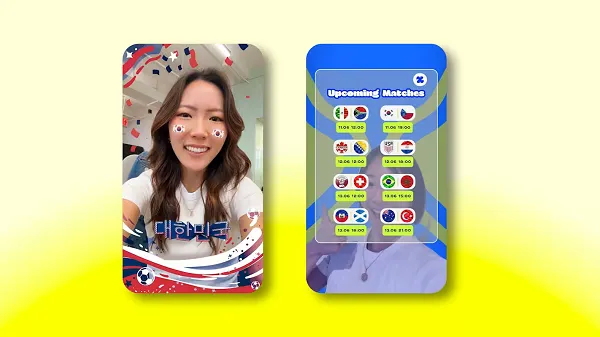
rewrite Listen to the article 3 min This audio is auto-generated. Please let us know if you have feedback. Snapchat announced a range of activations for the FIFA World Cup 2026, including new fan gear for Bitmoji characters, themed Lenses and exclusive coverage from creators at the event.
First, Snapchat added a range of World Cup fan gear to the Bitmoji store, which will enable users to deck their Bitmoji depictions out in their preferred national colors. Snapchat also partnered with U.S. Soccer, Adidas and Nike on an expanded range of Bitmoji outfits for the event.
In terms of AR tools, Snapchat added official team and organic country Lenses across more than 20 national teams. The app also added World Cup-related promotions and effects to showcase the event. Snapchat is also sending creator Alix Earle and NBA player Jared McCain to the World Cup to share exclusive insights. The app is also partnering with a range of players, including João Félix of Portugal, Sergiño Dest of the U.S. and Erling Haaland of Norway, who will provide direct insight into the event.
The platform also launched a World Cup Topic Chat, which will provide a way for users to discuss the games in real time.
Finally, Snapchat is hosting in-person World Cup events in Los Angeles and New York City. These events will provide “spaces for communities to celebrate the tournament together,” per Snapchat. “Throughout the tournament, Snapchat will take over the U.S. Soccer House in Los Angeles with immersive experiences designed to help fans, creators, and partners connect around the biggest moments of the tournament,” Snapchat said. “Later in the summer, in partnership with the NYNJ World Cup 2026 Host Committee, Snapchat will activate at the official NYNJ World Cup 26 & Telemundo Fan Village at Rockefeller Center from July 6-19, and the FIFA Fan Festival at USTA Billie Jean King National Tennis Center from June 11-27, bringing Snapchat Cam, AR experiences, and creator-led moments directly to fans on the ground.”
The World Cup could provide a significant engagement opportunity for Snapchat, with the majority of the app’s users engaging with sports content, and seeking out sports-related updates in the app.
Snapchat said that 63% of Gen Z social media users follow professional athletes on social media, and said the app helps players connect with fans “in more authentic, personal ways.”
For the World Cup specifically, Snapchat said that 62% of World Cup fans will watch or follow content in the app from players, teams or creators during the tournament.
With these stats in mind, it makes sense for Snapchat to make the 2026 World Cup a focus, as it looks to make the platform a more critical connector for its users. in spanish

rewrite this title in spanish What are the latest Hootsuite product features? [May 2026]
rewrite Track TikTok hashtags, stream OwlyGPT answers in real time, monitor Threads keywords, invite guest approvers, and manage advocacy with a redesigned leaderboard — here’s everything Hootsuite shipped in May. Quick summary of May updates:Monitor TikTok hashtags and brand-related conversations in ListeningStream OwlyGPT answers in real time from the side panelAdd LinkedIn personalization to mobile Amplify repostsImproved auto-responder control with Virtual Agent Integrator updatesAdd alt text to Threads image posts directly in CreateTrack advocate performance with the new Amplify point-based leaderboard (admin view) What are the Hootsuite product updates for May 2026? As an all-in-one social media management platform, Hootsuite helps teams publish, engage, listen, and measure — all from a single dashboard. May’s updates strengthen AI-powered workflows, expand listening to TikTok and Threads, and give advocacy and approval workflows a serious upgrade. Here’s everything we rolled out this month. Listening: TikTok hashtag monitoring You can now track TikTok’s brand-related conversations in Hootsuite Listening and Talkwalker by monitoring up to 50 brand-relevant hashtags per business token. Posts are ingested directly into your Insights channels and Topics, including engagement metrics like likes, comments, and shares. The update also includes backfill for up to 1,000 top-performing posts from the previous 90 days — so you’re not starting from zero. This update helps teams: Identify emerging TikTok trends and high-value influencers Track brand and competitor hashtag performance alongside other networks Get a head start with historical backfill data on first connection Takeaway: TikTok hashtag monitoring brings one of the most important short-form video platforms fully into your social listening workflow. OwlyGPT: Streaming answers in the side panel OwlyGPT now streams answers in real time directly from the side panel, so you see insights building as the AI works through your prompt — rather than waiting for a complete response to appear all at once. This mimics natural conversation and makes OwlyGPT noticeably more responsive for complex or open-ended tasks like trend analysis, content drafting, and campaign planning. Why it matters: See incremental output as the AI reasons through complex queries Validate the direction of an answer earlier and redirect if needed Work faster, with a more conversational AI experience Takeaway: Streaming answers make OwlyGPT feel less like a search tool and more like a real-time thought partner. Mobile Amplify: Add your own voice to LinkedIn reposts Advocates using the Hootsuite mobile Amplify app can now add their own notes and commentary when resharing a LinkedIn post. Instead of hitting share as-is, they can personalize the post in their own words to make it feel more authentic. For employee advocacy programs, this is a meaningful upgrade. Content that sounds like it came from a real person — not a corporate broadcast — tends to drive significantly more engagement. This update helps teams: Increase advocate participation by making sharing feel more natural Drive higher engagement with more personalized, authentic posts Maintain brand message while giving advocates creative latitude Takeaway: LinkedIn repost personalization gives advocates a voice, which is exactly what makes employee advocacy programs work. Inbox: Better control over Virtual Agent Integrator (VAI) Two updates give teams more precise control over automated responses in Inbox: First, auto-responders are now restricted to direct messages only. They will no longer trigger on story mentions, story replies, or shared reels — reducing noise from automation where it doesn’t belong. Second, you can now select which message types your custom Virtual Agent handles, giving you finer control over when automated responses fire and when conversations should go to a human. This update helps teams: Avoid automated responses on content where they feel out of place Route the right messages to human agents more reliably Improve the overall quality of customer experience in Inbox Takeaway: These VAI improvements give social care teams cleaner, more controllable automation that doesn’t interrupt the wrong conversations. Create: Alt text support for Threads image posts You can now add alt text to images when publishing to Threads directly from Hootsuite. This keeps teams in compliance with accessibility standards and ensures image descriptions are included as part of the standard publishing workflow — not as an afterthought. Why it matters: Meet accessibility requirements across more social channels Keep alt text workflow consistent regardless of the platform Improve reach among audiences who use screen readers Takeaway: Threads alt text support keeps accessibility built into your workflow, not bolted on after the fact. Amplify: New point-based leaderboard — admin view The Amplify leaderboard has been redesigned around a points-based system, and admins now get a detailed view of what’s actually driving advocate performance. Beyond just seeing who ranks where, you can now view total points per advocate, drill into the individual scoring events behind each score, and filter leaderboard data by social network, team, or user metadata. You can also add the leaderboard tile to any Analytics report and export it for sharing with leadership. Why it matters: Understand why top advocates are succeeding, not just that they are Use data to refine your advocacy incentive strategy Connect advocacy performance directly to business reporting Takeaway: The new admin leaderboard turns Amplify into a more measurable, strategic advocacy tool — not just a content distribution channel. Frequently asked questions Frequently asked questionsWhat are the Hootsuite product updates for May 2026?The Hootsuite product updates for May 2026 include TikTok hashtag monitoring in Listening, real-time streaming answers in OwlyGPT, LinkedIn repost personalization for mobile Amplify, Virtual Agent Integrator improvements in Inbox, alt text support for Threads, and a redesigned Amplify leaderboard with admin analytics.Can Hootsuite monitor TikTok hashtags?Yes. As of May 2026, Hootsuite Listening and Talkwalker support TikTok hashtag monitoring. Teams can track up to 50 brand-relevant hashtags per business token, monitor engagement metrics, and backfill up to 1,000 top-performing posts from the previous 90 days.What is the Amplify leaderboard point system?The Amplify leaderboard now runs on a point-based system where advocates earn points for different types of social interactions, not just the volume of posts shared. Admins can see total points per advocate, the individual events behind each score, and filter results by network, team, or metadata. The leaderboard tile can also be added to Analytics reports.Can I add alt text to Threads posts in Hootsuite?Yes. You can now add alt text to images when publishing to Threads directly from the Hootsuite Create composer.What is the Virtual Agent Integrator in Hootsuite Inbox?The Virtual Agent Integrator (VAI) lets teams connect custom chatbots or automation to Hootsuite Inbox. The May 2026 updates restrict auto-responders to direct messages only (no longer triggering on story mentions or shared reels) and let you choose which message types your virtual agent handles, giving you more precise control over when automation fires. Want a closer look at these new Hootsuite features? Log in to your dashboard to explore May’s product updates — or start a 30-day trial to see how Hootsuite supports smarter social media management, deeper insights, and stronger results. in spanish
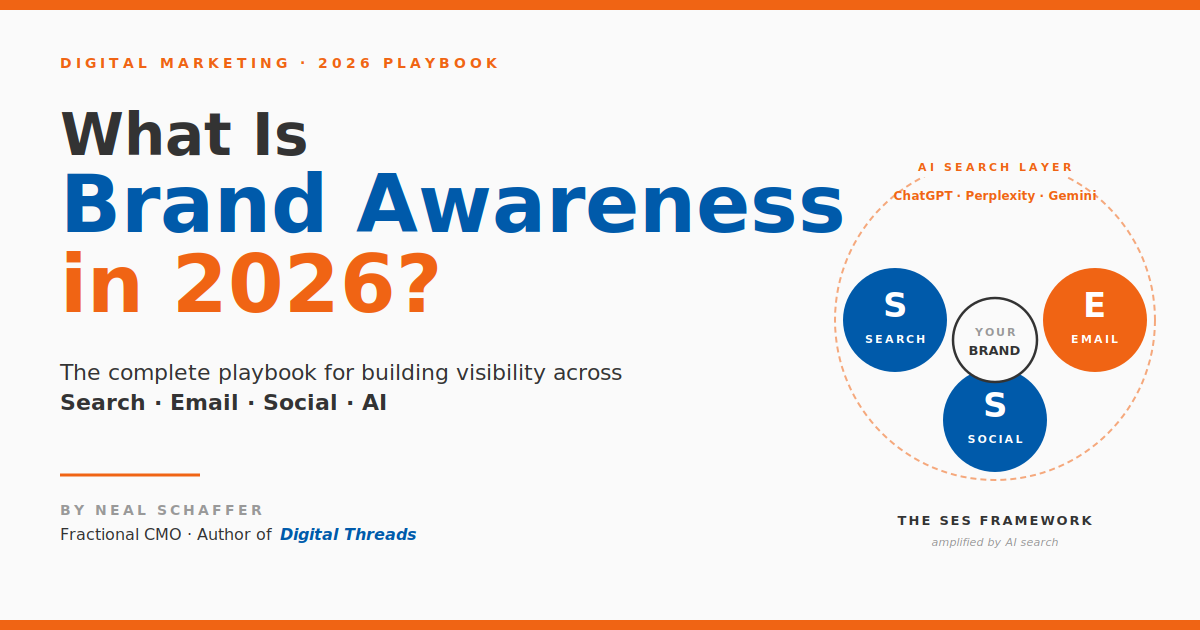
rewrite this title in spanish What Is Brand Awareness in 2026? A Digital Marketer’s Guide
rewrite A few times over the past year, prospective clients reached out about Fractional CMO work or personal branding consulting and told me upfront how they found me. Not Google. Not LinkedIn. Not a podcast recommendation. ChatGPT had named me when they asked for someone in my space. That caught my attention. I’ve spent two decades building visibility on traditional search engines and social media. But here was a new gatekeeper, one I hadn’t intentionally optimized for, deciding I belonged on a shortlist of people worth talking to. And the conversion quality was striking. Inquiries that came from AI recommendations tended to arrive already convinced. They’d done their research inside the chat, weighed the options, and picked up the phone. That opened my eyes to a new definition of what brand really means in the post-generative AI era. It’s no longer just what your customers remember about you. It’s what the machines summarizing the internet remember about you, and then pass along to your future customers without you ever knowing it happened. Brand awareness used to be a soft metric. The kind that lived on a slide in the awareness layer of the funnel, got measured in surveys once a year, and stayed out of the conversation when CFOs asked about ROI. That era is over. In 2026, brand awareness is the difference between being part of the conversation and being invisible in it, and the conversation is happening across Google, ChatGPT, Perplexity, Gemini, Claude, LinkedIn feeds, email inboxes, and Spotify playlists all at once. I’ve spent the last decade helping companies show up in those conversations, both as a Fractional CMO and as the author of Digital Threads, where I lay out the SES Framework (Search, Email, Social) that runs through this guide. This is the playbook I use with clients who need to be found, remembered, and recommended in a fragmented digital landscape, whether the recommender is a human, a search engine, or a large language model. Key Takeaways ✅ Brand awareness is the share of your target audience that recognizes and remembers your brand. It splits into brand recognition (cued recall, like spotting your logo) and brand recall (unaided recall, naming your brand when prompted by a category). ✅ Trust now sits alongside price and quality as a purchase driver. Edelman’s 2025 Trust Barometer Special Report on Brand Trust found that 80% of people now trust the brands they use, and trust has become a strategic battleground for competitive advantage. ✅ Build awareness across the SES Framework, not just one channel. Search makes you discoverable for years, email keeps you in the inbox of people who already know you, and social media spreads your voice through algorithms and advocates. ✅ AI search has rewritten the rules of brand visibility. AirOps research analyzing over 21,000 brand mentions found that 85% of brand mentions in AI responses come from third-party sources rather than the brand’s own website, which means earned media and review platforms now drive AI citations. ✅ B2B brand awareness has become the top business priority. LinkedIn’s 2025 B2B Marketing Benchmark with Ipsos found that 42% of senior B2B marketers rank increasing brand awareness and reputation among decision-makers as their single most important goal for the year. ✅ Measurement still matters, but the metrics have changed. Branded search, direct traffic, share of voice, AI citation rate, and third-party mentions tell you more than impressions or likes ever did. What Is Brand Awareness? Brand awareness is the extent to which your target audience can recognize and recall your brand when they encounter it or when they think about the category you serve. It has two distinct components, recognition (knowing your brand when shown) and recall (naming your brand when prompted by a need), both shaping whether a buyer ever considers you. Most people use “brand awareness” as a catch-all, but those two components behave very differently in practice. Recognition is what happens when a buyer sees your logo on a sponsored post and thinks, “oh, I’ve heard of them.” Recall is what happens when that same buyer needs a CRM and types “best CRM for small business” into ChatGPT without your name in mind, then either sees your brand named or doesn’t. The brands that win consistently are the ones that build recall, not just recognition. Recall is harder, slower, and worth far more. Why Has Brand Awareness Become More Critical in 2026? Brand awareness has become more critical in 2026 because the discovery layer has fragmented. Buyers now research across Google, ChatGPT, Perplexity, Gemini, LinkedIn, YouTube, and TikTok, and AI systems summarize options before the buyer ever clicks a link. If your brand isn’t named in those summaries, you’re not on the shortlist. Gartner forecasted in early 2024 that traditional search engine volume would drop 25% by 2026, with search marketing losing share to AI chatbots and virtual agents. Whether that exact number has already landed is up for debate, but the directional shift is undeniable. Branded queries are increasingly happening inside ChatGPT and Perplexity, and the brands that show up in those answers are pulling ahead of the ones that don’t. This shift is showing up in budget priorities. The LinkedIn study cited in Key Takeaways found that 94% of B2B marketers now agree trust is the most important factor in B2B success, and a plurality of senior marketers are putting brand reputation ahead of demand generation as their primary objective. That’s a meaningful inversion of the last decade’s “always be converting” mindset. It’s also showing up in how content marketing performs. According to the Content Marketing Institute’s 15th annual B2B benchmarks, 87% of B2B marketers report that content marketing helped them create brand awareness in the past 12 months, making it the single most-cited outcome of their content investment, ahead of demand generation, lead nurturing, and sales. And then there’s the AI piece, which I’ll come back to in its own section. Short version: the brands that show up inside AI answers tend to share three traits. They have strong third-party citation footprints, they publish original data, and they reinforce a consistent entity across the web. What’s the Difference Between Brand Awareness, Brand Recognition, and Brand Recall? Brand awareness is the umbrella term that covers both recognition and recall. Recognition is aided awareness, where a buyer identifies your brand when shown a logo, ad, or name in a list. Recall is unaided awareness, where a buyer names your brand from memory when prompted by a category or need. Recall is harder and more commercially valuable. Is Your LinkedIn Not Delivering Results? Just released: my new book to help professionals, entrepreneurs, and business owners maximize LinkedIn for real growth.With years of LinkedIn expertise, Maximizing LinkedIn for Business Growth offers actionable steps to build your brand, expand your network, and drive results. Start leveraging LinkedIn like never before—grab your copy now! Click the cover or button below to buy on Amazon. Here’s a side-by-side breakdown so the terminology lines up: TermWhat It MeansHow It’s MeasuredWhy It MattersBrand AwarenessTotal share of your audience that knows your brand existsAided + unaided recall surveys, share of voice, branded search volumeThe umbrella metric for top-of-funnel visibilityBrand RecognitionBuyers identify your brand when shown a cue (logo, ad, name)Aided recall surveys, ad recall studiesIndicates visual identity strength and ad effectivenessBrand RecallBuyers name your brand from memory when given a category promptUnaided recall surveys, top-of-mind awareness scoresPredicts inclusion in the consideration set during buying decisionsShare of VoiceYour brand’s portion of total conversation in your categoryMention volume, search share, social listeningTracks competitive visibility against direct rivalsBrand SalienceHow easily and how often your brand comes to mind in buying situationsCategory-cued recall, mental availability researchLinks awareness directly to purchase behavior Recognition is what happens when a buyer sees your logo and thinks “I’ve heard of them.” Recall is what happens when a buyer needs a CRM and asks ChatGPT without your name in mind. Both are brand awareness. Only one predicts purchase. If you want to go deeper on the share-of-voice piece, I’ve broken down how it compares to share of market in a separate explainer on share of voice versus share of market, because the two get confused constantly in client conversations. How Does Brand Awareness Fit Into the Marketing Funnel? Brand awareness sits at the top of the marketing funnel, where buyers move from “don’t know you exist” to “have heard of you.” It’s the prerequisite for every later stage. A buyer can’t consider you, prefer you, or purchase from you if they’ve never encountered your name. Awareness is the door, not the room. That’s the textbook version. The reality in 2026 is messier. Buyer journeys loop and circle back. A widely-cited 2020 FocusVision study reported by MarTech found the average B2B buyer consumes 13 pieces of content before making a vendor decision, split roughly eight vendor-created and five third-party. That number is from before the AI search era and is almost certainly higher today across more fragmented channels. People discover you on TikTok, forget you for three months, see your name in a Perplexity answer, then sign up for your newsletter from a podcast mention. Awareness happens in fragments, across channels, over time. The textbook funnel still gets drawn on slides, but the 2026 reality is a buyer who finds you on TikTok, forgets for three months, then bumps into your name in a Perplexity answer before signing up for your newsletter. Awareness happens in fragments. What hasn’t changed is the principle. If the goal is purchase, you need awareness first. If the goal is loyalty, you need awareness sustained. If the goal is advocacy, you need awareness that’s emotionally resonant enough for people to want to talk about it. The SES Framework from Digital Threads breaks brand awareness into three channels. Search makes you discoverable for years. Email keeps you in inboxes that already know you. Social spreads your voice through algorithms and advocates. How Do You Build Brand Awareness Through Search? Building brand awareness through search means publishing discoverable, evergreen content that answers the questions your target audience is already typing into Google, YouTube, Amazon, and increasingly into ChatGPT and Perplexity. Search is the first “S” in my SES Framework because content indexed in a search engine works for years, while a social post fades in hours. The most reliable awareness compound I’ve seen with clients is a blog backed by a clear keyword strategy. Not random thought leadership. Not “what’s on my mind today” posts. Content built around questions that have real search demand and that match the buyer’s stage. That requires real keyword research, the kind I describe in my SEO strategy resource, and patience to wait six to twelve months for the compounding effect to kick in as you build the library of content I describe in detail in Digital Threads. Three search tactics consistently move the awareness needle: Long-form evergreen content answering specific buyer questions, supported by topical clusters that build authority around a theme. Authority signals through earned backlinks and citations. The mechanics of why backlinks matter for SEO is its own rabbit hole worth understanding. YouTube and podcast presence because both platforms function as search engines with multi-year content shelf life, and Google now surfaces video and audio prominently in mixed-media results. Search rewards maintenance more than volume, which is why the content still bringing me clients today is the content I went back and refreshed periodically. How Do You Build Brand Awareness Through Email? Building brand awareness through email means showing up in inboxes consistently enough that your name becomes familiar, not just transactionally useful. Email is the “E” in SES because once a subscriber opts in, you have permission to keep reinforcing your brand with every send, even when most of those sends go unopened. The subject line alone is a brand impression. I’ve worked with clients who treated email as a conversion channel only, sending exclusively when they had something to sell. The result was unsubscribes, predictably. The clients who treated email as a relationship channel, sending a weekly or biweekly newsletter with genuine value, saw their open rates climb and their direct-traffic-from-email numbers compound over a year or two. A few things that matter for awareness specifically, separate from conversion: A recognizable sender name and subject line voice so subscribers know it’s you before they open. Having a defined brand voice pays off across every send. Consistency over frequency. A predictable weekly newsletter outperforms sporadic blasts every time. Subscribers learn to expect you. Forwardable, citable content. When a subscriber forwards your email to a colleague, that’s earned awareness with zero acquisition cost. Write at least one section per send with that in mind. Building brand awareness through social media means creating content that the platform’s algorithm wants to show to people who don’t follow you yet, while keeping the people who already follow you engaged. Social is the second “S” in SES, and it’s the channel where awareness can compound fastest, but also where it disappears fastest if you stop showing up. The 2025 Sprout Social Index reported that social media has become the number one source consumers use to keep up with trends and culture, ranking ahead of TV, family and friends, and every other digital channel. That’s a meaningful shift. It means social isn’t just a marketing channel, it’s a discovery layer that competes with traditional media for attention. As Scott Morris, Chief Marketing Officer at Sprout Social, put it when announcing the findings: “Consumer demands grow increasingly sophisticated with each year, and this year is no different. The 2025 Index report illustrates how consumers expect meaningful engagement and cultural relevance on social media that goes beyond trend-chasing.” That’s the bar in 2026. Posting consistently isn’t enough. Posting with cultural fluency and authenticity is what builds brand recall. A few principles that hold across platforms: Pick two or three platforms where your audience actually spends time, and go deep. Spreading thin across six channels is a recipe for inconsistent presence and inconsistent awareness. I’ve watched too many clients try to be everywhere and end up nowhere. Build a consistent visual and verbal identity. Adobe Express is the design tool I personally use for this, because the template system and brand kit feature make it realistic to keep visual identity consistent across hundreds of posts a year (full disclosure, I’m an Adobe Express Brand Ambassador, so I’m biased, but I’ve been recommending it for the same reasons since before that relationship existed). Bring in other voices. Influencer partnerships, especially with micro-influencers who have tight community trust, extend your awareness into audiences your own accounts can’t reach organically. Treat customer care on social as awareness work. Public replies are seen by future customers, not just the person you’re replying to. Every well-handled support exchange is a brand impression for an audience. If you’re trying to think holistically about how these pieces fit together, I’ve written more on building a coordinated social media strategy that aligns the awareness, engagement, and conversion layers. How Do You Build Brand Awareness Inside AI Search and ChatGPT? Building brand awareness inside AI search means earning citations and mentions from the third-party sources that AI models trust most, because AI systems synthesize answers by retrieving from external sources rather than generating from scratch. The discipline is called Generative Engine Optimization (GEO) or Answer Engine Optimization (AEO), and it’s reshaping what brand awareness even means. The AirOps research mentioned in Key Takeaways is the clearest signal I’ve seen. When an AI tool names your brand in a top-of-funnel commercial query, that mention is six and a half times more likely to come from a third-party source than from your own website. Which means the old SEO playbook of “rank our pages first” only partially translates. You also need to be cited on the sites the AI is reading. AI search has rewired brand awareness. Your own website does roughly 15% of the work. The other 85% lives on review platforms like G2 and Clutch, Wikipedia entries, Reddit threads, podcast transcripts, and news coverage you don’t control. Earned media is the new SEO. Here’s the practical implication for a brand awareness strategy: Get into review sites and aggregators. G2, Capterra, Trustpilot, and category-specific roundups disproportionately shape what AI models say about your category. Pursue earned media coverage. A placement on a publication the AI considers authoritative is worth more in 2026 than ten guest posts on low-authority blogs. Publish original research and statistics. Content with cited statistics earns more AI mentions than opinion pieces. This is one reason I keep my annual social media marketing statistics roundup up to date on my own site. Reinforce entity consistency. Use the same name, the same role descriptions, and the same key facts about your brand across every site that mentions you. AI models penalize ambiguity. There’s also a measurement layer to this. HubSpot’s AEO product, launched in early 2026, tracks brand visibility scores and share of voice across ChatGPT, Gemini, and Perplexity, and HubSpot reported on their own results that AEO became one of their fastest-growing lead sources with leads converting at three times the rate of traditional search. The tooling is maturing fast, and the brands that start measuring AI visibility now will have a year-plus head start on those who wait. How Do You Measure Brand Awareness? Measuring brand awareness in 2026 requires a mix of legacy metrics (branded search, direct traffic, social mentions) and emerging ones (AI citation rate, share of voice across LLMs, third-party mention quality). No single number tells the full story, which is why most marketers track a portfolio of signals and look for direction over time rather than precision in any given month. Here’s the measurement portfolio I recommend to clients, organized by what each metric actually tells you: Brand awareness measurement has evolved in three layers. The foundations (branded search, direct traffic) still matter. The competitive layer (share of voice, brand recall) tells you where you stand against rivals. The emerging layer (AI citation rate, third-party mention volume) is what 2026 added to the stack, and it’s where the next year of category leadership will be decided. MetricWhat It TracksWhere to Find ItBranded search volumeHow often people type your brand name into GoogleGoogle Search Console, Google TrendsDirect trafficVisitors typing your URL directly or using a bookmarkGoogle Analytics 4Share of voiceYour portion of category conversation across earned mediaSocial listening tools, Mention, Brand24Aided and unaided brand recallSurvey-based memory of your brand in your categoryQuarterly brand tracker surveysSocial mentions volume and sentimentHow often and how favorably people talk about youNative platform analytics, Sprout Social, BrandwatchAI citation rateHow often your brand appears in AI-generated responsesProfound, Otterly.AI, Semrush AI ToolkitThird-party mention volumeCoverage on review sites, news sites, podcastsManual tracking + tools like Ahrefs Brand RadarReferral traffic from earned mediaVisitors arriving from publications, podcasts, and partnersGoogle Analytics 4 The mistake I see most often is over-weighting impressions and likes, which feel measurable but barely correlate with anything that matters. A million Instagram impressions on a video nobody remembers is a worse business outcome than 50,000 impressions on a post that drives 500 newsletter signups and a podcast download spike. What Most Brand Awareness Guides Get Wrong Most brand awareness guides treat it as a top-of-funnel activity disconnected from revenue, which leads to vanity-metric thinking and budget cuts the moment a CFO asks ROI questions. The reframe I work from: awareness is a leading indicator of every conversion metric you care about, but only when it’s measured against the segment of the audience you can actually sell to. A few specific things guides routinely miss: Confusing reach with awareness. Reach is exposure. Awareness is memory. They’re not the same, and the difference is the gap between “they saw it” and “they remember it.” Memory takes repetition. Treating awareness as a one-time campaign. Awareness decays. Without sustained reinforcement, the brands you built recognition for last year fade out of consideration sets this year. Plan for ongoing investment, not a launch sprint. Skipping the entity layer. Especially with AI search now in the picture, brands that show up consistently across the web (with the same name, same description, same fact pattern) get cited far more than brands that drift in their positioning. Picking the wrong tactics for the funnel stage. Influencer awareness campaigns make sense at the top of the funnel. Retargeting ads for “brand awareness” mostly waste money because the audience already knows you exist. The other miss I see constantly, even from experienced marketers, is treating brand awareness as separate from content strategy. They’re the same thing. Every blog post, video, newsletter, and social asset is a brand awareness vehicle if it’s published consistently in your voice. For more on that integration, my post on what content marketing actually is lays out how content ties to brand building. And the financial case has gotten harder to ignore. Kantar BrandZ has tracked the world’s biggest brands for two decades, and the companies sitting at the top of its value rankings have historically delivered higher shareholder returns than the broad market, even across rough years. Brand investment isn’t a cost. It’s a balance sheet asset that compounds. Brand Awareness FAQ What’s a realistic timeline for seeing brand awareness improve? Realistic timelines depend on your starting point and channel mix, but in my consulting work I tell clients to expect three to six months of consistent effort before they see meaningful lift in branded search and direct traffic, and twelve to eighteen months before they see compound effects across multiple channels. Awareness doesn’t lift overnight. It accrues. How much should I budget for brand awareness versus performance marketing? There’s no universal split, but Les Binet and Peter Field’s “The Long and the Short of It” research for the IPA, based on nearly 1,000 effectiveness case studies, found that a roughly 60/40 brand-to-activation allocation produces the strongest long-term growth in most consumer categories, with the brand portion higher for newer or less-known companies. The mistake is going 100% performance and wondering why CAC keeps climbing. You can’t convert someone who’s never heard of you. Is brand awareness measurable, or is it inherently fuzzy? It’s measurable, but not with a single number. You measure it through a portfolio of signals (branded search, direct traffic, share of voice, AI citation rate, survey-based recall) and you watch the trendline. Anyone selling you a “brand awareness score” as a single metric is oversimplifying, but the inputs that feed that score are absolutely trackable. Does brand awareness still matter if I’m primarily selling through paid ads? Yes, and probably more than you think. Branded queries convert at significantly higher rates than unbranded queries, and ad creative tested with audiences who already recognize the brand consistently outperforms creative shown to cold audiences. Paid ads work better when the brand is already known. That’s why category leaders can afford lower CACs than their challengers. How is brand awareness different from brand identity? Brand identity is the set of visual, verbal, and emotional cues you control (your logo, voice, story, design system, values). Brand awareness is the share of your audience that recognizes those cues. Identity is what you create. Awareness is what gets retained. The two work together, but they’re distinct, and conflating them is one reason a lot of brand strategy work goes sideways. I’ve written more on the brand storytelling side of identity if you want to go deeper there. Start Building Brand Awareness That Compounds Brand awareness in 2026 is not a quarterly campaign. It’s an ongoing system across search, email, social, and AI answer engines, all reinforcing the same entity for the same audience. The brands that win show up consistently, publish content worth citing, and measure progress against signals that predict revenue rather than vanity metrics. If you’re trying to ground your brand awareness strategy in current data, the latest content marketing statistics are a useful place to start, because content marketing is doing more of the awareness-building work in 2026 than any other tactic. And if you’d like hands-on help building a coordinated awareness strategy across your full digital footprint, download a free preview of Digital Threads for the full SES Framework, or get in touch about Fractional CMO services if you want me involved directly. The discovery layer keeps changing. The discipline of showing up where your buyers are doesn’t. Actionable advice for your digital / content / influencer / social media marketing. Join 13,000+ smart professionals who subscribe to my regular updates. in spanish